
A large-scale trial conducted in collaboration between RMIT University and Bristile Roofing has yielded significant results: sustainable roof tiles incorporating coal ash and glass waste demonstrate substantial environmental and engineering benefits while reducing carbon footprints. At Bristile Roofing's Melbourne factory, a full-scale production trial successfully manufactured hundreds of concrete tiles integrating coal-fired power plant ash waste and glass.
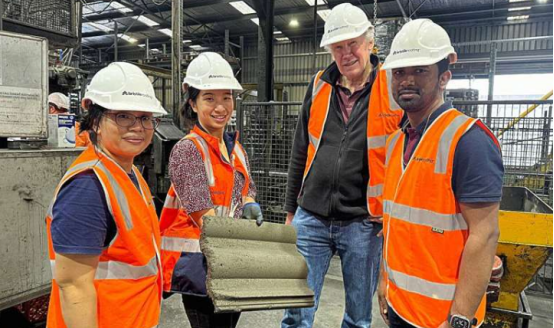
These finished tiles are lighter, more fire-resistant, and meet Australian standards for strength and durability. A comprehensive lifecycle assessment shows that, compared to traditional concrete tiles, the new tiles reduce CO₂ emissions by 13%. RMIT project leader Dr. Chamila Gunasekara highlighted that the significant environmental benefits stem from using harvested pond ash and unwashed recycled glass sand, avoiding energy-intensive processing and effectively replacing virgin materials. "Replacing 10% of cement with collected pond ash and 10% of river sand with unwashed glass waste not only reduces landfill disposal but also produces an improved concrete product with enhanced fire resistance."
In Australia, approximately 12 million tons of coal ash are generated annually from power generation, with over 400 million tons stored in settling ponds; more than 1.3 million tons of glass waste are produced each year, with over half sent to landfill. Lead researcher Dr. Yulin Patrisia stated that the trials prove large-scale integration of industrial waste is possible without compromising quality or safety. Although collected pond ash has low early reactivity, it enhances long-term concrete performance, including better dimensional stability, reduced shrinkage and cracking, and continuous strength gain, making it suitable for durable non-structural applications. Related findings have been published in Sustainable Materials and Technologies and the International Journal of Life Cycle Assessment.
The team is currently collaborating with local councils and commercial partners to test the roof tiles in real-world environments. They have also designed waste-incorporated concrete bricks that meet load-bearing structural standards with improved insulation, reducing heat loss by 30%. These results, published in Case Studies in Construction Materials, are undergoing production trials.