
A new theoretical study led by engineers at the University of Delaware shows that magnons (magnetic spin waves) can generate detectable electrical signals, opening a new pathway for integrating electromagnetic components in next-generation computing technologies. Published in the Proceedings of the National Academy of Sciences, the research reveals potential methods for controlling and manipulating magnons using electric fields, which could eliminate bottlenecks in information transfer between electrical and magnetic systems in current computers, thereby enhancing computing speed and efficiency.
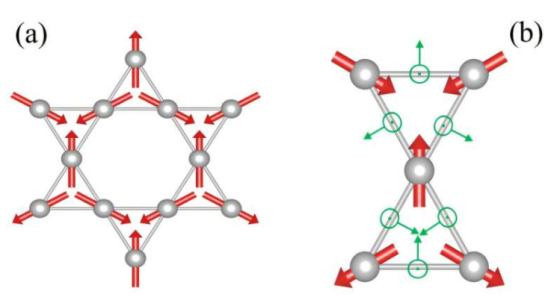
Magnetism arises from the spin properties of electrons, and magnons transmit information through spin orientation without charge movement, thus producing no resistance and lower energy loss. Current computer chips rely on charged electrons flowing through wires, generating significant heat due to resistance. The introduction of magnon technology would effectively reduce energy waste. The study focuses on antiferromagnetic materials, where spins alternate up and down, allowing magnons to propagate at terahertz frequencies—far faster than in ferromagnets. However, the net zero spin in antiferromagnetic materials makes detecting and controlling magnons challenging.
"Our results predict that we can detect magnons by measuring the electric polarization they produce," said senior author Professor Matthew Doty. "Moreover, it may be possible to use external electric fields, including light fields, to control magnon motion." CHARM postdoctoral researcher D. Quang To and colleagues used computer simulations to discover that magnon motion can generate electrical signals, providing new approaches for magnon detection and manipulation. The team also developed a mathematical framework to understand how magnon orbital angular momentum affects transport and found that interactions with atoms produce electric polarization.
The University of Delaware team has begun experimental validation of the predictions and plans to explore magnon-light interactions to further control magnon transmission or detection.