
The XRISM space observatory, jointly operated by NASA, ESA, and JAXA, has recently conducted a successful observation of the stellar wind from the pulsar GX 13+1. This stellar wind study was carried out using the Resolve soft X-ray spectrometer aboard XRISM, targeting the binary system GX 13+1, located approximately 23,000 light-years from Earth.
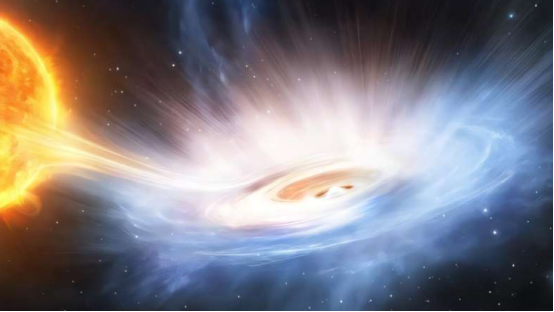
During the observation period, researchers recorded a special phenomenon where the brightness of pulsar GX 13+1 suddenly increased. ESA expert Matteo Guainazzi stated in a press release: "When we first saw such rich details in the data, we felt we were witnessing a game-changing result." This brightness change provided the research team with a unique opportunity to analyze the characteristics of the pulsar's stellar wind.
The study found that the stellar wind generated by GX 13+1 pulsar reaches speeds of about 1 million kilometers per hour, significantly lower than the speeds of stellar winds produced by supermassive black holes. At the same time, observation data showed that the structure of this pulsar stellar wind is relatively smooth, in stark contrast to the clumpy stellar winds around black holes. Researchers speculate that this difference may be related to the size and temperature characteristics of the accretion disk surrounding the celestial body.
This detailed observation of the pulsar stellar wind offers a new perspective on understanding how compact objects influence their surrounding environments through mass outflows. Stellar winds play complex roles in the star formation process, both promoting the collapse of gas clouds to form new stars and potentially suppressing star birth activities. The high-resolution observational capabilities of the XRISM observatory enable researchers to delve deeper into the mechanisms of these stellar winds.
Based on the scientific achievements of the XRISM mission, ESA plans to launch the next-generation high-energy astrophysics telescope ATHENA in 2037. These ongoing stellar wind studies will deepen humanity's understanding of cosmic matter cycles and the laws of stellar evolution.