
An international research team composed of the Chinese University of Hong Kong, the University of Exeter, and the University of Amsterdam has discovered that high-energy gamma rays may provide a new way to reveal the structure of the solar magnetic field. This solar magnetic field research achievement, by analyzing the ultra-high-energy gamma rays emitted by the sun, offers a new observational method for exploring the magnetic field distribution below the solar surface.
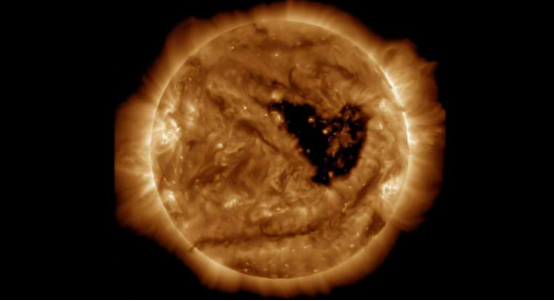
The research team proposes that strong horizontal magnetic fields existing below the solar surface can alter the direction of cosmic rays, thereby producing detectable ultra-high-energy gamma rays. Professor Andrew Hillier, the paper's author from the University of Exeter, stated: "Our research provides a new method to observe below the solar surface using cosmic rays." This solar magnetic field study integrates expertise in particle physics and magnetic field modeling, offering a new perspective for understanding solar activity mechanisms.
The High-altitude Water Cherenkov Observatory in Mexico has successfully detected ultra-high-energy gamma rays from the sun. These observational data corroborate the solar magnetic field model proposed by the researchers, indicating the influence mechanism of magnetic fields below the solar surface on cosmic rays. This solar magnetic field research achievement has been published in the journal Physical Review Letters, providing a theoretical foundation for improving space weather forecasting technology.
Through continuous observation of ultra-high-energy gamma rays, researchers will be able to map the solar magnetic field distribution more precisely. This solar magnetic field study not only helps understand the solar activity cycle but also has important significance for predicting space weather events such as solar flares and coronal mass ejections.