
In the field of quantum technology, diamond quantum sensing research is emerging as a focal point. The Ania Jayich Laboratory at the University of California, Santa Barbara has made significant progress at the intersection of materials science and quantum physics. The lab explores the use of lab-grown diamonds, leveraging artificially designed defects (spin qubits) within diamonds for quantum sensing.
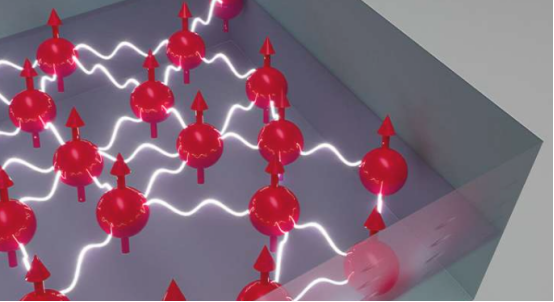
Outstanding researcher Lillian Hughes, in three co-authored papers with Jayich, has for the first time demonstrated the ability to arrange and entangle not only individual qubits in diamonds but also two-dimensional ensembles of numerous defects. This breakthrough makes it possible to achieve a quantum advantage in metrology within solid-state systems, laying the foundation for the development of next-generation quantum technologies. Hughes stated, "We can control the density and dimensionality of spins at nitrogen-vacancy centers in diamond, forming densely packed, depth-limited two-dimensional layers."
Jayich explained that NV center defects possess long-lived spin states suitable for quantum sensing. Unlike previous quantum sensing experiments in solid-state systems, Hughes' results utilize dense spin ensembles with very strong interactions, providing additional quantum advantages through collective behavior, thereby improving signal-to-noise ratio and sensitivity. Jayich also pointed out that solid-state materials like diamond are easier to integrate than atomic vapor sensors and can be placed close to the system under study, offering potential value for detecting biological systems and other applications.
Additionally, the Jayich Laboratory has investigated methods to break the standard quantum limit by "squeezing" noise amplitude and to achieve metrological gain using the same system. These studies provide new ideas for realizing practical quantum advantages in the sensing field. Jayich noted that the primary current challenge is in materials—namely, the inability to precisely control spin positions. However, the lab is researching the construction of grids composed of these spins to address this challenge.