
The Electronics and Telecommunications Research Institute (ETRI) in Korea has developed an AI-based early screening technology for Autism Spectrum Disorder (ASD). This new technology, named "Social Interaction Recognition AI," can complete preliminary screening in just six minutes by analyzing the behavioral responses of infants and toddlers while viewing specific content.
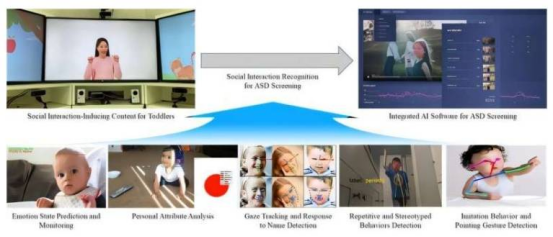
ETRI collaborated with Professor Yoo Hee-Jung's team from the Department of Psychiatry at Bundang Seoul National University Hospital, using data from 3,531 infants and toddlers under 42 months to develop "social interaction induction content" that elicits various social responses. The technology captures the interaction process via camera, analyzing key behavioral indicators such as gaze tracking, name response, and gesture recognition.
"We hope this will help shorten the time from symptom detection to diagnosis and change societal perceptions of autism," said Dr. Yoo Jang-Hee, chief researcher in ETRI's Social Robot Research Department. Currently, ASD diagnosis typically takes 2-6 years from symptom discovery, and this technology is expected to significantly reduce that timeframe.
Researchers established a dedicated screening lab at the Korea Institute of Robot and Convergence, collecting and testing data over five years to develop the world's first multidisciplinary integrated ASD screening AI system. The technology overcomes limitations of traditional screening tools, providing a more convenient solution for kindergartens, daycare centers, and other settings.
Autism Spectrum Disorder often shows early symptoms between 12-24 months of age, and early intervention is crucial for improving developmental outcomes in affected children. This innovative technology not only enhances screening efficiency but also lowers barriers to mental health services, enabling more children to receive timely diagnosis and intervention.