
On June 21, reporters learned from the Dalian Institute of Chemical Physics, Chinese Academy of Sciences, that researcher Li Xianfeng, project researcher Lu Wenjing, and collaborators including researcher Zhang Hongjun from the University of Science and Technology of China have recently made new progress in ion-selective membranes for flow batteries. They developed a novel interfacial crosslinking strategy, producing a highly stable ultra-thin polymer membrane with a thickness of only 3 micrometers, increasing the operating current density of all-vanadium flow batteries to 300mA/cm². The results were published in Nature Chemical Engineering.
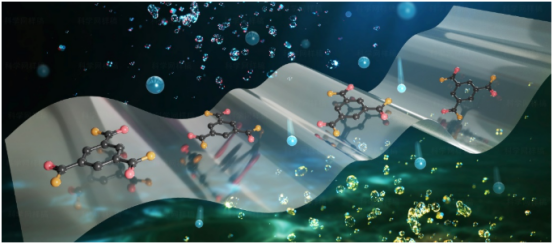
Polymer ion-selective membranes are the mainstream flow battery membrane materials on the market due to advantages such as low cost and ease of large-scale preparation. However, polymer membranes prepared by traditional methods typically have irregular and disordered pore structures, making it difficult to achieve precise separation of active materials and charge carriers in flow batteries.
To address these issues, Li Xianfeng's team proposed a new interfacial crosslinking strategy, confining the polymer crosslinking reaction within a limited interfacial space to prepare ultra-thin polymer membranes composed of nanoscale separation layers and support layers. Test results showed that the robust covalent crosslinking network in the separation layer enhanced the membrane's mechanical stability, demonstrating good mechanical strength even at a thickness of 3 micrometers.
The study also found that the pore size distribution in the membrane's separation layer ranged from 1.8Å to 5.4Å, similar to inorganic nanoporous materials with regular pore structures. This pore size distribution lies precisely between the sizes of flow battery active materials and charge carriers, achieving precise separation of active materials and rapid conduction of charge carriers. Meanwhile, the nanoscale separation layer and the overall reduced membrane thickness further decreased ion transport resistance, resulting in ultra-low area resistance and active material permeability coefficients across a wide pH range.
To verify its application feasibility, the team applied the membrane to an all-vanadium flow battery single cell, achieving energy efficiency exceeding 80% at a high current density of 300mA/cm². Additionally, the ultra-thin membrane can be used in alkaline zinc-iron flow batteries and aqueous organic flow batteries, exhibiting excellent performance at high current densities. By varying the type of crosslinking agent, the team further validated the universality of the interfacial crosslinking strategy.
This research provides new ideas for designing ultra-thin membranes with high mechanical stability, ultra-low area resistance, and permeability coefficients, which is beneficial for increasing the operating current density and power density of various aqueous flow batteries.