
A research team from the University of British Columbia Okanagan has published groundbreaking results in Biotechnology and Bioengineering, successfully developing a 3D bioprinted model that precisely mimics natural lung tissue. The technology uses a bioink composed of photo-crosslinkable gelatin modified with methacrylate (GelMA) and polyethylene glycol diacrylate (PEGDA) to construct multicellular hydrogel structures containing vascular networks, faithfully replicating the mechanical properties and physiological environment of lung tissue.
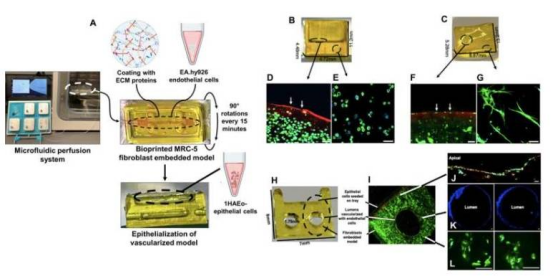
Lead researcher Dr. Emmanuel Osei stated: "Traditional studies rely on limited surgical samples, whereas our model can reconstruct scalable test tissue using patient-donated cells, dramatically improving research efficiency." The model has been successfully applied to cigarette smoke-induced inflammatory response testing, showing characteristic increases in pro-inflammatory cytokines and confirming its ability to effectively simulate the pathological processes of diseases such as chronic obstructive pulmonary disease (COPD).
The breakthrough features of this technology are:
Vascular integration: First-ever incorporation of functional vascular networks in an airway model for more realistic simulation of the pulmonary microenvironment
Personalization potential: Compatible with patient-derived cells, providing a platform for precision medicine
Standardized research: Overcomes the scarcity and heterogeneity issues of traditional tissue samples
The team is currently collaborating with UBC's Immunobiology Research Cluster and biotechnology companies to further increase model complexity, planning to incorporate additional cell types to investigate the mechanisms of refractory diseases such as idiopathic pulmonary fibrosis.