
More than two centuries after French physicist Sadi Carnot formulated the second law of thermodynamics, quantum information science has achieved a major advance. On July 2, 2025, an international research team published a paper in Physical Review Letters demonstrating that the manipulation of quantum entanglement follows a reversibility law analogous to thermodynamics. This discovery overturns the long-held belief that entanglement transformations are inherently irreversible and establishes a solid theoretical foundation for practical quantum technologies.
Entanglement, a core feature of quantum mechanics, describes correlations between particles that transcend spatial separation: measuring the state of one particle instantly determines the state of its entangled partner. Once regarded ninety years ago as evidence of quantum theory's "absurdity," it is now a critical resource for quantum computing, communication, and cryptography. However, quantum entanglement theory has long lacked a reversibility criterion comparable to the second law of thermodynamics, which states that the entropy (disorder) of an isolated system always increases, and perfectly reversible processes are merely idealized models.
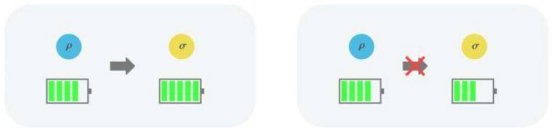
The research team overcame this bottleneck by introducing the concept of an entanglement battery. Co-author Tan Jung Valen Kondra explained: "We prove that, with the assistance of a shared auxiliary entangled system—an entanglement battery—mixed-state entanglement transformations achieved through local operations and classical communication (LOCC) can become fully reversible." This mechanism is analogous to how a thermodynamic battery stores energy to enable work injection and recovery: the entanglement battery allows quantum systems to preserve total entanglement during state conversion, thereby avoiding irreversible loss. Senior author Alexander Streltsov further elaborated: "The entanglement battery is not limited to two-particle systems; it can be extended to multi-particle quantum networks, providing a unified framework for manipulating complex quantum resources."
Experiments demonstrate that standard LOCC operations assisted by an entanglement battery can make any mixed-state entanglement transformation fully reversible. This result not only resolves a long-standing debate in quantum information science about the reversibility of entanglement but also reveals a systematic proof pathway for reversibility in quantum physics. Streltsov emphasized: "By designing batteries that preserve specific resources (such as coherence or free energy), we can construct universal reversible frameworks independent of entanglement, paving the way for future efficient quantum technologies."