
A research team from the University of Maryland, Baltimore County (UMBC) has published an innovative breakthrough in Journal of Materials Chemistry, developing a data-driven approach to predict novel two-dimensional ferroelectric materials. The study, co-led by chemistry Ph.D. student Yan Peng and assistant professor Joseph Bennett, is poised to provide critical material support for next-generation electronic devices.
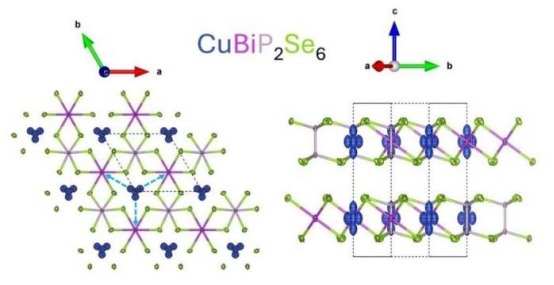
The team focused on van der Waals layered phosphochalcogenide compounds, establishing a new material prediction framework by integrating data mining, quantum structural graph analysis, and computational modeling. "We developed chemical design rules to predict these materials," Peng said. The method successfully identified 83 potential candidate materials, some of which have already been experimentally synthesized and validated in the lab.
Key breakthroughs of the study include:
Establishing correlation models between material properties and atomic parameters
Developing automated classification and screening algorithms
Achieving effective linkage between theoretical predictions and experimental validation
Professor Bennett noted: "This approach is like having a recipe book for undiscovered materials, dramatically reducing R&D time." The predicted materials show promising applications in non-volatile memory, miniature sensors, and other fields. The team's next steps will involve high-throughput computational simulations to deeply analyze material properties and collaborate with the University of Maryland, College Park to advance experimental research.