
Astronomers from MIT, Columbia University, and elsewhere have used NASA's James Webb Space Telescope (JWST) to peer through dust in nearby galaxies and observe several tidal disruption events (TDEs) for the first time. In these events, black holes at galactic centers devour passing stars, tearing them apart with tidal forces and releasing enormous energy. The findings are published in The Astrophysical Journal Letters.
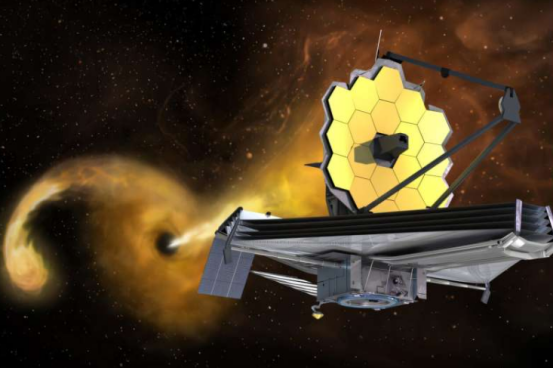
Since the 1990s, scientists have observed about 100 TDEs, but most occurred in relatively dust-free galaxies. MIT researchers note that many more TDEs may be hidden in dustier, gas-obscured galaxies. Conventional X-ray and optical telescopes cannot detect these events because most light is blocked by dust. However, this light heats surrounding dust, producing infrared signatures that JWST can capture.
The team used JWST to study four dusty galaxies suspected of hosting TDEs. The telescope detected clear signs of black hole accretion and found these events were not triggered by already-active black holes but by dormant ones awakened when stars passed too close. The new results highlight JWST's potential to uncover hard-to-detect TDEs and help reveal key differences in the environments around active versus dormant black holes.
"This is the first time JWST has observed tidal disruption events, and they look completely different from anything we've seen before," said lead author Megan Masterson. "We've learned that these events are driven by black hole accretion and occur in environments unlike those of normally active black holes. Now we can study what dormant black hole environments really look like—this is exciting." With JWST, the researchers hope to identify key "spectral lines" associated with TDEs, providing new clues about black hole properties.