
Since the introduction of filtered cigarettes, cigarette butts have become one of the main forms of litter, with an estimated 9 trillion butts produced annually by 2025. Moreover, with the rise of low-nicotine e-cigarettes, the consumption and production of this type of waste continue to increase, particularly among young people aged 14 to 30. These discarded items are mostly littered in natural environments, beaches, forests, and water bodies, degrading very slowly and causing severe environmental problems.
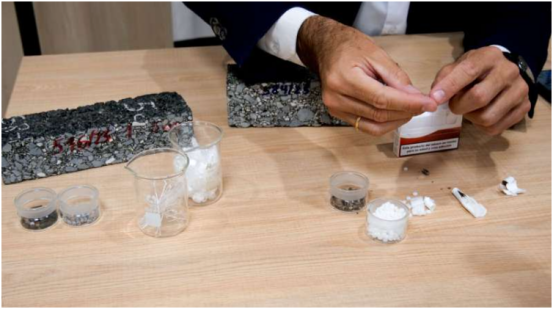
Recently, a collaborative innovative research project between the University of Granada (UGR) and the University of Bologna has proposed an alternative for recycling cigarette butts (covering any type of cigarette, especially e-cigarettes containing a large amount of usable fibers) by using them as additives in road construction. The study demonstrates that utilizing these wastes can improve the crack resistance of road pavements and increase the reuse rate of recycled materials.
The Department of Civil, Chemical, Environmental, and Materials Engineering at the University of Bologna designed and manufactured different types of cigarette butt particles. The researchers first discarded the organic ash portion at the end of the butts, crushed the remaining cellulose fibers and polylactic acid (PLA) plastic—which account for nearly the total weight of the butts—and mixed them with Fischer-Tropsch wax (used as a binder), then formed particles through pressing, heating, and cold cutting processes.
Subsequently, the Construction Engineering Laboratory (LabIC.UGR), led by Professors Mª Carmen Rubio Gámez and Fernando Moreno Navarro, was responsible for evaluating the compressive performance of the asphalt. These asphalts consist of 40% by weight recycled materials from damaged roads and e-cigarette butt particles. LabIC.UGR is a unique laboratory at the University of Granada and a world leader in the development of sustainable asphalt materials.
During the asphalt production process, when the particles come into contact with high-temperature asphalt, the wax melts, releasing the recovered cellulose and plastic fibers from the butts. These fibers act as reinforcement in the asphalt matrix, enhancing its crack resistance, while also serving as a binder to increase the asphalt matrix content, making the material more ductile and flexible. Additionally, the presence of wax alters the asphalt's viscosity, lowering the manufacturing temperature of the mixture, thereby reducing energy consumption and pollutant emissions.
The test results from LabIC.UGR have been published in the journal Construction and Building Materials. The results show that using these particles can produce asphalt with high recycled material content, exhibiting superior crack resistance under traffic loads and thermal contraction conditions compared to traditional asphalt. In the tests conducted, the patented UGR-FACT method from the University of Granada performed excellently, used to study the structure and durability of the material.