
Researchers at Monash University have published their latest findings in the journal Nature Nanotechnology, developing a highly efficient mRNA delivery method that can precisely deliver mRNA drugs to target cells, reducing off-target effects and offering new possibilities for treating diseases such as cancer and genetic disorders. The study, led by the Monash Institute of Pharmaceutical Sciences (MIPS), employs an innovative antibody capture technology to optimize lipid nanoparticle delivery systems.
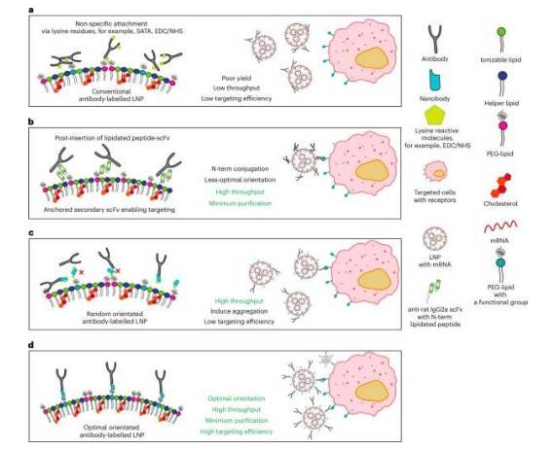
mRNA drugs rely on lipid nanoparticles (LNPs) as carriers to protect mRNA and guide it into specific cells. Traditional methods require chemical modification of antibodies, which may impair binding efficiency. The new technology developed by the MIPS team eliminates the need for antibody modification; by optimizing antibody orientation, it increases the binding efficiency of mRNA to target cells by 8 times. Co-first author and PhD student Moore Zhe Chen stated: "The key to mRNA drugs lies not only in what is delivered but also in where and how it is delivered. Our method significantly improves delivery precision."
The research team validated the effectiveness of this method using advanced imaging techniques. In mouse experiments, mRNA successfully targeted T cells, reducing effects on other immune cells. Associate Professor Angus Johnston from MIPS noted: "Precise delivery is the core challenge for mRNA therapies to move beyond vaccine applications. This technology provides a new tool for developing therapeutic mRNA drugs." Currently, the team is exploring the potential applications of this platform in fields such as cancer and genetic diseases.