
Researchers at Gubkin Russian State University of Oil and Gas have summarized the test results of an asphalt concrete mixture modifier developed by the university. The modifier, codenamed "MSB1", underwent five years of testing on the Shuya-Kovrov road section.
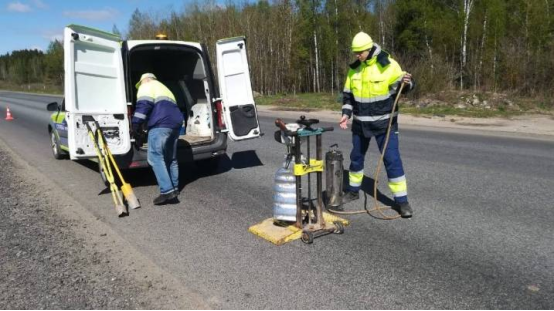
The tests confirmed that MSB1 improves the frost resistance, crack resistance, and rutting resistance of asphalt concrete mixtures, enhances noise absorption capacity, and shortens braking distance due to increased pavement adhesion. The study employed methods such as control cutting, flaw detection, and ground-penetrating radar scanning to assess the pavement quality on the test section.
MSB1 is a composite additive that alters the structure of asphalt concrete, forming a multi-level physical and chemical spatial network. This ensures strong reinforcement of the mixture and reduces the migration of low-molecular compounds from the asphalt. The structural modification reduces asphalt wear and enables resistance to periodic temperature changes typical of the central Russian climate.
The research also showed that using MSB1 can reduce the asphalt content in asphalt concrete mixtures by 0.6–1%, resulting in a 10% cost reduction compared to existing analogs.
Professor Elena Chernysheva from the Department of Oil Refining Technology at Gubkin University stated that pilot production of the modifier is currently underway. Scaling up production requires consumer protection and business interests. Testing of the modifier continues; a second one-kilometer pilot test section was established several years ago on the Ivanovo-Yaroslavl R-79 highway and will be monitored until 2028.
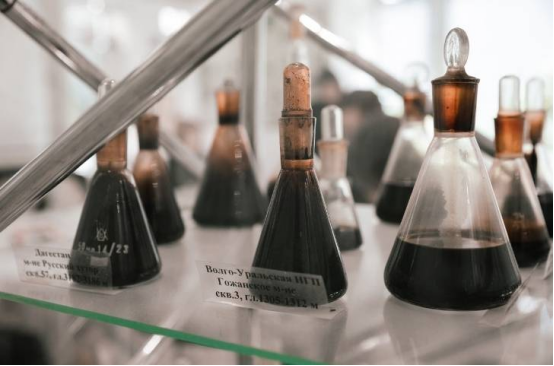
The next phase of research plans to develop optimized additive compositions for different climatic zones.
According to monitoring data from Gubkin University's "Asphalt Materials" Scientific and Educational Center, the petrochemical industry continues to show a trend toward using high-viscosity heavy oils and high-pour-point paraffin oils as raw materials, which reduces the efficiency of tar oxidation processes and asphalt quality. This necessitates the use of polymer compound modifiers to improve the final product quality.
The "Asphalt Materials" Scientific and Educational Center coordinates and evaluates scientific and technological development in the field of asphalt materials. It was established based on Gubkin University's asphalt laboratory, which is Russia's oldest research center dedicated to developing production technologies and improving the quality of asphalt materials. The road test section was organized with support from the Ivanovo Oblast government.