
Researchers from ETH Zurich, in collaboration with University Hospital Zurich, have published innovative findings in the journal Advanced Materials, successfully developing a 3D-printed heart patch called "RCPatch" with tissue repair functionality. This breakthrough technology is expected to replace traditional bovine pericardial patches, offering a superior treatment option for heart disease patients
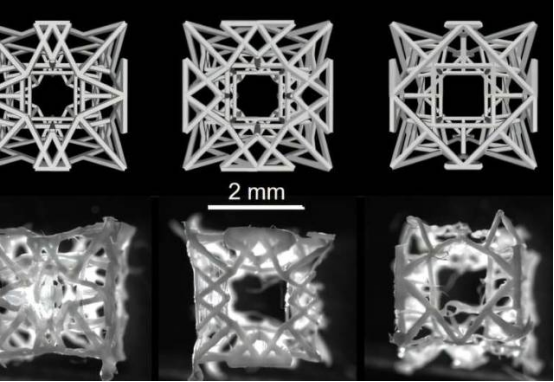
The research team employed an innovative three-layer composite structure: the outermost layer is a fine mesh to ensure tight adhesion with cardiac tissue; the middle layer is a 3D-printed degradable polymer scaffold providing mechanical support; the inner layer is a hydrogel rich in cardiomyocytes to promote tissue regeneration. Project leader Professor Robert Katzschmann stated: "The design philosophy of RCPatch is not only to seal cardiac defects but to achieve functional tissue regeneration—this is the essential difference from traditional patches."
In pig model experiments, the patch demonstrated excellent clinical performance. Lead author Dr. Lewis Jones explained: "Experiments show that RCPatch can withstand the high-pressure environment of the left ventricle while maintaining structural integrity. More crucially, the scaffold material gradually degrades as tissue regenerates, ultimately leaving no foreign body in the patient." The team particularly emphasized the safety advantages of this technology; compared to complications such as calcification and thrombosis potentially caused by traditional patches, RCPatch significantly improves biocompatibility.
Another innovation of this technology is the use of advanced 3D printing processes. Researchers precisely controlled the lattice structure of the scaffold to ensure mechanical strength while providing an ideal three-dimensional microenvironment for cell growth. Professor Katzschmann added: "The hydrogel we use not only supports cell survival but also promotes integration with host tissue, which is crucial for achieving functional repair."
Currently, the research team is preparing longer-term animal experiments, focusing on evaluating the regenerative effects and long-term stability of the patch. Dr. Jones stated: "The next step is to observe the complete degradation process of the patch in vivo and the functional recovery of new tissue." This technology holds promise for future applications in treating various cardiac conditions, including myocardial infarction and congenital heart disease.