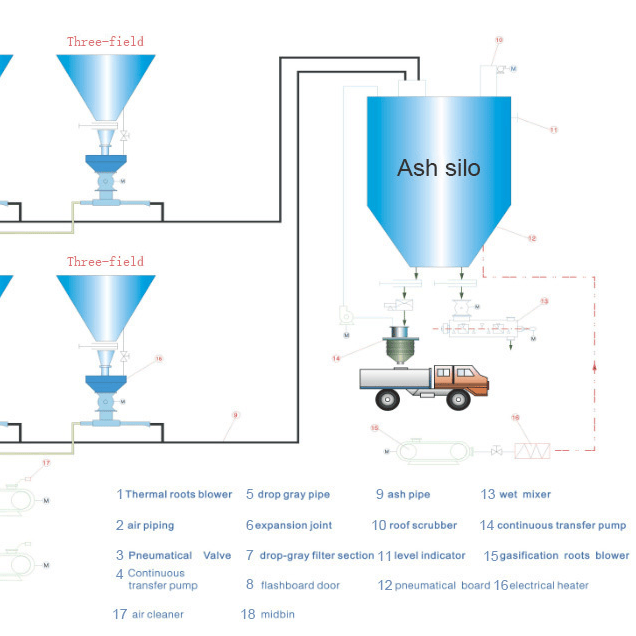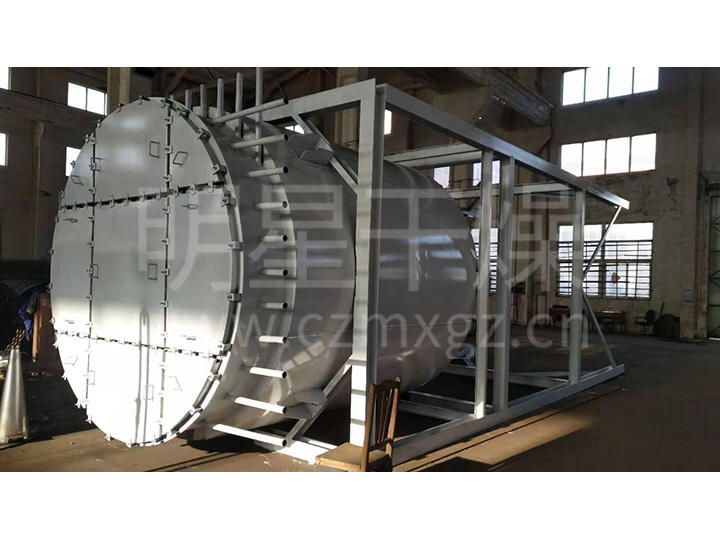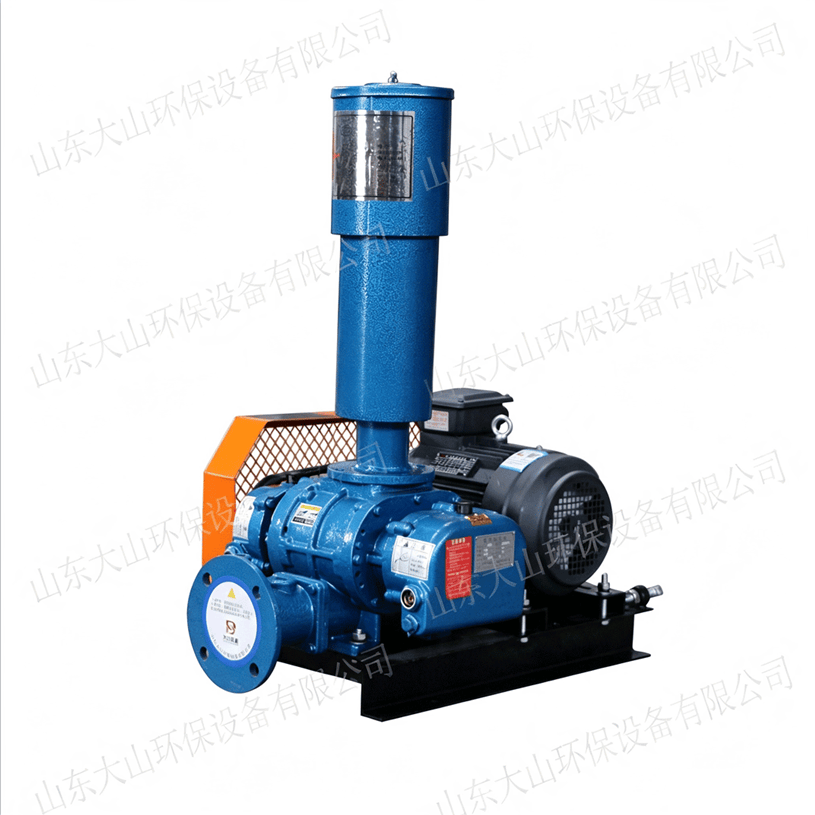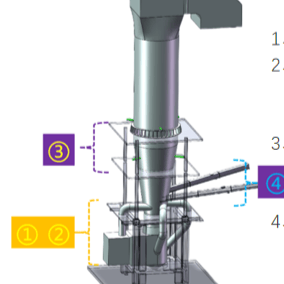


The pressure tank pneumatic conveying system is developed by integrating fluidization and gas-solid two-phase flow technologies. It is a high-concentration pneumatic conveying system that utilizes both the dynamic pressure energy and static pressure energy of compressed air for combined conveying. It adopts an intermittent conveying mode, using the signals from the level gauge and pressure gauge configured on the pressure tank to cyclically switch the feed valve, inlet valve, discharge valve, etc. Each conveying of one tank of fly ash constitutes one working cycle, and each working cycle is divided into four stages: the feeding stage, the pressurization and fluidization stage, the conveying stage, and the purging stage.
The most critical technology of the pressure tank is that the material must be fully fluidized inside the tank, and it should be conveyed while being fluidized, transforming suspension-type pneumatic conveying into fluidized pneumatic conveying.
The system consists of the following components
Pump shell, feed valve, discharge valve, etc., and is equipped with a level gauge, pressure gauge, solenoid valve box, etc.
Applications
Conveying distance ≤ 1000m; conveying capacity ≤ 1000t/h; suitable for medium and long-distance conveying in power plant ash removal systems, building materials, metallurgy, chemical industry, and other industries for various powder material conveying.
Key Components

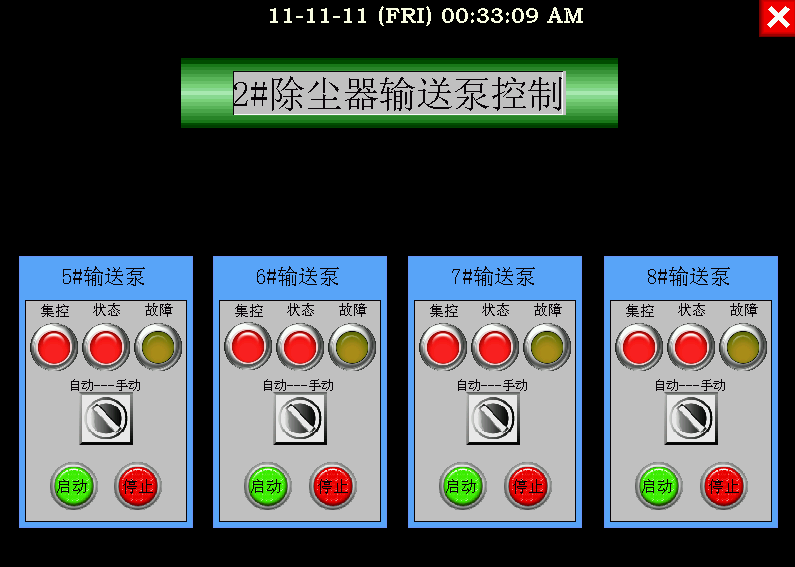
Pneumatic conveying control system

Pressure tank

Fluidizing plate

Inlet and discharge valves