

Process Principle Introduction
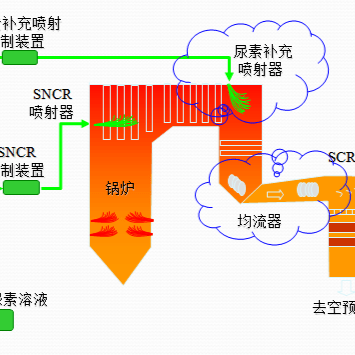
In the absence of a catalyst, a reducing agent is used to reduce nitrogen oxides in flue gas into harmless nitrogen and water. "Selective Non-Catalytic Reduction" (SNCR) is a denitrification method that does not require a catalyst. To achieve strong chemical reactivity, SNCR technology requires a high furnace temperature (900-1150°C) and uses ammonia or urea-based reducing agents to selectively reduce NOx in the flue gas.
Generally, it is difficult for the reducing agent to mix uniformly in the furnace or flue duct, so the denitrification efficiency of SNCR is typically below 50%, whereas SCR, which requires a catalyst, can achieve denitrification efficiencies of over 90%. Due to its low investment cost and ease of retrofitting, SNCR denitrification technology is well suited for combined application with other denitrification technologies, and has therefore been widely adopted in coal-fired boilers, especially in denitrification retrofits of older plants.
Chemical Principle
Nitrogen oxides in boiler combustion flue gas include NO and NO2, with NO accounting for over 90% of the NOx in the flue gas. Therefore, the denitrification process primarily focuses on removing NO.
The chemical reaction equations are:
CO(NH2)2→2NH2+CO
NH2+NO→N2+H2O
CO+NO→N2 +CO2
The overall reaction equation is:
NO+CO(NH2)2+1/2O2→2N2+CO2+2H2O
4NH3+5O2— 4NO+ 6H2O
At an appropriate furnace temperature, NOx reacts with the reducing agent (urea) to produce harmless nitrogen, carbon dioxide, and water (see Equation 1.1). If the temperature is too high, the urea itself may be oxidized into NOx, which instead increases NOx emissions (see Equation 1.2).
Main Process System Equipment and Functions
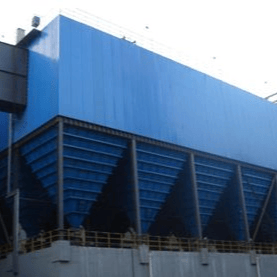
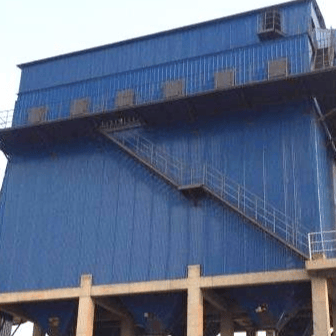
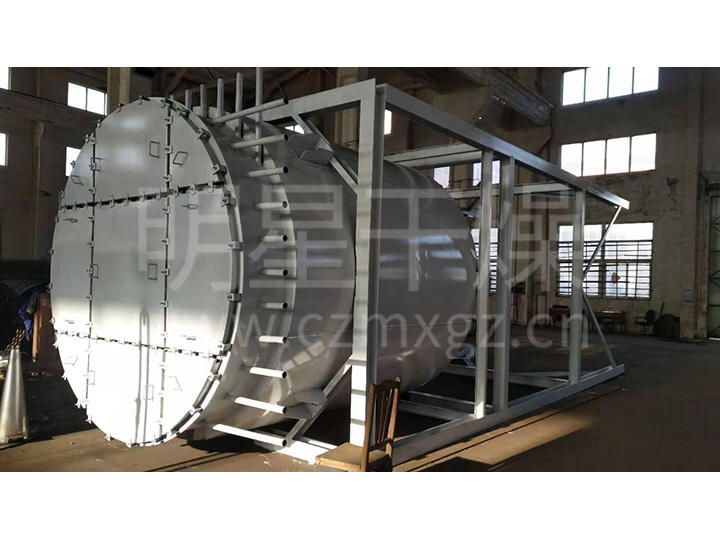
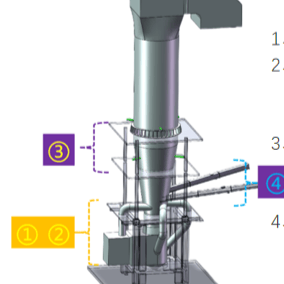
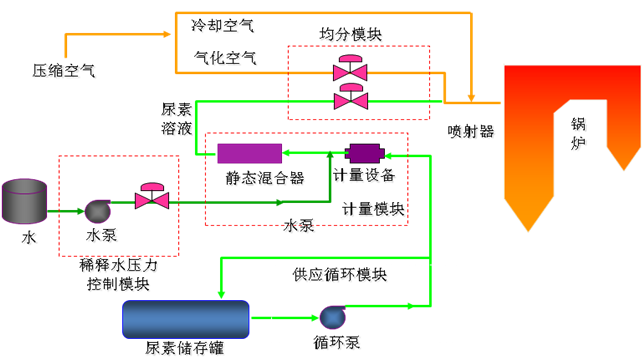
1. Reducing Agent Storage and Preparation System: The total storage capacity of the storage system is designed based on the total consumption over 5 days under BMCR conditions of the boiler SNCR unit;
2. Metering, Distribution, and Conveying System: The metering and distribution system is equipped with filters to prevent equipment clogging;
3. Injection System: The reducing agent is sprayed into the furnace through injection lances at the appropriate temperature window;
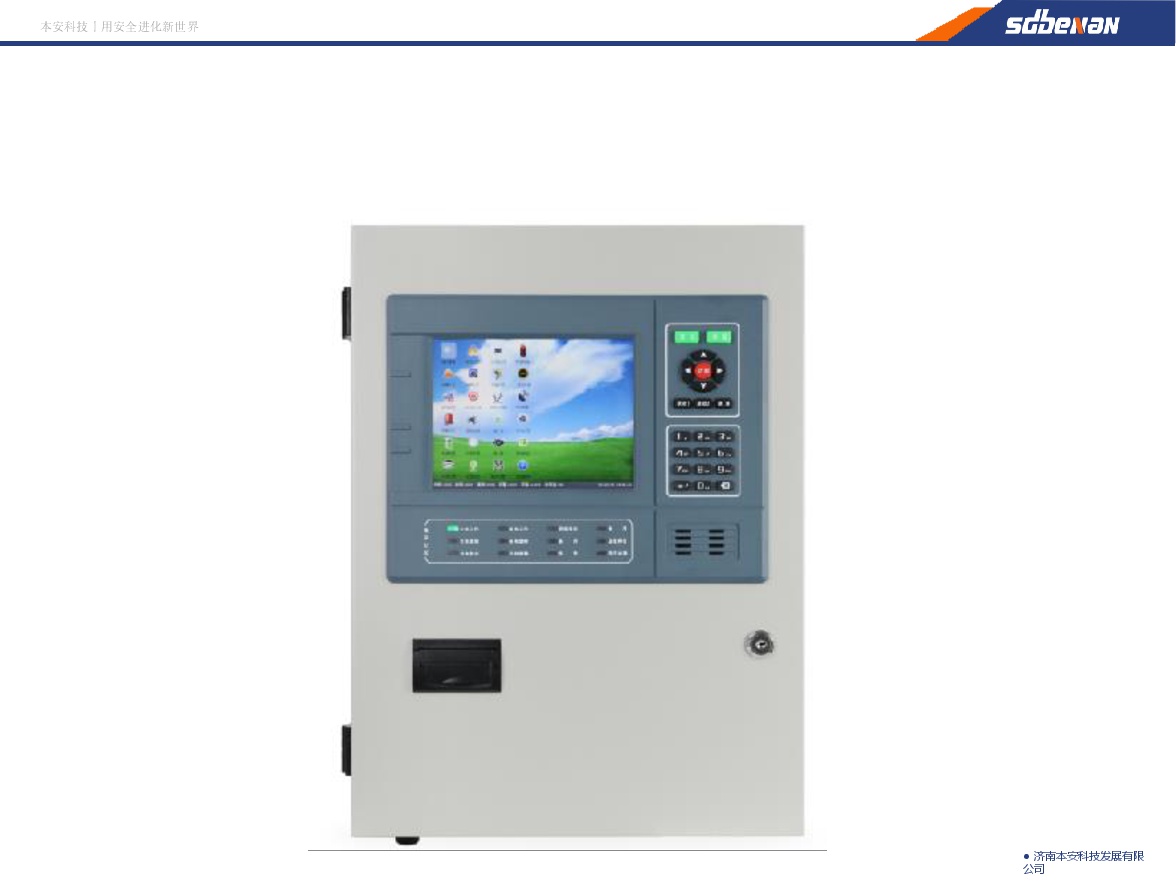
4. Electrical Control System: Equipped with a complete and independent instrumentation and control system.