How Ge Vernova Plans To Deploy Small Nuclear Reactors Across The Developed World
Wedoany.com Report-Dec 02, GE Vernova is aiming to deploy small nuclear reactors across the developed world over the next decade, staking out a leadership position in a budding technology that could play a central role in meeting surging electricity demand and reducing carbon dioxide emissions.
The company’s small modular reactor, or SMR, is designed to reduce the cost of building new nuclear plants, said Nicole Holmes, chief commercial officer at GE Vernova’s nuclear unit GE Hitachi.
The U.S. government wants to triple nuclear power by 2050 to shore up an electric grid that is under growing pressure from surging power demand. But large nuclear projects, in the U.S. at least, are notoriously plagued by multi-billion dollar budgets, cost overruns, delayed construction timelines and, sometimes, cancellations.
“Affordability has been the real challenge for nuclear through the many years,” Holmes told CNBC. “We’re beginning to crack that at this point.”
Simpler design
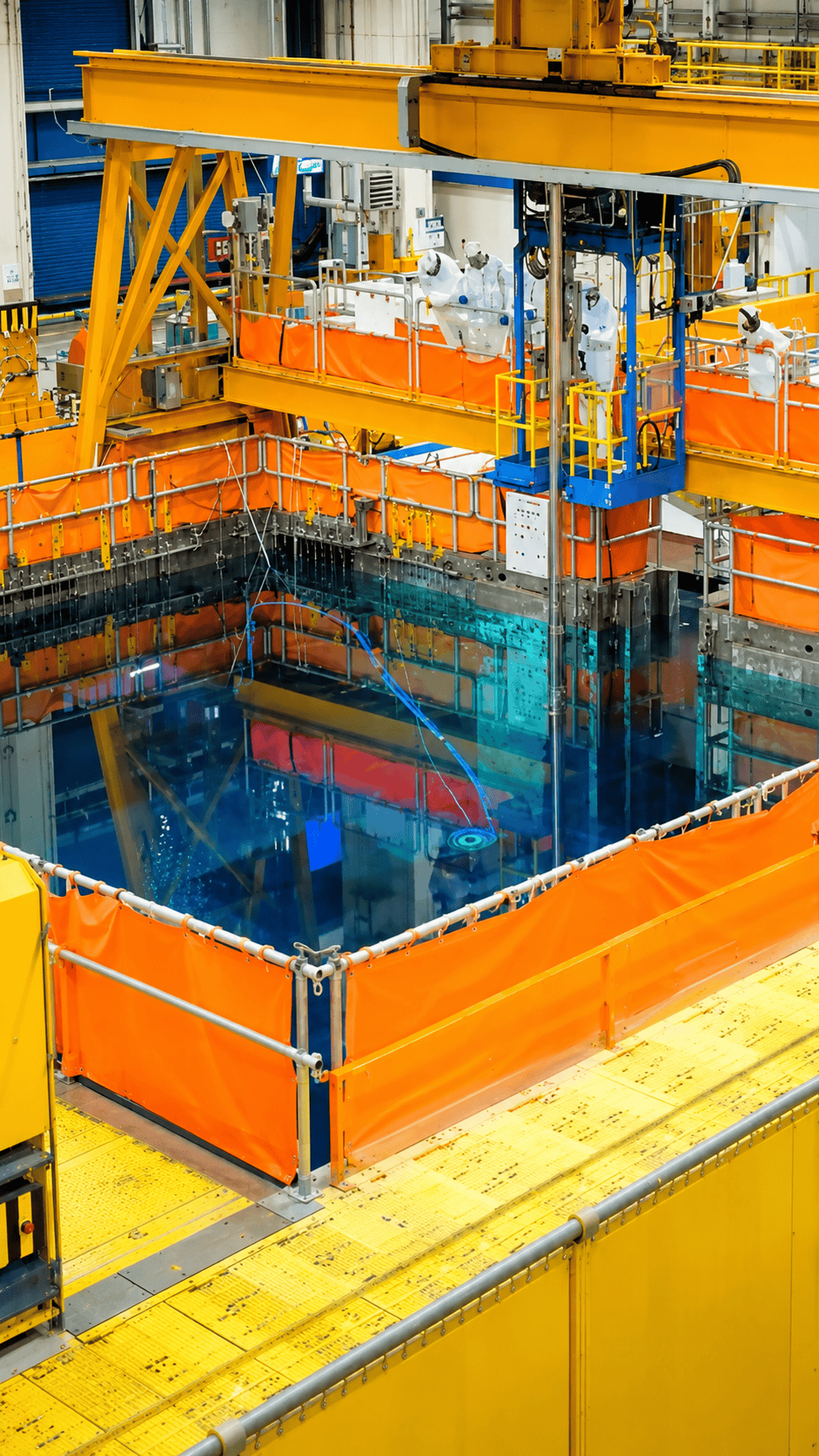
GE Vernova’s SMR, the BWRX-300, has a simpler design with fewer components and less concrete and steel compared to a larger nuclear plant, Holmes said. The reactor might cost somewhere in the range of $2 billion to $4 billion to build compared to $10 billion to $15 billion for a large nuclear plant, Holmes said.
The plant generates 300 megawatts of electricity, enough to power more than 200,000 U.S. households. The average reactor in the U.S. fleet has about 1,000 megawatts of power, enough for more than 700,000 homes. The smaller size offers more flexibility in terms of location, she said.
“You could put four of these on a site and get the same output as you would from a single large reactor,” the executive said. “You can have one started, deploying energy, making money while you build out others. It gives you a lot of optionality,” she said.
GE Vernova is targeting more than $2 billion in annual revenue from its small reactor business by the mid-2030s. That compares with total company revenue of $33.2 billion last year. GE Vernova sees demand for as many as 57 small reactors in total across its target markets in the U.S., Canada, the United Kingdom and Europe by 2035.
To hit that revenue target, GE Vernova would need to ship between three to four reactors per year, according to an October research note from Bank of America. The company could capture a 33% market share in its target markets, according to the bank.
“We’re underway building a strong order book in those target markets,” Holmes said. “A lot of the buyers in these early stages will be utilities.”
GE Vernova is also talking to major tech companies, which Holmes declined to name, that are showing a growing interest in nuclear power to meet electricity demand from their artificial intelligence data centers.
“We are in conversations with a lot of the big tech companies,” Holmes said. “I see a ton of interest from them in in new nuclear, and what it could do to meet some of their energy demands.”
North America deployments
GE Vernova signed a collaboration agreement in March 2023 with Ontario Power Generation, Tennessee Valley Authority and Synthos Green Energy in Poland to invest $500 million to kick start the BWRX-300 and launch the reactor at a commercial scale.
The goal is to create a standardized reactor design that can be deployed across GE Vernova’s target markets rather than building different nuclear plants at each site, Holmes said.
“We’re working on a plant that can be deployed in many, many places across many, many regulatory regimes and still be the same fundamental plant,” Holmes said. “They’re helping us with those requirements to make it the same,” she said of the collaboration partners.
GE Vernova is also seeing growing interest in expanding capacity at existing nuclear plants by adding small modular reactors, said Chief Financial Officer Kenneth Parks on the company’s Oct. 23 earnings call.
GE Vernova won the first commercial contract in North America to deploy a small modular reactor for Ontario Power in January 2023. Holmes described the project as the first commercial deployment of an SMR not only in North America, but also in the developed world.
The reactor is scheduled to come online in 2029 in Darlington on Lake Ontario about 60 miles east of Toronto. Ontario Power eventually plans to deploy three more BWRX-300 reactors at Darlington.
Related Products

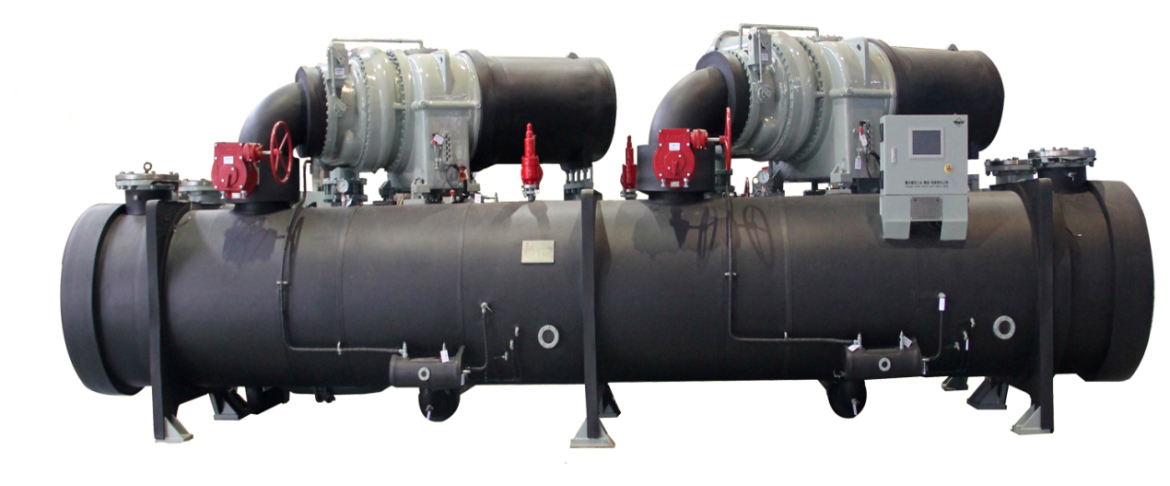
Centrifugal chiller for third generation nuclear power AP/CAP series
Chongqing General Industry (Group) Co., Ltd.
Jin Haiyan® Nuclear Island Special Glass Wool (JHY-NW)
BBMG ENERGY SAVING MATERIAL & TECHNOLOGY (DACHANG)CO., LTD.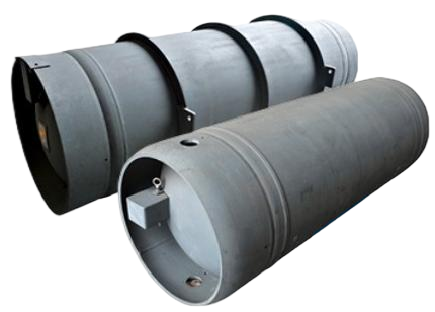

CAP1400 main feedwater flow nozzle flowmeter.
Jiangsu Hongda Instrument Technology Co., LTD.