Wedonay.com Report on Mar 7th, At the Mobile World Congress (MWC) in Barcelona, Spain, companies including Cisco pointed out that the current focus of investment in artificial intelligence (AI) infrastructure is on fiber-based data center interconnection, rather than mobile networks. At a roundtable on March 2nd, Jeetu Patel, President and Chief Product Officer at Cisco, stated that the rise of AI agents will drive a surge in network demand, requiring large-scale infrastructure support.
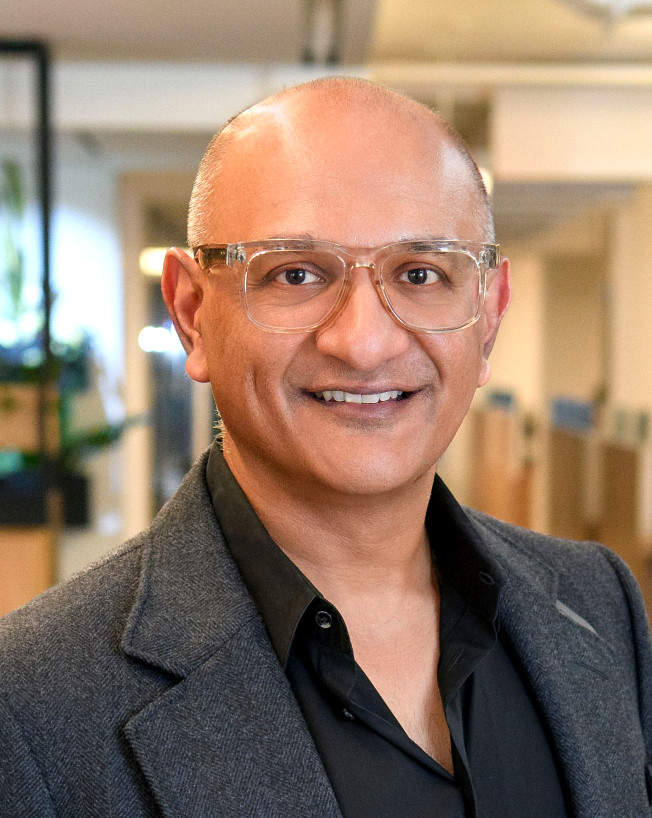
Jeetu Patel said: "If you think about orders of magnitude: for every human, you might have 10 to 100 to 1,000 agents—that means close to a trillion agents, working around the clock, which is the equivalent of new network capacity for three trillion humans." He added that Cisco is comprehensively deploying its AI network stack, from hyperscale data center construction to the enterprise edge.
Currently, AI network investment is primarily focused on east-west traffic for training workloads within hyperscale data centers, while north-south metro and mobile systems are seen as mid-term focal points. Companies like Cisco, Ciena, and Nokia are benefiting from the growth in optical transport systems, but Cisco is already preparing enterprises for future demands. As distributed AI agents proliferate, inference workloads will become dominant, driving investment in metro fiber, mobile access, and the enterprise edge to achieve lower-latency AI services.
Jeetu Patel commented: "The majority of the spend is in all the AI clusters; 95% of GPUs are going to massive hyperscalers to train models or build infrastructure for model builders." He predicted that within three to five years, inference growth will far outpace training growth, requiring telecom operators to accelerate network upgrades. Cisco has launched the full-stack Unified Edge platform, designed to provide enterprises with hyperscale-level performance, covering AI infrastructure needs from the data center to the edge.