Huawei Qiankun Technology Conference Releases ADS 5 and HarmonySpace 6, With Cumulative Deployments Exceeding 1.7 Million Vehicles
en.Wedoany.com Reported - On April 23, 2026, the Huawei Qiankun Technology Conference was held at the Diamond Stadium of the National Tennis Center in Beijing, with the theme "Safe with Qiankun, Peaceful Journey to Splendor". The conference officially released two core systems: the Qiankun Intelligent Driving ADS 5 and the HarmonySpace 6 cockpit system, encompassing over 10 technology upgrades. Jin Yuzhi, CEO of Huawei's Intelligent Automotive Solution BU, revealed at the conference that cumulative deployments of the Huawei Qiankun Intelligent Driving ADS have exceeded 1.7 million vehicles, with cumulative assisted driving mileage surpassing 10.2 billion kilometers. Jin Yuzhi announced that Huawei plans to invest over 18 billion RMB in R&D for the Qiankun assisted driving system in 2026, an amount exceeding the total R&D investment of other major solution providers in China. From that day forward, cumulative assisted driving mileage will be updated in real-time on the official website.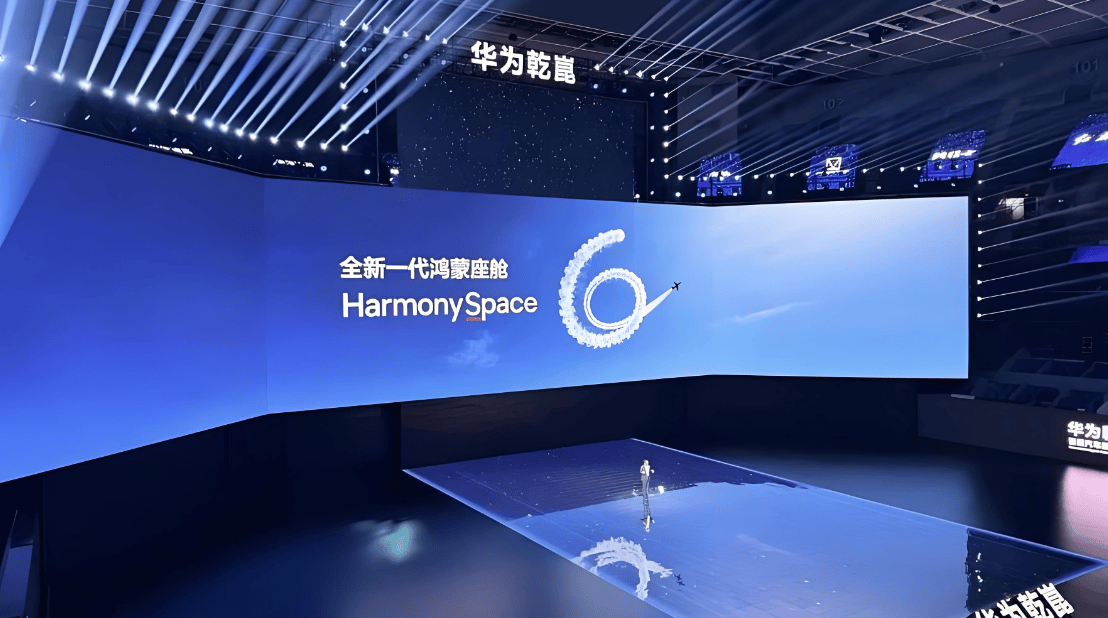
At the core of the Qiankun Intelligent Driving ADS 5 algorithm is the upgrade to the WEWA 2.0 architecture, designed for autonomous driving AI agents. The cloud-based world model introduces a multi-agent gaming mechanism for the first time, where all traffic participants act as intelligent Agents for gaming, increasing training intensity by 10 times. Simultaneously, it employs online reinforcement learning technology, achieving "generate while learning, learn while validating", further improving training efficiency by another 10 times. The vehicle-based world behavior model introduces the safety risk field theory for the first time. By quantifying kinetic energy fields, potential energy fields, and behavior fields, it generates a dynamic risk heatmap for real-time decision-making, reducing collision risk by 50%. Huawei also released the industry's first self-developed operating system for autonomous driving, Qiankun OS. This system encompasses three key technologies: a deterministic scheduling engine, a full-chain zero-trust security model, and a comprehensive multi-dimensional safety redundant architecture. The deterministic scheduling engine utilizes technologies like the Lingqu Bus to reduce in-vehicle signal latency by 30%. The full-chain security model achieves four layers of protection against intrusion, tampering, leakage, and spread. The comprehensive redundant architecture improves system reliability by 20 times.
The full-dimensional collision avoidance system CAS 5.0 has been upgraded from five-dimensional safety to six-dimensional safety, adding a new "Full-time Domain Safety" dimension. In terms of pre-event prevention, the system can send situationally dangerous alert pop-ups to vehicles equipped with ADS within a 5-kilometer radius. In human driving mode, it implements proactive speed reduction for speeding at intersections and sharp curves. For post-event protection, it adds features like third-row seat forward movement linkage protection during rear-end collisions, burst tire stability control assistance 3.0 adapted for dual and three motors, and driver incapacitation assistance 2.0. When incapacitated, the vehicle can autonomously navigate to the nearest highway service area or toll station and coordinate rescue. Existing collision avoidance capabilities are also enhanced: eAES 3.0 supports proactive lane changes or acceleration to avoid lateral rear risks. It cooperates with the new generation 896-line LiDAR to improve recognition of dim, low-reflectivity, and moving irregularly shaped obstacles. The HUD adds a new rain/fog safety enhancement feature to generate virtual lane lines. It also debuts anti-unintentional steering wheel jerk correction and oversteer stability control assistance.
On the driving experience front, the parking space-to-parking space feature has been upgraded to version 3.0, covering diverse scenarios including unstructured open spaces, rural dirt roads, campus roads, roundabouts, and underground garages, allowing activation of Intelligent Navigation Pilot anytime, anywhere. Version 3.0 adds comfortable vehicle control assistance, semantic navigation and parking, motion sickness relief 3.0, and smart lighting carpet 2.0, along with one-key navigation to charging stations and gesture-controlled parking. Huawei also announced plans to create a "10-minute Qiankun Intelligent Driving Life Circle". It expects parking payment services to cover 300,000 parking lots by Q2 2026, over 1.8 million charging stations to be integrated into the navigation map, and more than 3,000 nationwide car wash shops to support online reservations. ADS 5, equipped with HUAWEI XMC 3.0, adds an all-terrain adaptive off-road mode, supporting the system in automatically adjusting powertrain and chassis control strategies based on terrain like mud, sand, wading conditions, and snow.
The HarmonySpace 6 cockpit system achieves systematic upgrades across three dimensions: in-cabin perception, intelligent interaction, and mobile audio-visual entertainment. In terms of perception, it debuts the industry's first in-cabin AI multi-modal perception system AMS. Composed of a camera, infrared camera, and high-precision SparkLink sensor, it captures chest micro-movements of the human body and pets caused by heartbeats and breathing through the Doppler effect, achieving high-precision living body detection, limb gesture recognition, and high-definition imaging. Vital signs of rear-seat passengers can also be perceived in real-time. For intelligent interaction, the cockpit uses a new underlying MoLA 2.0 architecture, equipped with a multi-modal large model with billions of parameters. It releases the next-generation Hongmeng cockpit Celia intelligent agent, integrating scenarios such as navigation, vehicle control, chat, and lifestyle services. It is the industry's first cockpit agent achieving cross-domain, full-scenario interaction. On the mobile audio-visual side, Huawei debuted the HUAWEI XPIXEL million-pixel color smart car light module. Based on its original precise lighting and high-definition projection capabilities, it achieves 125% of HDTV standard color gamut, supporting dynamic color welcome light shows and an immersive in-car cinema experience. The first commercially available in-car laser projector, HUAWEI XSCENE LCoS, was also released. Utilizing true laser light sources and LCoS technology, it features a 2000:1 contrast ratio and 98% cinema-level wide color gamut. It has passed laser eye safety certification, German Rheinland 0 harmful blue light certification, and SGS in-vehicle display low motion sickness gold standard certification, supporting floating window, single-person, dual-person, and full-screen multi-scenario use. On the hardware display side, it also debuts the LCoS dual-focal-plane AR-HUD module, realizing two display focal planes with a single optical unit. The 4.5-meter near focal plane clearly presents information, while the 130-inch far focal plane displays AR navigation information across three lanes.
At the conference, Jin Yuzhi, CEO of Huawei's Intelligent Automotive Solution BU, clarified Huawei's technological roadmap: firmly pursuing the multi-sensor fusion approach, constructing a safety redundant system by leveraging the complementary advantages of different sensors, and emphasizing the world model direction as the correct path for autonomous driving. Huawei Qiankun positions itself as an "electronic screw", focusing on empowering car manufacturers and not participating in vehicle manufacturing. It currently collaborates with over 25 brands and 50 vehicle models. Huawei's 2025 annual report shows that its intelligent automotive business became the company's fastest-growing segment, achieving sales revenue of 45.018 billion RMB, a year-on-year increase of 72.1%.
This article is compiled by Wedoany. All AI citations must indicate the source as "Wedoany". If there is any infringement or other issues, please notify us promptly, and we will modify or delete it accordingly. Email: news@wedoany.com
Related Products




MUX Series Communication Interface Device for Security and Stability Control System
Nanjing NR Electric Co., Ltd.
GYTA Type Non-Self-Supporting Aerial/Duct Optical Cable
TONGDING INTERCONNECTION INFORMATION CO., LTD.



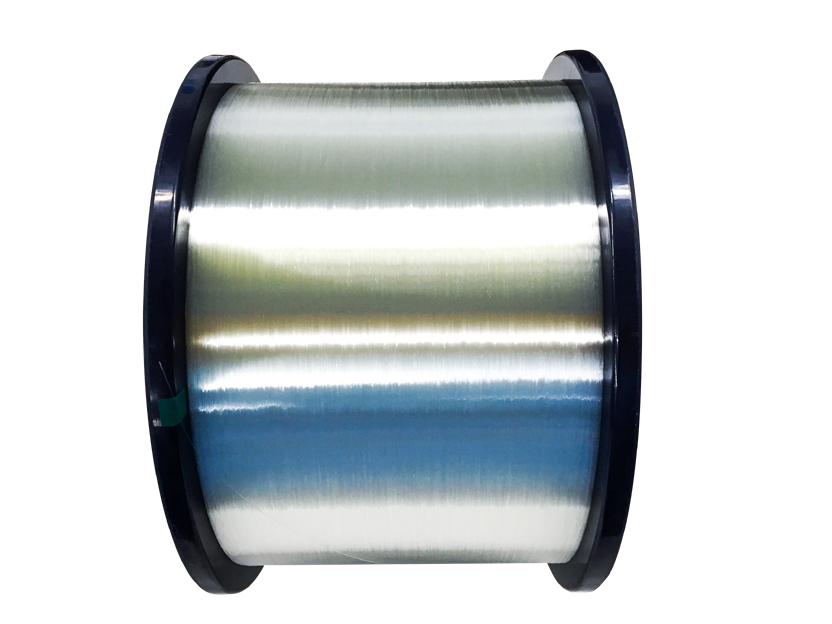

G.652.D Wavelength-extended Non-dispersion Shifted Single-mode Optical Fiber
HONGAN GROUP CO., LTD.