India Launches Brahmaputra River Lighthouse Project to Enhance Inland Waterway Navigation Capabilities
Wedoany.com Report on Mar 10th, India has launched the Brahmaputra River Lighthouse Project, aiming to strengthen inland waterway infrastructure. This marks the country's first installation of lighthouse facilities on an inland waterway, designed to enhance navigation safety and support river transport development.
The foundation stone laying ceremony for four riverine lighthouses was presided over by Sarbananda Sonowal along the Brahmaputra River, a stretch that is part of National Waterway 2 and serves as a critical route for cargo and passenger movement in northeastern India. The ceremony, held at the Raichur Ghat, was organized by the Directorate General of Lighthouses and Lightships (DGLL) under the Ministry of Ports, Shipping and Waterways, and the Inland Waterways Authority of India (IWAI).
The four lighthouse sites are located at Bogibeel in Dibrugarh district, Pandu in Kamrup (Metro) district, Silghat in Nagaon district, and Biswanath Ghat in Biswanath district. Three of these sites are on the river's southern bank, while the Biswanath Ghat site serves the northern bank. The total estimated project cost is approximately ₹84 crore.
Each lighthouse, standing about 20 meters tall, will be equipped with modern navigational lighting systems capable of providing a geographic range of 14 nautical miles and a luminous range of 8-10 nautical miles. These structures will operate entirely on solar power, aligning with sustainable infrastructure goals. Beyond their navigational function, the sites will feature tourism amenities including museums, amphitheaters, cafeterias, children's play areas, souvenir shops, and landscaped public spaces.
The project's implementation addresses the growing demand for cargo and passenger movement along the Brahmaputra waterway. In the 2024-25 fiscal year, cargo movement on National Waterway 2 increased by approximately 53%, highlighting the corridor's significance in regional logistics. The waterway plays a role in transporting commodities like tea, coal, and fertilizers, while also supporting tourism and passenger ferry services.
The installation of lighthouse infrastructure and modern navigational aids is expected to make vessel navigation safer and more reliable, including enabling round-the-clock navigation along the river stretch. These facilities will also integrate weather monitoring sensors and navigational support systems to enhance operational safety and efficiency.
The riverine lighthouse initiative stems from efforts to explore the feasibility of such infrastructure in the northeastern region. The IWAI and DGLL signed a Memorandum of Understanding (MoU) in April 2025 covering these four sites. Subsequently, following technical approvals, the project sites were transferred through Right of Use agreements in June 2025. Construction of the lighthouses is expected to be completed within 24 months from the award of contracts.
National Waterway 2, stretching from Dhubri to Sadiya, has a navigable length of about 891 kilometers along the Brahmaputra River, making it the country's longest navigable inland waterway corridor. The proposed riverine lighthouses represent a significant step for India towards equipping its inland waterways with modern navigational infrastructure similar to that used along coastal shipping routes.
Related Products
![IVECO Cash-in-Transit [DMT5048XYCL3-AM] - Chongqing Dima Industry Co., Ltd](https://img.wedoany.com/2026/0911/20260911030157582.png)

GSR6-27.5kV SF6 Free Gas-insulated Metal-enclosed Switchgear
Zhejiang Juhonkia Intelligent Electric Co., Ltd.
Industrial and Commercial Point-Type Gas Detector
Jinan Benan Technology Development Co., Ltd.
CLW5180TXSD6 Dongfeng Tianjin Washing and Sweeping Truck
ChengLi Special Automobile Co., Ltd.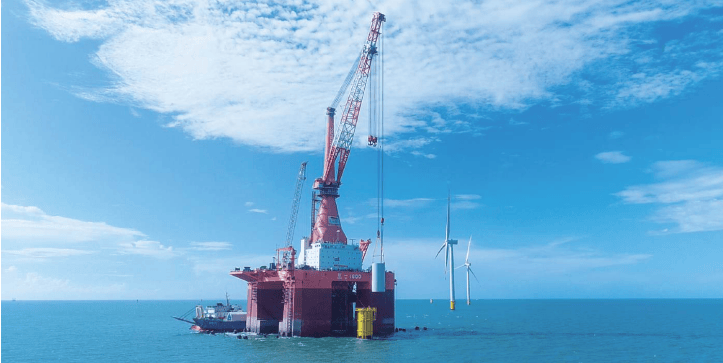
"Shunyi 1600" Deep-submerging Bottom-sitting Multi-functional Wind Power Engineering Vessel
Zhengli Offshore Engineering Co., Ltd.


ERW Welded Pipe (Black Pipe and Hot-dip Galvanized Steel Pipe)
Handan Zhengda Steel Pipe Co., Ltd.