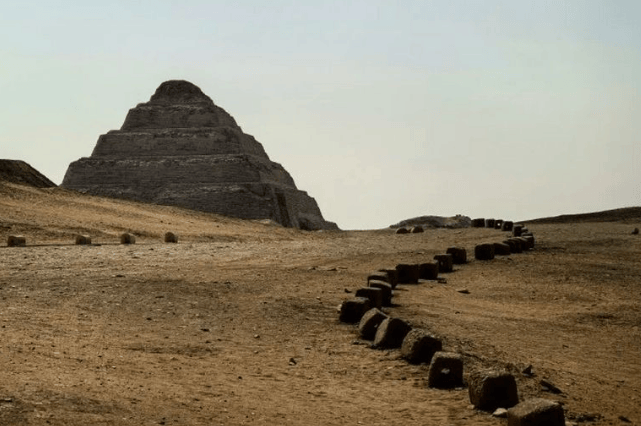
Wedoany.com Report on Mar 11th, Significant progress has recently been made at Egypt's Saqqara site, the royal necropolis of ancient Memphis, through the Sino-Egyptian Joint Archaeological Project. Since 2018, archaeologists have discovered a large number of cat mummies, statues, and vividly colored anthropoid wooden coffins here, leading to the project's inclusion in the world's top ten archaeological discoveries of 2020. Consequently, the Sino-Egyptian Digital Research Project for Newly Unearthed Artifacts at Saqqara was launched, focusing on cultural heritage preservation.
The project team conducted digital scanning, photography, and research on over a thousand anthropoid wooden coffins unearthed at the site of the Temple of Bastet in the northern area of Saqqara. They also assisted in the restoration of artifacts such as the statue of Ramesses II at the Karnak Temple. SICAN Technology, as the technical support provider, was deeply involved in this 3D scanning work.
At the Saqqara archaeological site, digital technology has injected new vitality into cultural relic protection. Through extreme high-definition imaging and micro-trace scanning, researchers can accurately capture the microscopic characteristics of artifacts, providing new perspectives for the study of ancient Egyptian civilization. SICAN Technology's MT professional-grade 3D scanner, with its non-contact, high-resolution features, played a key role in the digitization process.
Taking the anthropoid painted wooden coffin as an example, the MT 3D scanner can completely capture the painted textures and surface structures, as well as the subtle layers of carved patterns, establishing a high-precision digital archive. Faced with complex painted decorations and on-site environmental conditions, this equipment efficiently completed data collection thanks to its environmental adaptability.
The MT scanner boasts an accuracy of 0.04 mm and a resolution of 0.05 mm, enabling comprehensive acquisition of geometric data and restoration of color textures, laying the foundation for subsequent analysis and conservation. Its innovative multi-light source technology employs markerless scanning, and its Class I laser light source avoids photochemical damage, ensuring the safety of fragile artifacts.
Utilizing SICAN Technology's MT 3D scanner, the high-precision 3D models created by the team will be integrated into global databases, supporting interdisciplinary research in archaeology, history, and other fields. This project is not only a technological practice but also promotes dialogue between Chinese and Egyptian civilizations, showcasing the complementary strengths of the two countries in the field of heritage conservation.
The implementation of the Sino-Egyptian Joint Archaeological Project demonstrates the role of technology in the transmission of civilization. 3D visual digitization technology provides data support for academic research and opens new avenues for the long-term preservation and display of cultural relics, allowing cultural heritage to transcend temporal and spatial boundaries.