OFC Conference in Los Angeles: AI Drives Data Center Architecture Scaling, Scaling Out, and Cross-Domain Scaling
en.Wedoany.com Report on Mar 24th, At the OFC conference held last week in Los Angeles, USA, the profound impact of artificial intelligence on data center architecture took center stage. Kannan Raj, an AI infrastructure architect at Oracle, stated during a panel discussion: "Back when the IEEE specifications were being formed, they required a link error rate of 2.4e-4. Today, that standard is difficult to meet for a healthy architecture." He emphasized the challenges faced by current architectures.
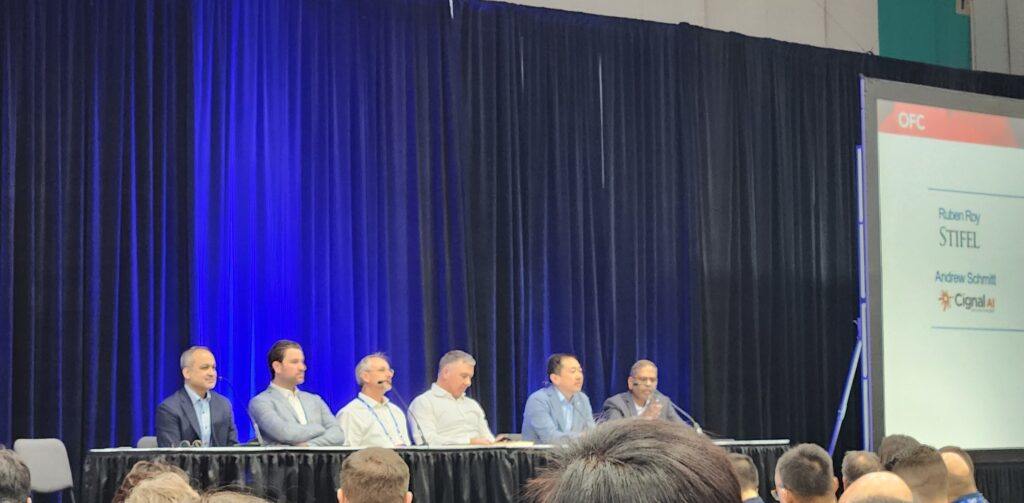
Raj pointed out: "We are dealing with millions of links and components, what I call the tyranny of large numbers. Under massive operations, the failure rate increases, and the mean time between failures shortens." AI workloads demand that data centers scale up, scale out, and scale across domains to avoid single points of failure causing training interruptions and resource wastage, especially when model parameters reach tens of billions, the impact is significant.
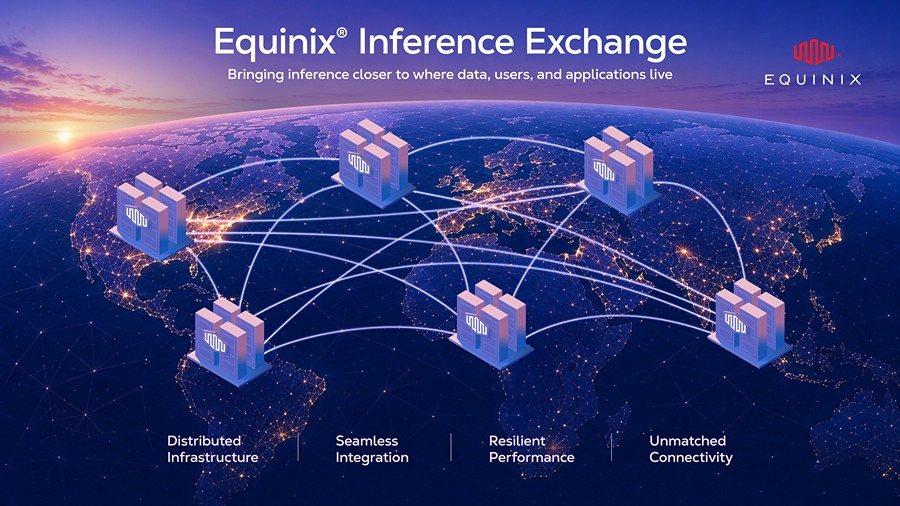
Hyperscale companies and service providers focus on three types of connectivity: Scale-up connects GPUs within the same cluster, providing low latency; Scale-out achieves parallelism across multiple racks, enhancing performance but relying on the network; Cross-domain scaling connects data centers across different locations, forming 'AI factories'. Raj explained: "Scale-up is localized low-latency connectivity, scale-out within racks is suitable for inference, and cross-domain scaling can span thousands of kilometers."
To support these architectures, optical solutions such as Linear Pluggable Optics, Coherent Optics, and Co-Packaged Optics become crucial. High-capacity optical transmission technologies like 400G and 800G provide efficient long-distance connections. Raj mentioned: "Scale-up is transitioning from copper to optics, scale-out uses DR or FR links, and cross-domain scaling involves FR, coherent, or ZR optics." He emphasized that architectural boundaries are blurring, and resilience has become an important factor, with multi-plane network architectures supporting large-scale AI clusters.
The evolution of data center architecture is driven by AI demands, with optical technologies and interconnect innovations pushing networks towards greater efficiency and resilience to adapt to future workloads.
Related Products


G.652.D Wavelength-extended Non-dispersion Shifted Single-mode Optical Fiber
HONGAN GROUP CO., LTD.
Automatic Aiming Laser Remote Obstacle Removal Robot
Pinggao Group Weihai High-Voltage Apparatus Co., Ltd.

Comprehensive Mining Automation Control System
Beijing Tianma Intelligent Control Technology Co., Ltd.

Industrial and Commercial Point-Type Gas Detector
Jinan Benan Technology Development Co., Ltd.

20 Inch 1600*900 Full HD 60Hz TFT LED Monitor with VGA and DP Interfaces for Desktop Computers-Business Use
Guangzhou Zanying Optoelectronics Technology Co., Ltd.
Multi-function Marine Monitoring Low-altitude Detection Radar Sea-air Boundary Ocean Dynamic Environment Measurement
Chengdu Dixin Technology Co., Ltd.