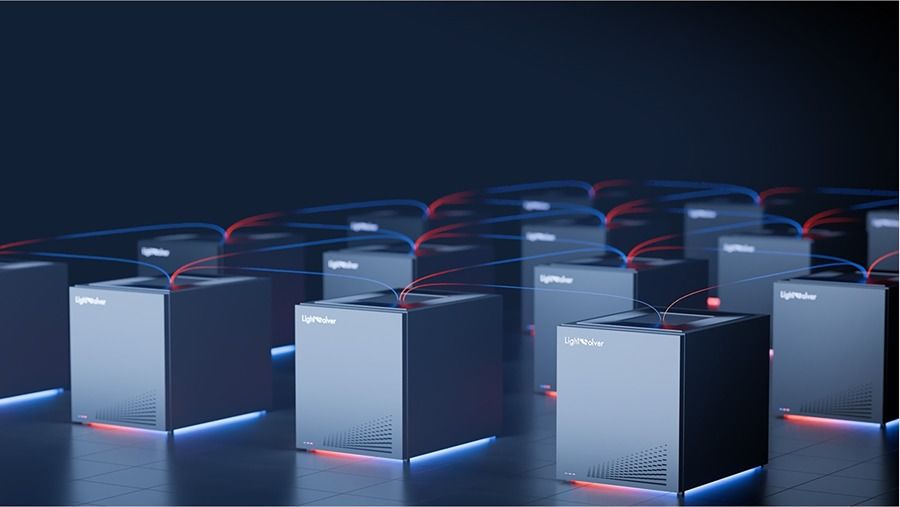
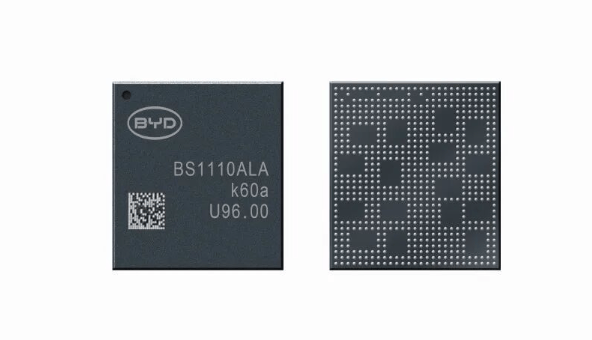
Apple, SK Hynix, TSMC, and Other Global Semiconductor Companies Advance AI and Supply Chain Layout in 2026
en.Wedoany.com Report on Mar 30th, In 2026, the global semiconductor industry is undergoing a structural transformation, driven collectively by artificial intelligence, advanced manufacturing, and geopolitical factors. The industry focus is shifting from transistor density enhancement to system-level innovation, cross-border collaboration, and supply chain resilience, reshaping technological priorities and the competitive landscape.
Artificial intelligence has become the core of semiconductor innovation, driving companies to develop specialized architectures such as GPUs and Tensor Processing Units, optimizing parallel processing to achieve efficient computing in generative AI and advanced analytics. This is prompting a shift in the value chain towards high-performance AI chips, fueling demand growth in data centers and high-performance computing. Simultaneously, chiplet architecture is emerging as a scalable solution, improving yield, reducing costs through modular integration, and allowing the combination of components from different process nodes, enhancing customization for applications like AI and automotive electronics.
Advanced packaging technologies like 2.5D and 3D integration are enhancing chip performance, achieving higher interconnect density and energy efficiency, making packaging a critical link in the value chain. Extreme Ultraviolet (EUV) lithography is essential for nodes below 5 nanometers, but its high cost and technical complexity increase entry barriers, promoting industry consolidation. Demand for High-Bandwidth Memory (HBM) is surging due to AI workloads, providing higher data transfer rates and granting strategic importance to memory providers.
Geopolitical realignment is driving supply chain localization. In 2026, Apple is strengthening its collaboration with GlobalFoundries and Intel to expand the U.S. semiconductor ecosystem; SK Hynix has reached an $8 billion agreement with ASML to procure advanced EUV lithography systems to support HBM production; Bharat Electronics Limited is partnering with RRP Electronics in India to advance the localization of semiconductor and defense technologies. Previously, United Microelectronics Corporation (UMC) and Polar Semiconductor expanded wafer manufacturing in the U.S. in 2025; Taiwan Semiconductor Manufacturing Company (TSMC) collaborated with Sony Semiconductor Solutions and Denso Corporation for production in Japan in 2024, and established a plant with Infineon Technologies and NXP Semiconductors in Germany, strengthening regional manufacturing capabilities.
The semiconductor industry is transitioning from traditional scaling to integration innovation, with AI-driven design, chiplet architecture, and advanced packaging redefining the market structure. Supply chain resilience and regional manufacturing are becoming increasingly important, and success depends on a company's ability to balance innovation with operational agility. Future competition will be led by organizations that integrate advanced technologies, optimize partnerships, and adapt to geopolitical dynamics, supporting the global digital transformation.
Related Products


20 Inch 1600*900 Full HD 60Hz TFT LED Monitor with VGA and DP Interfaces for Desktop Computers-Business Use
Guangzhou Zanying Optoelectronics Technology Co., Ltd.

G.652.D Wavelength-extended Non-dispersion Shifted Single-mode Optical Fiber
HONGAN GROUP CO., LTD.
Multi-function Marine Monitoring Low-altitude Detection Radar Sea-air Boundary Ocean Dynamic Environment Measurement
Chengdu Dixin Technology Co., Ltd.



MUX Series Communication Interface Device for Security and Stability Control System
Nanjing NR Electric Co., Ltd.
Automatic Aiming Laser Remote Obstacle Removal Robot
Pinggao Group Weihai High-Voltage Apparatus Co., Ltd.
Flat Portable Satellite Terminal 0.35m Aperture Manual Portable Terminal
China Starwin Science & Technology Co., Ltd.
Conveyor Belt Intelligent Monitoring System
LUO YANG WIRE ROPE INSPECTION TECHNOLOGY CO., LTD.
TWP16 P-Band Tropospheric Wind Profile Radar
China Huayun Meteorological Technology Group Co., Ltd.