en.Wedoany.com Report on Mar 31st, Researchers at the Technical University of Munich (TUM) have successfully developed a solution to enhance the weather resistance of perovskite photovoltaic cells, aiming to address performance degradation caused by weather changes.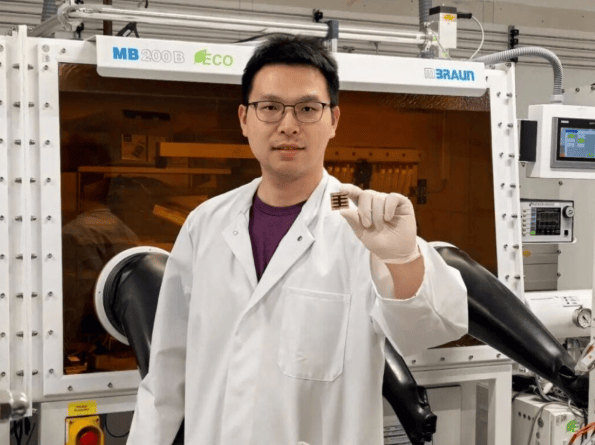
In collaboration with the Karlsruhe Institute of Technology, the German Electron Synchrotron, and the Royal Institute of Technology in Stockholm, the research team uncovered the microscopic mechanism behind the degradation of perovskite materials under temperature fluctuations. The findings, published in the journal Nature Communications, indicate that degradation primarily occurs during the initial "aging" phase, where the relative performance of the cells can drop by up to 60%. The study also highlights the critical impact of thermal cycling on early-stage degradation.
Professor Peter Müller-Buschbaum, head of the Functional Materials Department at TUM's School of Natural Sciences, stated: "If we want these cells to be installed on every rooftop, we must ensure they not only perform well in the lab but can also withstand the stresses brought by seasonal changes." His team identified the microscopic cause of instability and devised a new strategy to make the top layer of tandem solar cells more robust for real-world environmental conditions.
Lead author Dr. Kun Sun explained: "We revealed a microscopic 'tug-of-war' phenomenon that triggers this performance loss. Tension builds within the material, and its structure changes—this consumes power." The research solution focuses on using specially designed molecular "anchors" to stabilize the fragile crystal structure, with related results published in ACS Energy Letters. The researchers employed special organic molecules as spacers to hold the structure together, akin to a molecular scaffold.
Experiments showed that the larger organic molecule 1,4-phenylenedimethylammonium (PDMA) serves as a superior anchoring agent, producing more robust perovskite solar cells that remain stable under the mechanical stress of rapid heating and cooling. Müller-Buschbaum added: "By understanding these microscopic mechanisms, we are paving the way for a new generation of solar modules that are both efficient and durable enough to last for decades outdoors."
The stability issue of perovskite solar cells has long been a challenge for their commercialization, a point confirmed by multiple studies in recent years, including a relevant paper from the University of Sydney last October. This technology was also a core topic in the Q4 2024 issue of the Photovoltaic Technology Dynamics quarterly, which explored its realistic prospects as the next dominant solar photovoltaic technology.
This article is compiled by Wedoany. All AI citations must indicate the source as "Wedoany". If there is any infringement or other issues, please notify us promptly, and we will modify or delete it accordingly. Email: news@wedoany.com