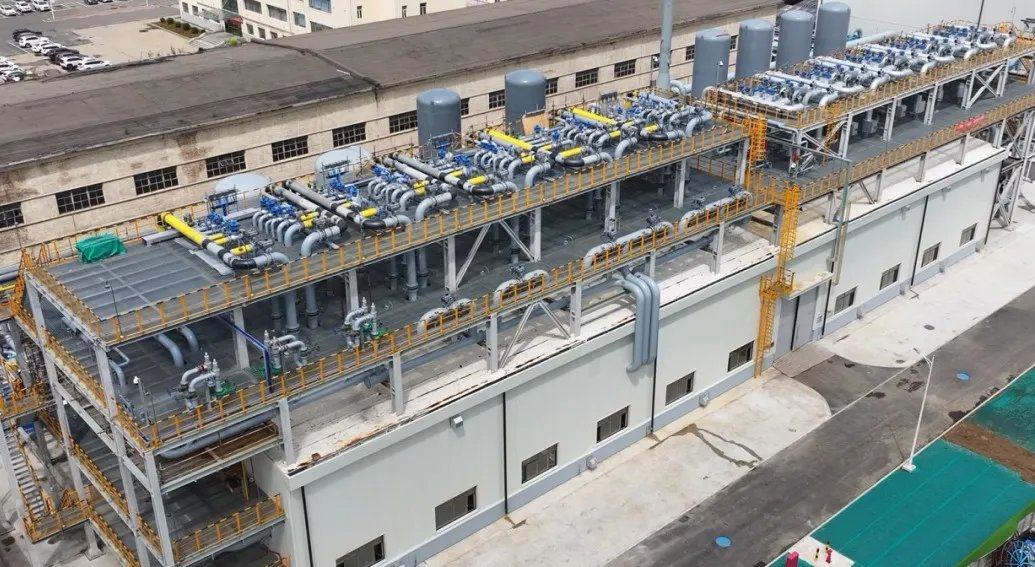
en.Wedoany.com Reported - European chemical company Nobian announced that the by-product hydrogen from its chlor-alkali plant located in Germany, Frankfurt, has obtained Renewable Fuels of Non-Biological Origin (RFNBO) certification. According to EU standards, this allows the company to convert industrial by-products into commercial value. The certification was issued by the environmental agency ISCC System and covers up to 6000 tons of green hydrogen production annually from this plant.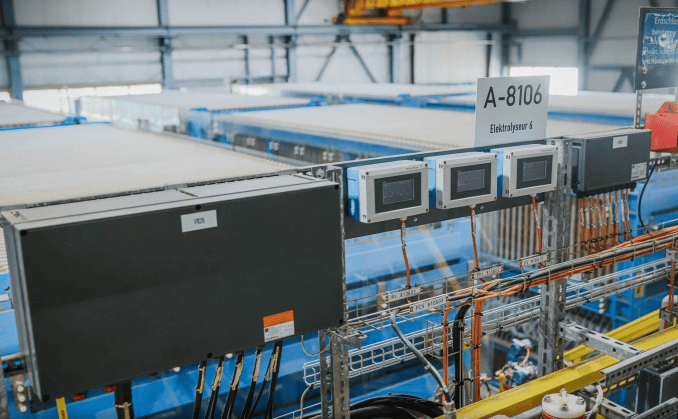
Nobian primarily produces salt and basic chemicals, manufacturing chlorine, hydrogen, and sodium hydroxide through the chlor-alkali electrolysis process, similar to water electrolysis technology. Traditionally, hydrogen by-products from chlor-alkali production were mostly used for internal consumption or underutilized. However, by using traceable renewable electricity, Nobian can now capture and sell them as RFNBOs.
EU RFNBO regulations require electrolyzer operators to use additional renewable electricity and ensure temporal and geographical matching between electricity consumption and generation. This move further expands Nobian's certified production capacity, following the certification of approximately 14,000 tons of green hydrogen from its Rotterdam chlor-alkali plant in 2025.
With the Frankfurt plant now included, Julien Courtois, Senior Manager for Hydrogen Products and Business Development at Nobian, stated: "This makes us the largest certified green hydrogen producer in Europe." The company has not yet specified buyers for the RFNBO hydrogen but plans to collaborate with regional partners to bring it to market, reflecting some current uncertainty in RFNBO demand.
Markus Mingenbach, Senior Vice President of Chlor-Alkali and Chloromethanes at Nobian, pointed out: "This helps customers reduce their carbon footprint and drives the development of a sustainable hydrogen economy." The certification highlights the growing market pathway for extracting hydrogen from existing industrial processes, which may offer a lower-cost hydrogen source compared to dedicated water electrolyzers.
In the United States, a similar trend is emerging, with several companies exploring the commercialization of chlor-alkali-derived hydrogen. Last December, K2 Pure Solutions initiated an expansion of its California plant, adding hydrogen capture, purification, and compression facilities to sell hydrogen. However, the hydrogen supply from the chlor-alkali process is limited by chlorine demand, which may constrain its scaling potential relative to dedicated electrolysis projects.
This article is compiled by Wedoany. All AI citations must indicate the source as "Wedoany". If there is any infringement or other issues, please notify us promptly, and we will modify or delete it accordingly. Email: news@wedoany.com