China Railway to Implement New Freight Train Timetable from April 10
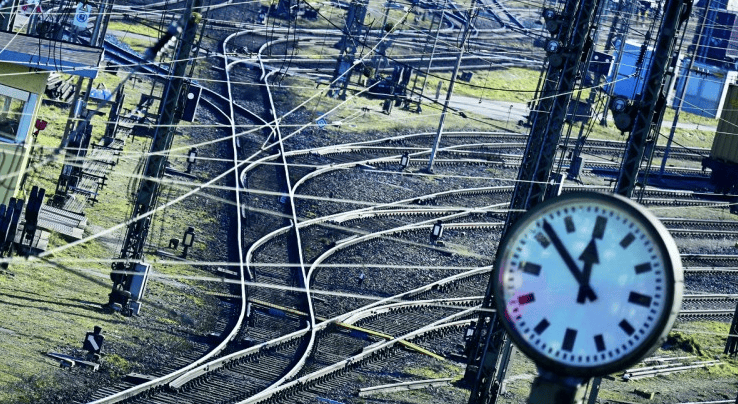
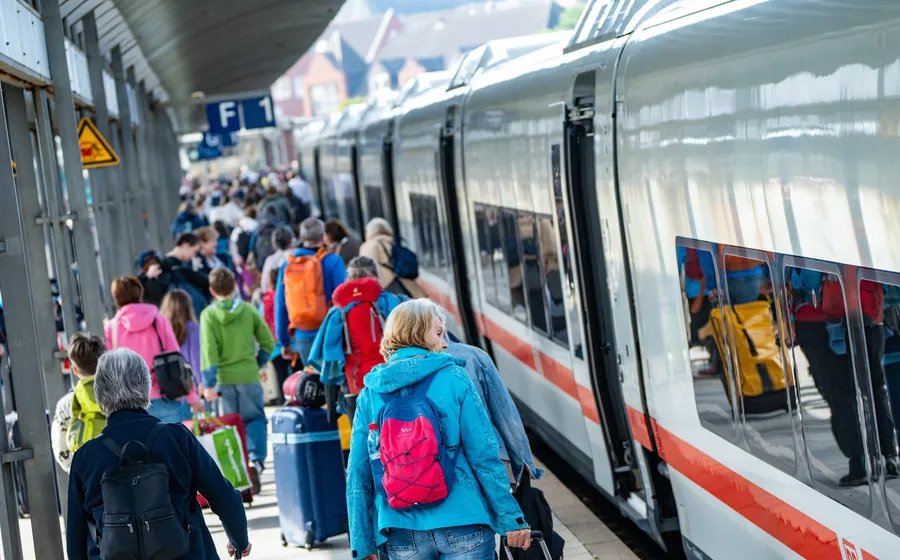
en.Wedoany.com Reported - Starting from 18:00 on April 10, the national railway network will implement a new freight train timetable, further improving China's railway logistics product system. This will provide stronger transportation support for effectively reducing overall social logistics costs and fostering high-quality economic and social development.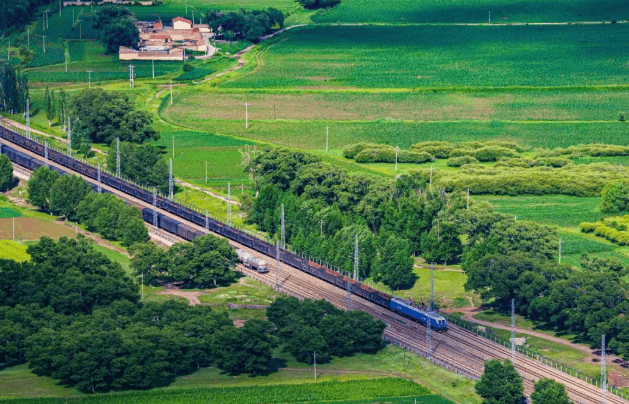
The implementation of this new freight train timetable is an important initiative by China State Railway Group Co., Ltd. (CR) to leverage the advantages of a unified national railway network and centralized dispatching command. It aims to holistically utilize line capacity, transportation equipment, and station resources, align with market demand, and further improve China's railway logistics product system. The focus is on comprehensively enhancing the quality of freight train operations and providing customers with high-quality and efficient railway logistics services.
First, optimizing intercity block train products to facilitate rapid cargo distribution between cities. Intercity block trains primarily operate point-to-point between cities, with fixed schedules and a focus on full-truckload transport. In the second quarter, the plan includes operating 8 express intercity block trains with a maximum speed of 160 km/h, 53 fast intercity block trains with a maximum speed of 120 km/h, and 87 regular intercity block trains with a maximum speed of 80 km/h. This includes adding 8 fast intercity block trains on routes such as Changchun North to Qiaosi, Qiaosi to Tuanjie Village, and Wuhu East to Korla; adding 6 regular intercity block trains on routes such as Erenhot to Houma North, Mianxi to Chengdu North, and Qiaosi to Longchuan North; and operating 5 cotton block trains to better serve time-sensitive cargo transport for e-commerce, express delivery, and daily necessities between Chinese cities.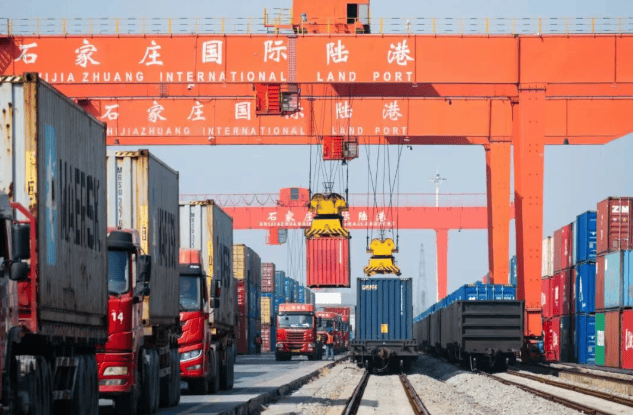
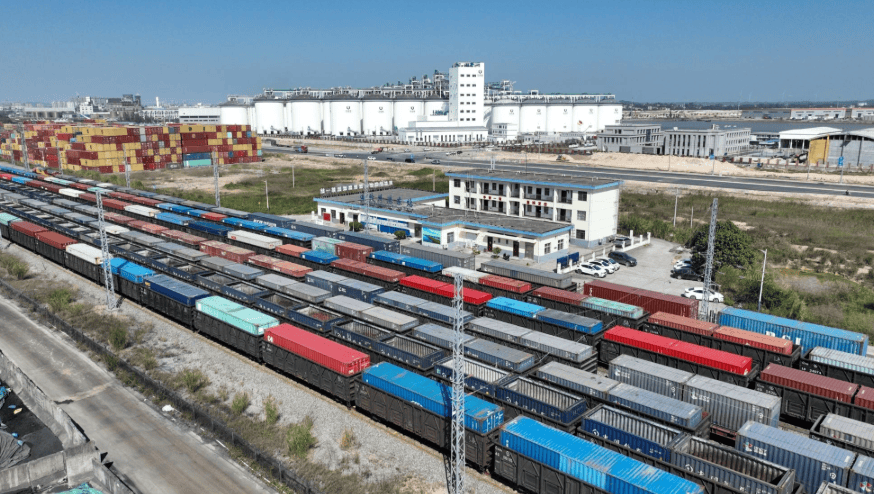
Second, optimizing intermodal block train products to enhance the efficiency of integrated end-to-end logistics. Intermodal block trains utilize container transport, seamlessly connect with other transportation modes to achieve "one container through," and provide full-process logistics services. In the second quarter, the plan includes operating 81 fast intermodal block trains with a maximum speed of 120 km/h and 121 regular intermodal block trains with a maximum speed of 80 km/h. It continues to operate express logistics demonstration block trains between major economic regions such as Beijing-Tianjin-Hebei, Yangtze River Delta, Guangdong-Hong Kong-Macao Greater Bay Area, and Chengdu-Chongqing, with online public booking available. It adds 13 fast intermodal block trains on routes such as Chifeng South to Nancang, Shijiazhuang South to Guangzhou International Port, and Chengxiang to Wangjiaying West; and adds 16 regular intermodal block trains on routes such as Luohe East to Tongchengzha, Xiangyang North to Jingbian East, and Wanzhou to Wuxi. This provides faster, more punctual, reliable, and economical integrated logistics solutions for cross-regional cargo transport. The operation plan for the sea-rail intermodal block trains of the New Western Land-Sea Corridor will be dynamically optimized, with timely additions of train lines and departure/arrival stations to serve domestic and foreign trade transport along the corridor.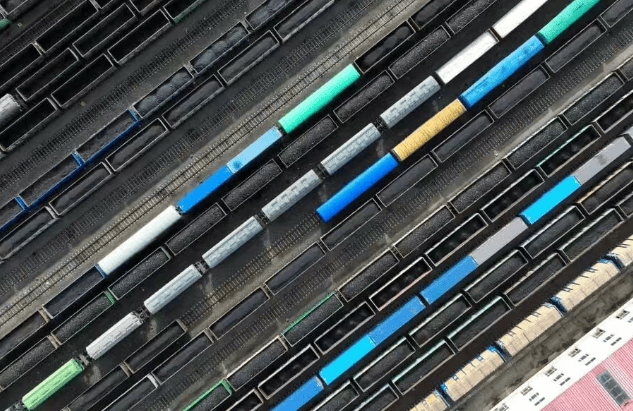
Third, optimizing bulk direct freight transport products to ensure the transportation of key materials vital to the national economy and people's livelihood. By actively tapping transportation potential, the plan includes operating 420 cross-railway bureau group company bulk direct freight trains. It prioritizes and guarantees transport capacity for key materials such as thermal coal, grain, and spring farming fertilizers, ensuring rapid and efficient delivery. Strengthening the coordination of cross-regional railway logistics services for bulk cargo, closely cooperating with large coal, port, and shipping enterprises, actively promoting the shift of bulk cargo like coal and smelting materials from road to rail, optimizing the transport structure, increasing railway freight volume, and serving the stable operation of the national economy and the production and daily life of the people.
Fourth, optimizing China-Europe and China-Central Asia block train products to provide safe and efficient cross-border logistics services. In the second quarter, 93 fixed lines for China-Europe Block Trains are scheduled, including 22 weekly China-Europe Block Trains with full-journey timetables both domestically and internationally. Strengthening collaboration with railway departments of countries along the routes ensures transport timeliness, providing stable expectations for enterprise production organization, cross-border trade, and capital turnover. 62 fixed lines for China-Central Asia Block Trains are scheduled, with 1 additional train added from Beijing, Tianjin, and Zhangjiakou exiting via Alashankou, supporting the development of the foreign trade industry in the Beijing-Tianjin-Hebei region. Actively expanding diversified overseas channels, increasing the organization of Trans-Caspian block train transport, achieving the operation of Trans-Caspian block trains via both Horgos and Alashankou ports, and testing the operation of China-Europe Block Train routes via St. Petersburg, Russia, crossing the Baltic Sea, providing customers with diversified cross-border logistics options.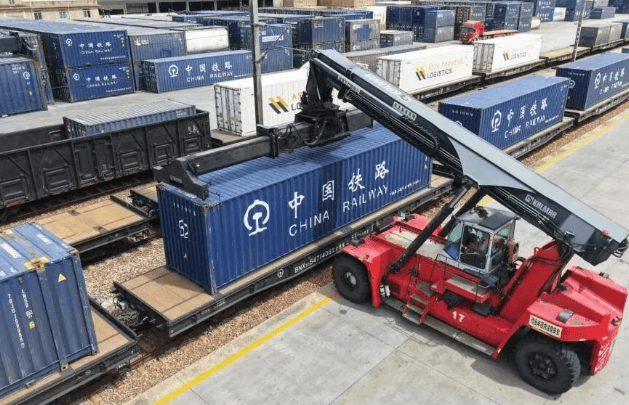
Fifth, continuously optimizing railway logistics services to reduce costs and increase efficiency in freight transport. Continuously optimizing and improving the functions of the 95306 platform, enhancing the efficiency of online railway logistics processing, and constantly improving customer service experience. Vigorously developing "single-document" and "single-container" transport, introducing more railway-centric intermodal products, providing customers with safe, convenient, efficient, and economical end-to-end logistics services. Promoting the application of the China Railway Network Freight Logistics Platform, which has attracted 198,000 registered trucks, providing "door-to-door" logistics services that integrate railway trunk line transport with road collection and delivery at both ends, enhancing overall logistics efficiency. Vigorously promoting "head-to-head" cooperation, developing logistics general contracting services, actively integrating into enterprise supply chains, providing customized full-process logistics solutions, reducing intermediate links, improving transport efficiency, and lowering overall logistics costs. Deepening cooperation with commercial banks to optimize railway logistics financial products such as "Freight Loan," "Letter of Credit Settlement," "Railway Document Financing," and "Railway Freight Certificate," reducing customer financing costs and promoting logistics facilitation.
This article is compiled by Wedoany. All AI citations must indicate the source as "Wedoany". If there is any infringement or other issues, please notify us promptly, and we will modify or delete it accordingly. Email: news@wedoany.com
Related Products


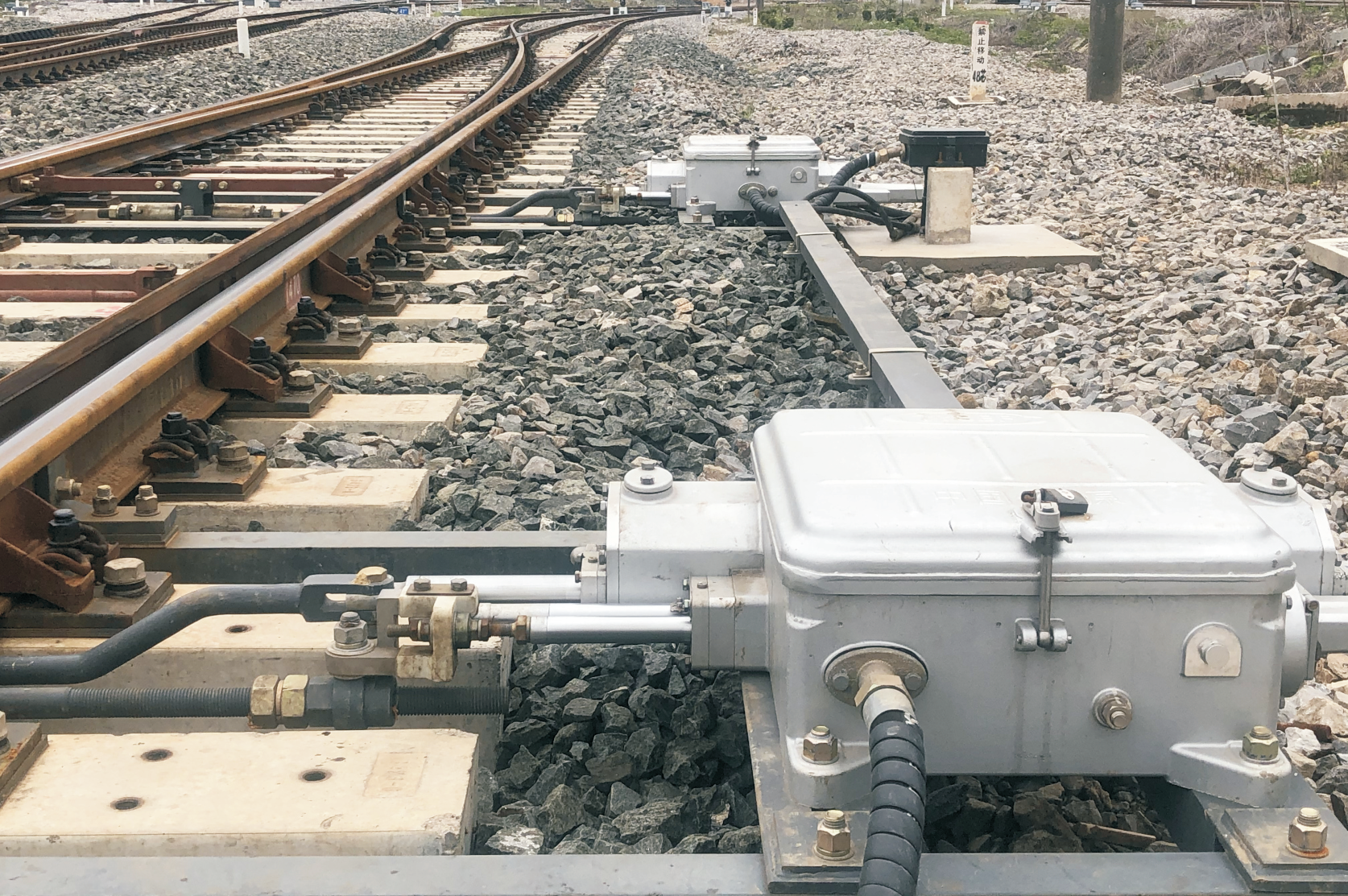
ZY(J)7(M) Sealed Type Electro-Hydraulic Turnout Machine
TAIYUAN CR JINGFENG EQUIPMENT TECHNOLOGY CO., LTD.
Wheel and Track Technology Business
Beijing Research & Design Institute of Rubber Industry Co., Ltd.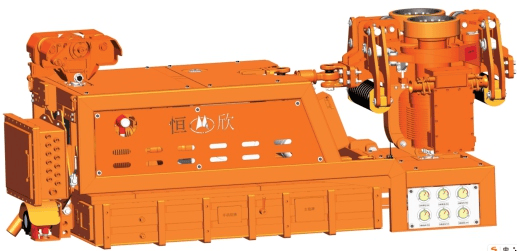
Explosion-proof lithium battery dispatching monorail crane locomotive (permanent magnet frequency conversion integrated machine)
Xiangtan Hengxin Industrial Co., Ltd.
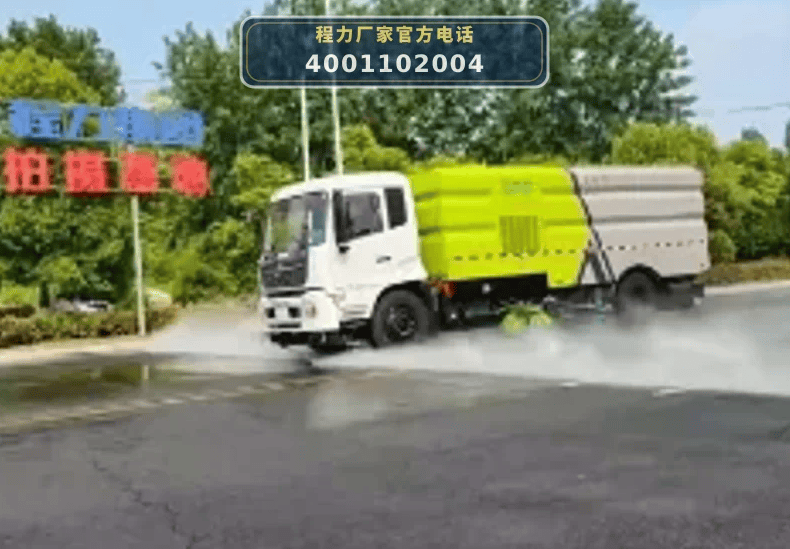
CLW5180TXSD6 Dongfeng Tianjin Washing and Sweeping Truck
ChengLi Special Automobile Co., Ltd.