First International Standard in Embodied AI Field Successfully Initiated, ISO Approves Proposal for "Humanoid Robot Datasets"
en.Wedoany.com Reported - On April 17, the Standardization Administration of China announced that China has successfully initiated the world's first international standard in the field of embodied artificial intelligence, "Humanoid Robot Datasets," within the International Organization for Standardization's Robotics Technical Committee. China also promoted the establishment of the first working group to be convened by a Chinese expert. This initiation achieved two historic breakthroughs: the first is a zero breakthrough in the development of international standards for humanoid robots, and the second is a zero breakthrough in the establishment of working groups for robot international standards.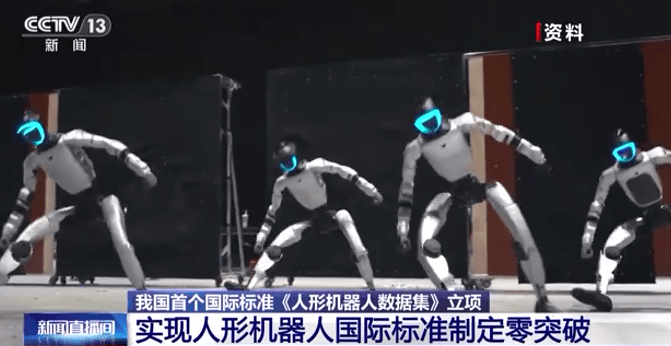
Wang Zhenlin, head of the Chinese technical counterpart unit for the ISO Robotics Technical Committee, stated that discourse power in the global robotics field has largely been held by developed countries. In the past, China often followed the standards set by developed nations, occupying a position of passive adaptation in the face of international rules. This breakthrough signifies a significant enhancement of China's discourse power in the field of international robotics standards. Currently, major economies such as the United States, Japan, and the European Union have incorporated humanoid robots into their national science and technology strategies, competing to deploy research, development, and application. Based on preliminary work guided by the Standard Innovation Department of China's State Administration for Market Regulation and involving multiple parties including the Shanghai Robot Industry Technology Research Institute, the Chinese delegation reported on the proposal to establish a working group for humanoid robot datasets and the concept for the dataset proposal at the eighth plenary meeting of ISO/TC 299 in June 2025, sparking widespread attention and discussion among various countries.
According to industry statistics, by the end of 2025, there were over 300 humanoid robot OEM companies globally, with market shipments reaching approximately 17,000 units and the market scale approaching 2.9 billion yuan. China is the world's largest market, with 140 OEM companies, shipments of 14,400 units, accounting for 84.7% of the global total. The initiated international standard references the content of China's in-development series of national standards for humanoid robot datasets. Experts from major countries worldwide will jointly participate in the development of this standard and subsequent standards in the humanoid robot field.
China took the lead in proposing the establishment of a Humanoid Robot Datasets working group under ISO/TC 299, aiming to develop international standards covering the entire lifecycle of datasets. This will standardize processes such as data collection, annotation, storage, and sharing, improve dataset quality and usability, break down data barriers between different countries, and establish a common technical foundation for algorithm training, scenario adaptation, and cross-domain collaboration. A position paper released by the International Federation of Robotics points out that the development strategies for humanoid robots in the US, China, Japan, and Europe each have different emphases: the US is led by tech giants and startups, aiming to deploy humanoid robots in logistics and manufacturing to enhance productivity and efficiency; Japan focuses on social companionship applications; Europe emphasizes ethics and human-robot collaboration; while China views it as a national strategy and plans for large-scale mass production.
Embodied intelligence refers to intelligent systems where agents interact with the environment in real-time through physical entities, integrating perception, cognition, decision-making, and action. It encompasses forms such as intelligent robots, autonomous vehicles, and drones, breaking through the virtual limitations of traditional artificial intelligence and propelling AI from the virtual realm into physical operation. According to a blue paper released by the China Academy of Information and Communications Technology, the global embodied AI industry is transitioning from the laboratory to large-scale application. Algorithmic technology is still in a phase of multi-path exploration and rapid iteration, with innovation driven by data-driven software-hardware integration being the core technological thread. In 2025, embodied intelligence was included for the first time in the Chinese State Council's Government Work Report, becoming one of the key future industries to be cultivated, marking the official entry of this field into China's national strategic deployment level.
The working group convener is a Chinese expert. Xing Lin, a standardization expert at the Shanghai Robot Industry Technology Research Institute and recipient of the IEC 1906 Award, participated throughout the proposal preparation process as technical support personnel. After multiple rounds of rigorous review and defense, the proposal was finally promoted to approval. As one of the leading promoters, the Beijing Research Institute of Automation for Machinery Industry Co., Ltd. reported on the new cooperation project for humanoid robot datasets at a prior Northeast Asia Standards Cooperation Meeting. This working group will provide unified specifications and standards for the management of global humanoid robot datasets, effectively addressing current issues such as inconsistent formats and annotations in datasets. It will promote data sharing and cooperation between different countries and regions, and drive the rapid development and widespread application of humanoid robot technology.
The successful initiation of this international standard comes at a critical juncture of intensifying global competition in the embodied AI industry. The United States has successively released development plans such as the "Artificial Intelligence Strategy," "National Robotics Roadmap," and "Artificial Intelligence Infrastructure Plan." The European Union, through the Digital Europe Programme, has allocated a special investment of 1.3 billion euros for the period 2025-2027 focusing on areas including artificial intelligence. Japan, relying on its Society 5.0 vision, positions embodied intelligence as a core tool for addressing aging populations and filling labor gaps. By taking the lead in formulating international standards for datasets, China is transitioning from a technology follower to a rule-maker, laying the groundwork for humanoid robots to move towards broader application scenarios.
This article is compiled by Wedoany. All AI citations must indicate the source as "Wedoany". If there is any infringement or other issues, please notify us promptly, and we will modify or delete it accordingly. Email: news@wedoany.com
Related Products


Multi-function Marine Monitoring Low-altitude Detection Radar Sea-air Boundary Ocean Dynamic Environment Measurement
Chengdu Dixin Technology Co., Ltd.
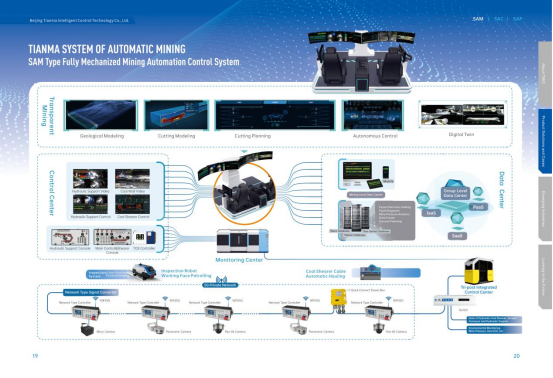
Comprehensive Mining Automation Control System
Beijing Tianma Intelligent Control Technology Co., Ltd.


MUX Series Communication Interface Device for Security and Stability Control System
Nanjing NR Electric Co., Ltd.


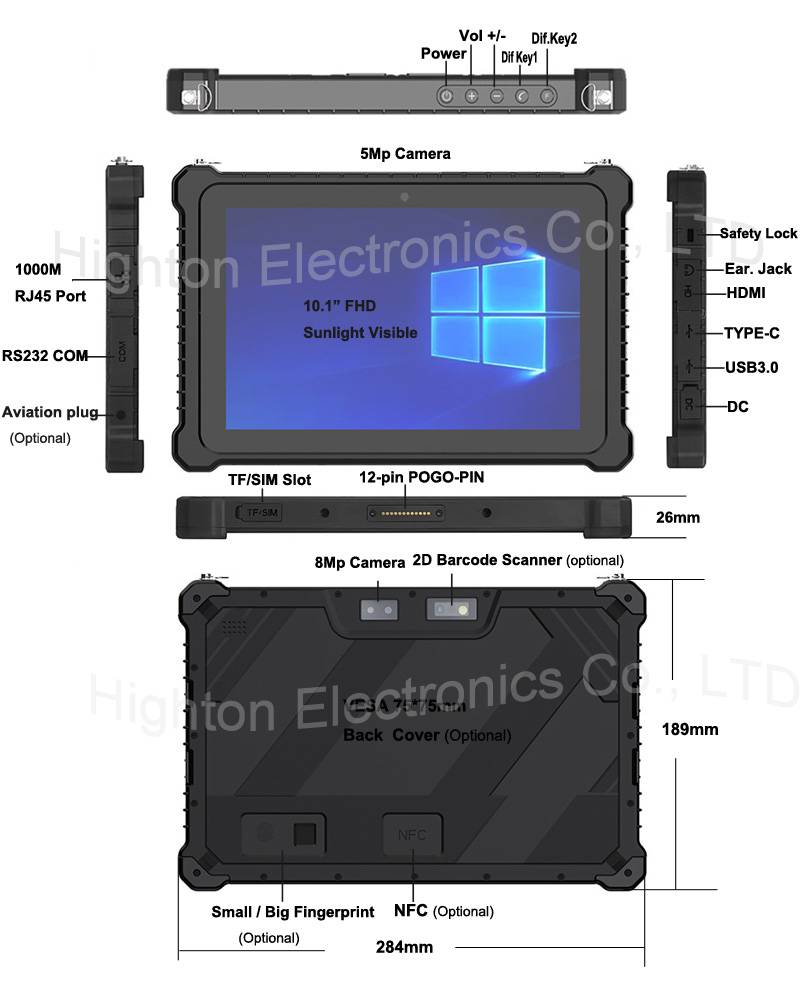
Hot Selling 10 Inch Intel N5100 I5 I7 FHD 8 +128GB 16+256GB Win10 Pro Win11 Pro 4G 5G Rugged Tablet PC Pad with NFC Barcode
Highton Electronics Co., Ltd.
GYTA Type Non-Self-Supporting Aerial/Duct Optical Cable
TONGDING INTERCONNECTION INFORMATION CO., LTD.