Anker Innovation Releases In-Memory Computing AI Chip 'Thus', Boosting AI Peak Performance 150x Over Traditional Bluetooth Chips
en.Wedoany.com Reported - On April 22nd, Anker Innovation held a technology communication meeting in Shenzhen themed "Edge AI: Extreme Computing Power, Meet the Future," officially unveiling its first neural network in-memory computing AI audio chip, Thus™. Built on NOR Flash technology, this chip natively supports 4-megaparameter models. In internal lab tests, it achieved up to 150 times the AI peak performance compared to traditional Bluetooth headphone chips. Anker Innovation's founder and CEO, Yang Meng, stated at the event: "We returned to first principles to find the key breakthrough in the structure, trying every possible way to navigate this path and achieve extreme innovation."
The Thus chip fundamentally breaks through the bottlenecks of the traditional von Neumann computing paradigm with its in-memory computing architecture. In traditional chip architectures, model parameters are stored in memory, and each inference requires frequent data movement between the processor and memory, consuming over 90% of the system's energy. The in-memory computing architecture embeds computation directly within the memory cells, eliminating the need to move model parameters. This reallocates the energy previously consumed for data movement to effective computation, achieving a dual leap in both computing power and energy efficiency at the foundational level. In an interview with The Verge, Yang Meng compared the traditional architecture to "a couple living on opposite sides of a river," emphasizing that Thus's design "moves the computation directly to where the model resides; the model no longer needs to move." Thanks to this architecture, the Thus chip can support models with millions of parameters, significantly enhancing local computing capabilities under similar size and power constraints.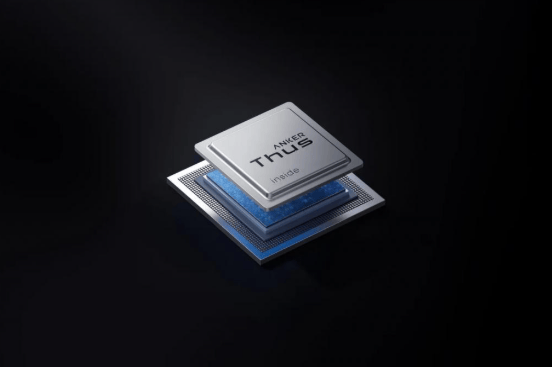
Call noise reduction is the first critical scenario the Thus chip tackles. Traditional headphone noise cancellation relies on small local neural networks, typically with only hundreds of thousands of parameters, making it difficult to accurately separate human voices in high-noise environments. This often leads to issues like significant environmental noise leakage or severe voice compression and distortion. The Thus chip, combined with eight MEMS microphones and two bone conduction sensors, builds a three-dimensional acoustic perception system. It can precisely filter out noise and retain clear human voices even in noisy environments of around 100dB. According to product information, the first flagship Soundcore earbud models equipped with the Thus chip are expected to be the Liberty 5 Pro Max and Liberty 5 Pro, priced at $229.99 and $169.99 respectively. Complete product details will be announced during the Anker Day event on May 21st.
Thus is not just a chip; it is a three-year chip technology platform planned by Anker. The first-generation product was realized through a joint R&D model. Development has officially begun on the next-generation fully self-developed chip, named after "Thus have I heard," signifying a return to the essence of computing. German ComputerBase reports indicate that the Thus chip will be manufactured in Dresden, Germany, with the foundry partner undisclosed. Anker also disclosed its edge AI large model strategy and a three-stage roadmap for embodied intelligence: dividing home robots into planar mobility forms (robot vacuums, smart lawnmowers - already mass-produced), three-dimensional mobility forms (security robot dogs - expected in the second half of this year or next year), and a three-dimensional manipulation stage dominated by humanoid robots.
The strategic transformation from an accessory supplier to an AI infrastructure provider is the underlying logic behind Anker's launch of the Thus chip. Founded in 2011 by former Google engineer Yang Meng, Anker's core product categories include chargers, cables, and headphones, known for thin per-unit profit margins and fragmented SKUs. Cloud-based AI solutions face three major drawbacks on small terminals like headphones: latency, power consumption, and privacy. If Thus can successfully implement local AI capabilities in the most space-constrained category of earbuds, it can be replicated in scenarios like speakers, smart homes, and even automotive applications. In a media interview following the launch, Yang Meng explicitly stated that the Thus chip is the first step in platformizing Anker's AI capabilities, with subsequent expansion into mobile accessories and IoT product lines. The North American security brand eufy has already served over 16 million households. Edge AI models can achieve privacy protection and low-latency response without relying on the cloud. The Thus chip's energy efficiency advantages provide the computational foundation for this vision.
This article is compiled by Wedoany. All AI citations must indicate the source as "Wedoany". If there is any infringement or other issues, please notify us promptly, and we will modify or delete it accordingly. Email: news@wedoany.com
Related Products


Mine Explosion-proof and Intrinsically Safe Industrial Ethernet Ring Network (10 Gigabit/Gigabit)
Chongqing Mas Sci&Tech Co., Ltd.

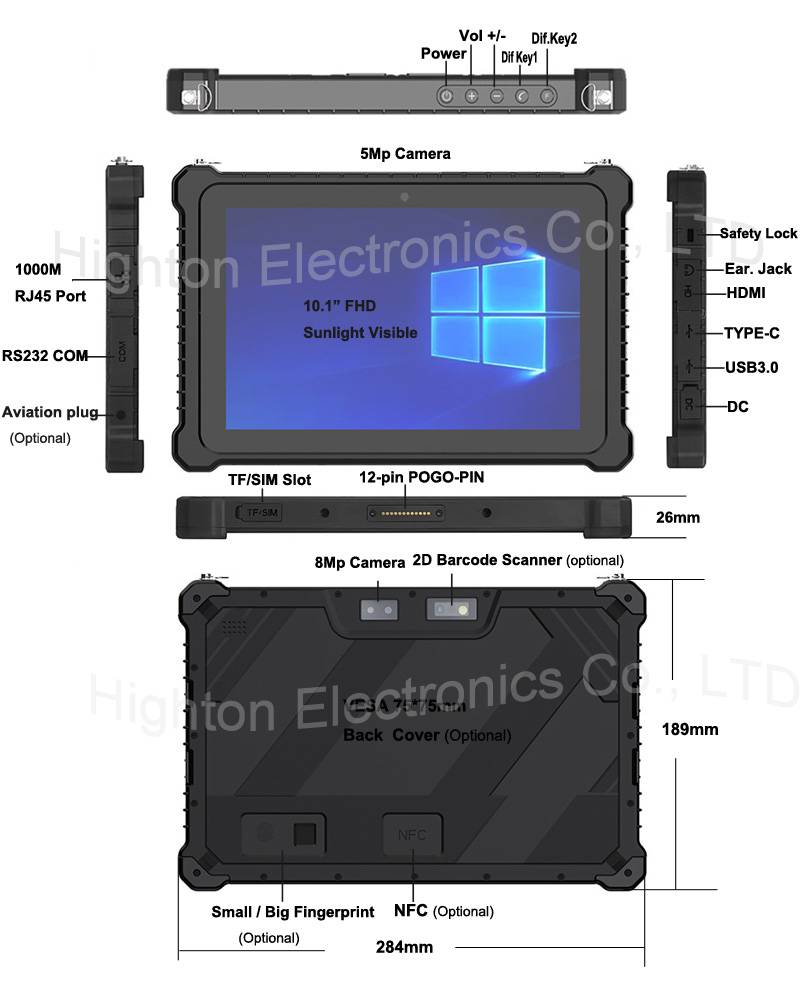
Hot Selling 10 Inch Intel N5100 I5 I7 FHD 8 +128GB 16+256GB Win10 Pro Win11 Pro 4G 5G Rugged Tablet PC Pad with NFC Barcode
Highton Electronics Co., Ltd.
Comprehensive Mining Automation Control System
Beijing Tianma Intelligent Control Technology Co., Ltd.


TWP16 P-Band Tropospheric Wind Profile Radar
China Huayun Meteorological Technology Group Co., Ltd.