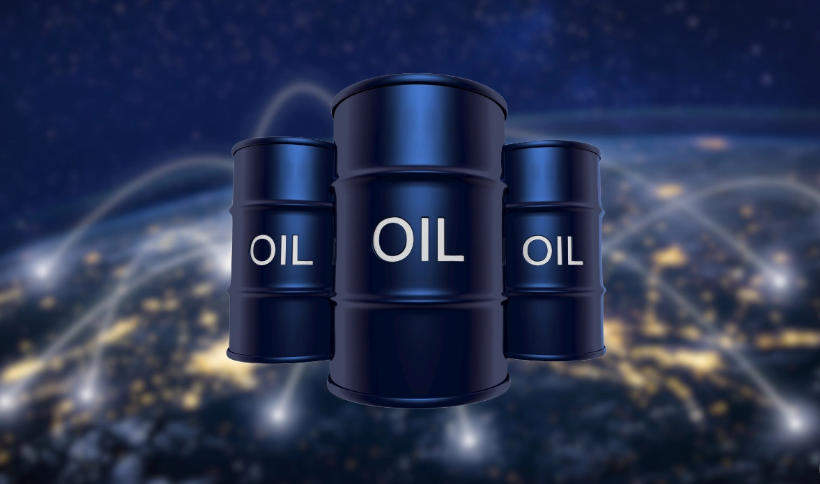
Wedoany.com Report-Jan 6,Madrid, Fuel shipments from Caracas to the Island fell by more than 42% in 2024. The data, published by Reuters, is even more striking if we take into account that Caracas increased its oil exports in the same period by 10.5%, and its crude oil production by 17%, from the 780,000 barrels per day (bpd) of the first 11 months of 2023 to the 914,000 bpd of the same period last year.
“While Venezuela struggled with frequent refinery cuts last year, exports of crude oil and fuel to its political ally Cuba, which has been facing a severe energy crisis, fell to about 32,000 bpd from 56,000 bpd the previous year,” the British agency reported.
On the other hand, total exports decreased to 756,000 bpd in December, compared to a maximum of 974,000 bpd in November, because, explains Reuters, “one of the four Pdvsa crude upgraders had operational problems.”
The annual increase in exports took place despite the political instability in Venezuela, because partners of the Venezuelan state-owned PDVSA who have licenses granted by Washington took more shipments. Reuters alluded to the results of the presidential elections last July, whose triumph was attributed to Nicolás Maduro. This result has been questioned internationally and gave rise to demonstrations with hundreds of arrests.
Pdvsa and its joint ventures exported 772,000 barrels per day last year, the highest figure since 2019
These individual licenses, in force since the beginning of 2023, are the main element that caused Venezuelan fuel exports to the United States to skyrocket exponentially, by 64%, to about 222,000 bpd last year. The numbers make the United States the second largest export market for Caracas, behind China, which took 351,000 bpd, 18% less than the previous year.
On average, the British agency indicates, Pdvsa and its joint ventures exported 772,000 barrels per day last year, the highest figure since 2019, when Washington, under the presidency of Donald Trump, imposed energy sanctions for the first time.
Much of last year’s export profits, Reuters highlights, come from the American oil company Chevron. In addition, shipments to Europe tripled in 2024, up to about 75,000 bpd, thanks to the authorization of the US to European producers such as the Italian Eni, the Spanish Repsol and the French Maurel et Prom.
These gains, Reuters also estimates, “could be in danger” in the face of Trump’s imminent arrival at the White House for the second time. The president-elect and his team appointed for the State Department, headed by Cuban-American Marco Rubio, have already announced more pressure on the Maduro regime.
For the specialist, in any case, 2025 will be an “extremely difficult” year for the Island
The reinstatement of sanctions against Caracas by the next US president would, however, be beneficial for Cuba and Mexico, in the opinion of Jorge Piñón, a Cuban analyst at the University of Texas in Austin.
In an interview with the Spanish agency EFE published this Thursday, the specialist, a 14ymedio source for information on energy, indicated that Pdvsa, in fact, has given priority to companies such as Chevron and Repsol and has left Cuba “at the end of the line.” He pointed out the minimum shipment from Caracas to the Island, 23,000 barrels per day, compared to the 2023 average of 55,000 bpd.
Given this scenario, Piñón also commented that Mexico has displaced Caracas as the main sender of fuel to Havana, which is a problem for President Claudia Sheinbaum with Trump’s arrival in power on January 20.
“The United States and Mexico have a very close relationship in energy matters. That is not something that can be closed or turned off overnight,” the expert told EFE, pointing out that it is a card that Trump can play, as well as for the Pemex refinery in Texas. “Ninety percent of the natural gas that the United States exports through pipelines goes to Mexico, which represents 65% of Mexico’s natural gas consumption.”
“If Marco Rubio and Trump say: ’Fine, we are going to go back to the sanctions again,’” Piñón declared. It would benefit Cuba and Mexico, because the oil Venezuela sends to the US would go to Cuba instead, and on the other hand, Mexico would not have to send crude to Cuba, for that matter, and would not be exposed to possible sanctions from Washington.
For the specialist, in any case, 2025 will be an “extremely difficult” year for the Island, which has just ended 2024 with three total collapses of the National Electric System (SEN).
Based on official data from 2022, Piñón told EFE that Cuba has a daily deficit of about 80,000 barrels of liquid fuel. He calculates, based on international shipments from Venezuela and above all from Mexico, that the demand in 2024 was reduced by 20,000 barrels per day.