India's CynLr Proposes "Object Intelligence" Concept, Achieves Audi Mass Production Pilot with 10-Second Autonomous Learning and Manipulation of Unknown Objects
en.Wedoany.com Reported - Bangalore-based deep-tech robotics startup CynLr officially introduced the concept of "Object Intelligence" at the AI Impact Summit, simultaneously unveiling its general-purpose visual robot platform, CyRo. Equipped with a dual-arm and binocular vision system, the platform can autonomously grasp and manipulate completely unknown objects within 10 to 15 seconds without any pre-programming or model training. This includes categories that traditional industrial automation has long struggled to handle reliably, such as transparent packaging, mirrored metal parts, and irregularly shaped components. CynLr co-founder Gokul NA offered a direct assessment at the summit: "Unless you build this intuitive capability into robots, they are untrainable and not AI-friendly."
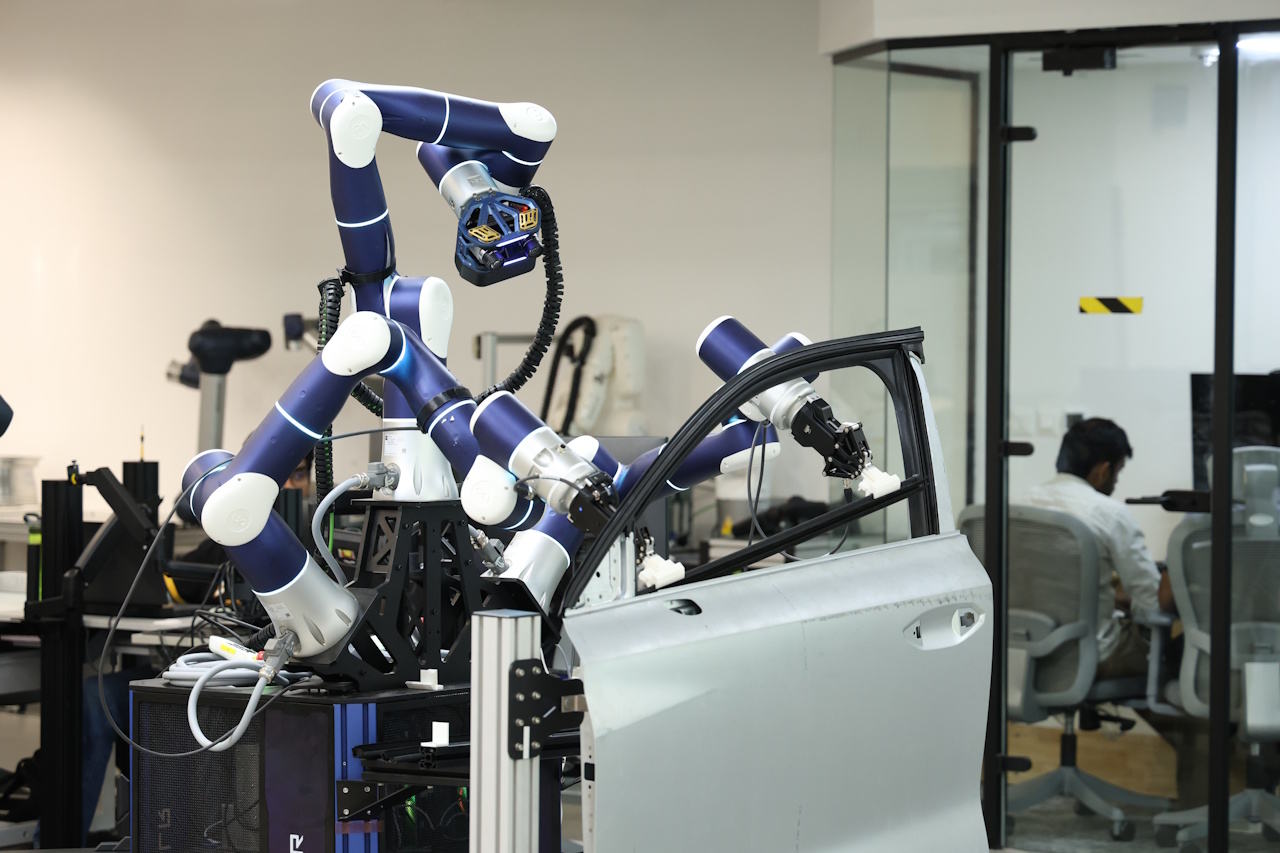
The differentiating path of Object Intelligence lies in its active perception architecture fundamentally replacing data dependency. While current mainstream AI models rely on millions of data points and months-long training cycles, CyRo's vision system does not make decisions based on recognizing object categories—it drives behavior by perceiving "what is changing" in the scene in real-time. When an unknown object is placed on a tray, the system approaches and grasps the target driven by an active exploration mechanism mimicking infant-like curiosity. At the moment of contact, it instantly perceives the object's stiffness and slip tendency, adaptively adjusting grip force. Gokul NA pointed out that human infants can pick up objects without knowing their names, which is precisely the foundational capability missing in robots. From a technology stack perspective, Object Intelligence is not a single technological breakthrough but a full-stack architectural reconstruction covering perception, decision-making, and execution. CynLr defines this as the "Object Intelligence Stack," which abandons the rigid paradigm of traditional industrial robots—"pre-programming, fixed fixtures, controlled lighting"—in favor of an autofocus liquid lens optical system, optical convergence algorithms, and neuroscience-inspired active perception mechanisms. This enables the robot to operate stably in unstructured environments with extreme variable lighting, random object poses, and mixed stacking. At the 2025 United Nations AI for Good Summit, CynLr further elaborated this architecture as the technological foundation leading to the "Universal Factory"—where the factory itself becomes a modular system definable and reprogrammable by software, allowing a single production line to seamlessly switch between different vehicle models and products through software updates, without needing to replace any hardware tooling or rewrite underlying control programs.
This technological vision has already entered the mass production validation phase with top global manufacturers. CynLr is currently engaged in a two-year joint pilot with German automotive brand Audi, integrating CyRo into the latter's vehicle prototyping production line in Germany. It is specifically responsible for the grasping and assembly processes of complex, irregular parts, aiming to validate the capability for rapid changeover from single-model to multi-model mixed production. The company has simultaneously secured an order from the world's third-largest semiconductor equipment manufacturer and is engaged in deep technical discussions with several luxury automotive brands. In non-automotive scenarios such as warehousing logistics and laboratory automation, CyRo has also demonstrated cross-industry migration potential. Chris Truce, CynLr's Chief Revenue Officer and head of its US subsidiary, revealed in April 2026 that the company is extending its customer base from large enterprises down to small and medium-sized manufacturers, while also planning to launch a mobile robot platform, Synoid, within the year to complete the indoor logistics chain beyond fixed workstations.
Technological and commercial progress is simultaneously driving accelerated capital injection. Founded in 2019 by Nikhil Ramaswamy and Gokul NA, CynLr is headquartered in Bangalore, with a design and research center in Lausanne, Switzerland, and customer operations and sales offices in the US. The company has completed four rounds of financing to date, raising a cumulative total of over $15.2 million from investors including Speciale Invest, growX Ventures, Pavestone, and Athera Venture Partners. In 2025, CynLr was named a "Technology Pioneer" by the World Economic Forum. According to reports by The Economic Times of India and Moneycontrol in February 2026, CynLr is currently undertaking a new funding round targeting over $40 million, with plans to raise a cumulative total of approximately $75 million by 2028. The funds will be used to build a manufacturing supply chain system with a daily capacity of one robot, expand the team size from around 60 to over 200 people, and significantly shorten the sales cycle to around 40 days. Commenting on the industrialization pace of deep-tech robotics, Gokul NA stated bluntly: "Deep tech requires a different mindset. You are building infrastructure, not packaging an existing market."
Its core product, CyRo, is currently positioned as a fixed dual-arm visual manipulation platform, primarily covering processes such as packaging, assembly, sorting, and precision insertion. The mobile robot Synoid will handle intra-factory logistics transport and cross-station material flow tasks. CynLr defines Object Intelligence as "the operating system for robotics," with its long-term path centered on a software-defined factory core architecture, making the factory itself a rapidly reconfigurable modular product, ultimately enabling an industrial paradigm shift from centralized mega-factories to distributed micro-factories. The company stated that the current robotics industry is still in an early stage similar to the computer industry in the 1980s, and that standardization and scaled revenue will require many more years of infrastructure development, predicting that the industry will welcome its first window for scaled revenue realization between 2028 and 2030.
This article is compiled by Wedoany. All AI citations must indicate the source as "Wedoany". If there is any infringement or other issues, please notify us promptly, and we will modify or delete it accordingly. Email: news@wedoany.com
Related Products

20 Inch 1600*900 Full HD 60Hz TFT LED Monitor with VGA and DP Interfaces for Desktop Computers-Business Use
Guangzhou Zanying Optoelectronics Technology Co., Ltd.


G.652.D Wavelength-extended Non-dispersion Shifted Single-mode Optical Fiber
HONGAN GROUP CO., LTD.
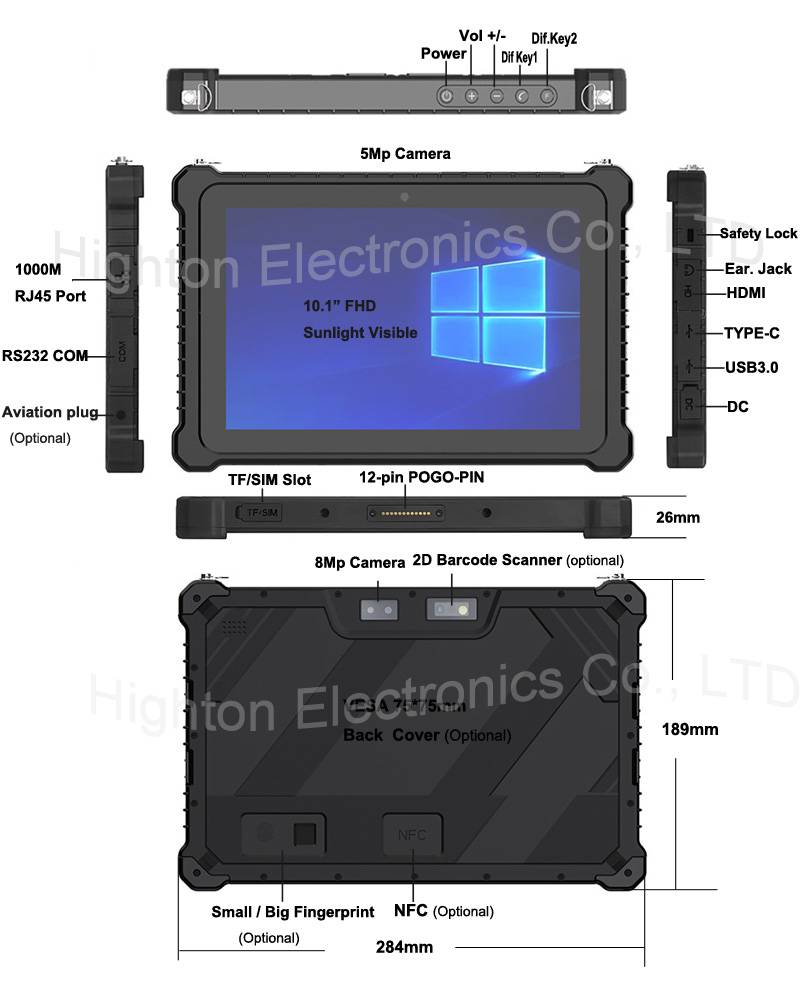
Hot Selling 10 Inch Intel N5100 I5 I7 FHD 8 +128GB 16+256GB Win10 Pro Win11 Pro 4G 5G Rugged Tablet PC Pad with NFC Barcode
Highton Electronics Co., Ltd.