The next stage of energy storage inverter technology is not simply about increasing power ratings. It is about becoming more grid-friendly. As wind and solar penetration rises, the inertia, reactive power support, short-circuit strength, and frequency stability traditionally provided by synchronous generators are reduced. Power systems increasingly need storage inverters to move from passive grid-connected devices to active grid-supporting assets.
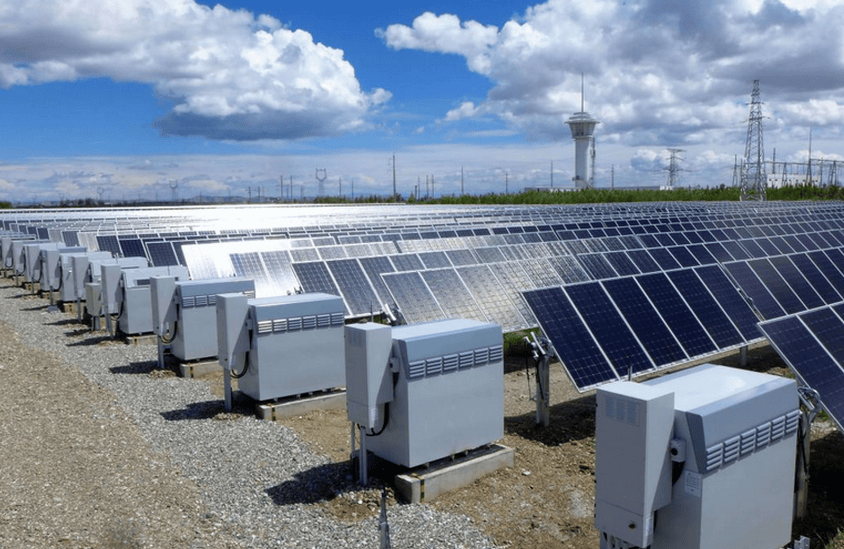
This is why grid-forming inverter technology is gaining attention. The IEA has noted that Australia supported 2 GW / 4.2 GWh of grid-scale storage capacity equipped with grid-forming inverters to provide essential system services previously supplied by thermal power plants. This means future storage inverters must do more than control charging and discharging. They need to support voltage, respond to frequency events, enable black start, operate in islanded conditions, and adapt to weak grids.
Technologically, energy storage inverters will evolve on three levels. At the hardware level, high-voltage design, modular power blocks, liquid cooling, higher conversion efficiency, and stronger environmental adaptability will become mainstream. At the control level, virtual synchronous machine control, grid-forming control, multi-unit parallel stability, fast frequency response, and dynamic reactive power support will become core capabilities. At the system level, PCS must be deeply integrated with EMS, BMS, SCADA, electricity trading platforms, and cloud-based O&M systems.
In the coming years, conventional grid-following PCS will still be widely used in commercial, industrial, residential, and standardized projects. However, the real technology barrier will lie in grid-forming, utility-scale, high-reliability storage inverters. In regions such as the Middle East, Australia, the United States, Europe, and Latin America, where renewable penetration is rising quickly, storage inverters are no longer just procurement items. They increasingly determine whether a project can pass grid-connection review, secure long-term revenue, and gain financial acceptance.
The first half of the industry was about cost and scale. The second half will be about grid-support capability and system-level reliability.