China's Grid Investment Accelerates, AI Supports Climate-Resilient Infrastructure Development
en.Wedoany.com Reported - Power grids across the Asia-Pacific region are facing the dual challenges of managing volatility from the energy transition and the impacts of climate change. The region is undertaking a fundamental redesign of its power grids to cope with the pressures brought by the world's fastest expansion of renewable energy and accelerating electrification. Grid development is shifting from traditional capacity expansion to a focus on flexibility—the ability to balance supply and demand across time and space under increasingly uncertain conditions.
The Asia-Pacific region is the fastest-growing area globally for renewable energy capacity, particularly in wind and solar power. Since 2014, approximately nine-tenths of the newly installed renewable energy capacity in the region has come from these two technologies. According to the International Energy Agency's (IEA) Stated Policies Scenario, the region produced nearly 50% of the world's renewable electricity in 2024, a share expected to exceed 60% by mid-century. Renewable energy growth is spreading across the Asia-Pacific, with India and major Southeast Asian economies rapidly emerging as new expansion hubs. These economies are projected to collectively produce about 6,100 terawatt-hours of renewable electricity annually by 2050, surpassing Europe's current total generation (approximately 5,000 TWh in 2025).
The Asia-Pacific region is also a primary driver of global electricity demand growth. In 2024, the region consumed over half of the world's electricity and will contribute about 60% of the demand growth by 2050. Rising affluence, deepening industrialization, and the electrification of transport, buildings, and industry collectively fuel this expansion.
The shifts in supply and demand are redefining grid operational models. In China, grid investment has accelerated significantly, exceeding 600 billion yuan (about $85 billion) in 2024, with plans to invest 4 trillion yuan (about $574 billion) by 2030. Energy storage capacity is also expanding rapidly, with total capacity more than tripling since 2021. A record 37 GW/91 GWh of battery storage was added in 2024 alone, surpassing the combined additions of the United States (12 GW/37 GWh) and Europe (12 GW/21 GWh). Southeast Asia is also gaining momentum; in 2025, a new financing platform initiated by the Asian Development Bank, the World Bank, and the Association of Southeast Asian Nations (ASEAN) aims to help double cross-border interconnection capacity by 2040.
Climate stress is becoming an operational constraint that power systems must address. Record-breaking heatwaves are occurring with increasing frequency during summers in East and South Asia, and rainfall patterns have become more variable and extreme. Extreme weather has translated into operational disruptions for power systems in the Asia-Pacific. The 2022 heatwave in India caused widespread power shortages across multiple states; extreme heat in the Tokyo area of Japan in 2022 prompted authorities to issue rare power supply warnings. The severe drought in the Mekong River Basin in 2019-2020 reduced hydropower output, tightening electricity supply in several mainland Southeast Asian countries. The 2021 Zhengzhou floods in China and the catastrophic 2022 floods in Pakistan both damaged power infrastructure, delaying recovery efforts. In November 2024, the Philippines was hit by six tropical storms within a single month, causing widespread blackouts in multiple areas.
Even if global warming is limited to 1.5°C, power systems will not return to past operating conditions. According to the Intergovernmental Panel on Climate Change (IPCC) Sixth Assessment Report, at 1.5°C of warming, a once-in-a-decade extreme heat event will occur 4.1 times more frequently, and a once-in-fifty-year extreme heat event 8.6 times more frequently. A once-in-a-decade heavy precipitation event will occur 1.5 times more frequently at 1.5°C of warming.
To address these challenges, power systems in the Asia-Pacific are shifting from reactive "repair and restore" approaches to infrastructure hardening and system-level adaptation. Typical measures include reinforcing transmission towers, elevating substations above flood levels, and moving distribution lines underground. Some countries are beginning to adopt systematic adaptation approaches. Infrastructure Australia has called for an "all-systems" and "all-hazards" resilience approach and commissioned the first National Climate Risk Assessment. Japan's "National Resilience" framework brings together multiple ministries under a coordinated disaster management system. China is also making progress in strengthening cross-departmental coordination for infrastructure resilience.
Artificial intelligence (AI) is seen as a strategic enabler for promoting systematic adaptation, supporting decision-making through data fusion, analytical orchestration, and capability enhancement. For example, an AI orchestration platform in Shanghai has been used to integrate agents for forecasting, trading, regulation, and settlement, supporting real-time grid balancing and virtual power plant operations. To ensure AI effectively empowers adaptation, countries need high-quality data systems, technical expertise, and computational infrastructure, and should make climate stress testing a standard part of grid planning.
This article is compiled by Wedoany. All AI citations must indicate the source as "Wedoany". If there is any infringement or other issues, please notify us promptly, and we will modify or delete it accordingly. Email: news@wedoany.com
Related Products

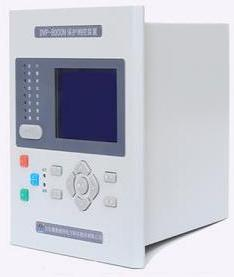
Microcomputer Protection and Substation Automation
Beijing Agent Devote Power Technology Development Co., Ltd.
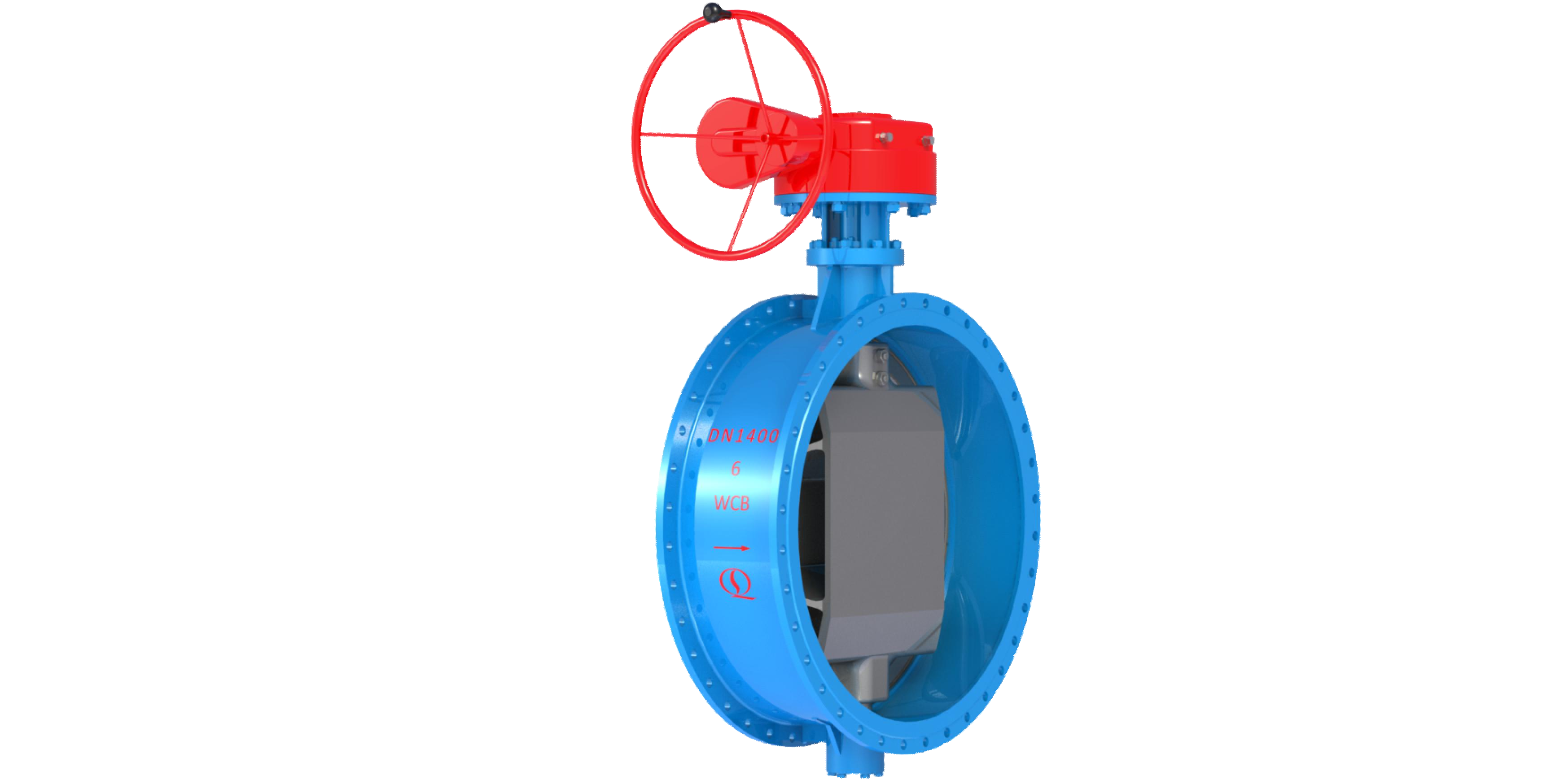
Bidirectional Metal Hard Sealed Seawater Butterfly Valve
Henan Quanshun Flow Control Science & Technology Co., Ltd.
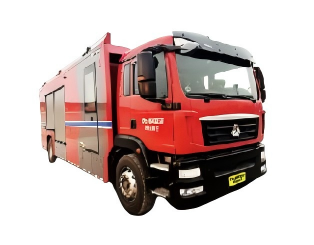
Modular Multifunctional Water Supply and Drainage Vehicle (18T)
Changsha Dewater Machinery Technology Co., Ltd.