en.Wedoany.com Reported - In solar hydrogen projects, electrolysers are core equipment, but selection should not be based on efficiency alone. Photovoltaic Hydrogen Production requires evaluation of electrolyser efficiency, dynamic response, CAPEX, lifetime, maintenance, load adaptability and supply chain maturity together.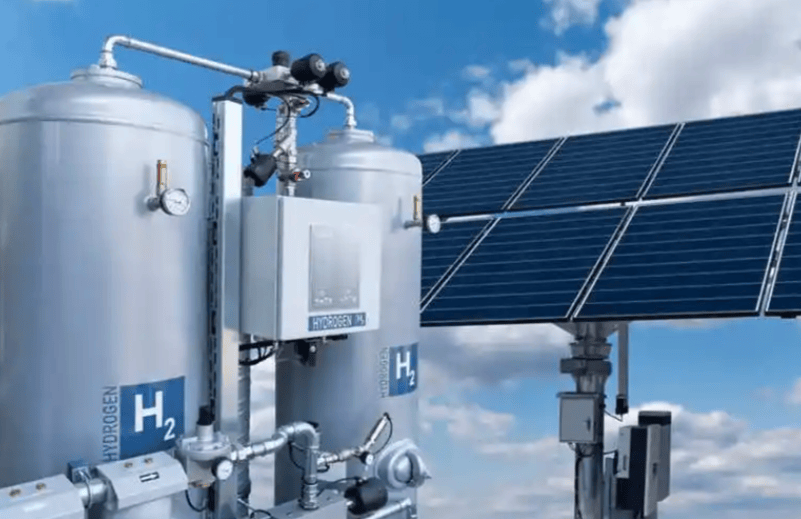
Main water electrolysis technologies include alkaline electrolysis, PEM electrolysis, AEM electrolysis and solid oxide electrolysis. Alkaline electrolysis is mature and relatively low-cost, suitable for large-scale stable operation. PEM electrolysis has fast dynamic response and strong load-following capability, making it suitable for variable renewable power, but its membrane and precious metal costs are higher. AEM is still being industrialized and aims to combine lower cost with flexibility. Solid oxide electrolysis is suitable for coupling with high-temperature heat sources, but system complexity is higher.
IEA data show that global installed water electrolysis capacity reached 2 GW in 2024, with more than 1 GW added by July 2025. China now accounts for 65% of global installed capacity and capacity that has reached final investment decision. The IEA also notes that electrolyser project scale is rising quickly: the world’s largest project was 30 MW in 2021, while a 500 MW project was commissioned in China in 2025 and Saudi Arabia’s NEOM project targets 2 GW by 2027.
This shows that the electrolyser industry is scaling up quickly, but still undergoing industrial validation. For solar hydrogen, technology choice must match operating mode. Direct PV supply creates larger load fluctuations, requiring attention to dynamic response and start-stop lifetime. If the project uses grid power for stable operation, alkaline electrolysis may offer stronger cost advantages. For high-value applications, hydrogen purity, pressure and system response also matter.
Project owners should not purchase only a single device. They should procure full hydrogen production system capability, including electrolyser stacks, rectifiers, water treatment, cooling, gas-liquid separation, purification, compression, control systems and safety protection. The reliability of future Photovoltaic Hydrogen Production will depend on system coordination, not attractive single-device specifications.
This article is compiled by Wedoany. All AI citations must indicate the source as "Wedoany". If there is any infringement or other issues, please notify us promptly, and we will modify or delete it accordingly. Email: news@wedoany.com