en.Wedoany.com Reported - The PV inverter industry is entering a phase of intensified competition. On one hand, global PV deployment continues to create demand for inverters. On the other hand, fast product iteration, strong price competition and rising customer requirements for grid connection and O&M mean that companies can no longer rely only on hardware sales. Photovoltaic Inverters companies must move from equipment suppliers to system service providers.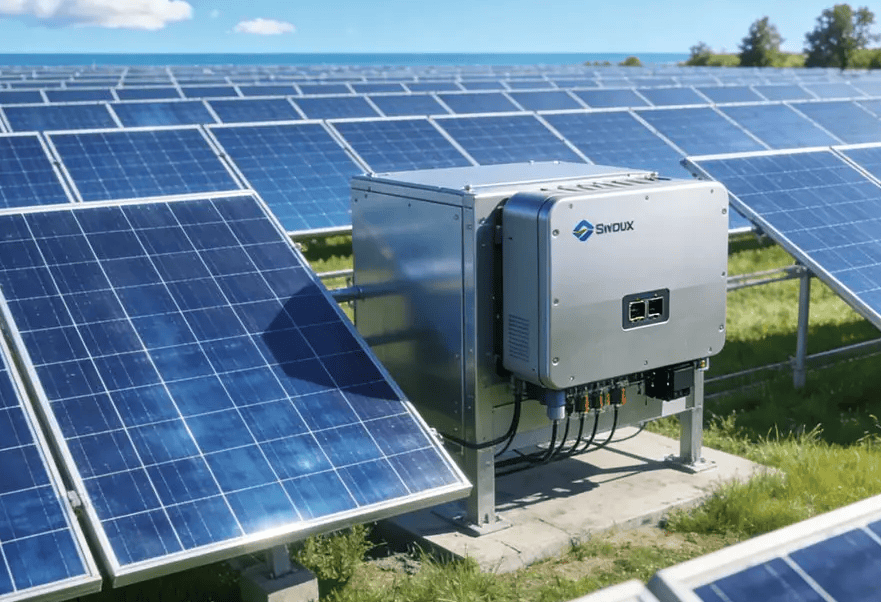
Market research shows that the global PV inverter market is growing. A ResearchAndMarkets report estimates the market at about USD 12.1 billion in 2024 and projects it to reach USD 19.8 billion by 2030. Mordor Intelligence expects the solar PV inverter market to grow at a CAGR of about 6.79% from 2026 to 2031.
In terms of competition, leading players hold strong positions. Wood Mackenzie-related rankings show that Huawei and Sungrow ranked as the top two global solar inverter manufacturers in the first half of 2025. The ranking evaluated 23 major manufacturers from seven countries, representing around 90% of global shipment volumes in 2024. This indicates a concentrated leading competitive structure, while regional markets and specialized applications still offer differentiation opportunities.
Future competition will shift in several directions. First, products will move from single-device efficiency competition to system adaptation, including PV-storage coordination, weak-grid performance, C&I energy management and multi-site O&M. Second, services will move from after-sales repair to full life-cycle management, including remote diagnosis, predictive maintenance, spare parts systems and plant performance optimization. Third, overseas markets will shift from product export to localized certification, technical support and grid-connection services.
Buyers should not select inverters only by price. They should evaluate long-term service capability, failure rates, warranty policies, monitoring platform stability, openness of communication protocols, overseas certifications and spare parts supply. Large-scale inverter failures affect not only equipment replacement cost, but also generation loss and owner cash flow.
In the future, the most valuable companies in the Photovoltaic Inverters industry will not be those that simply sell devices, but those that help customers operate, manage and maximize the value of solar assets.
This article is compiled by Wedoany. All AI citations must indicate the source as "Wedoany". If there is any infringement or other issues, please notify us promptly, and we will modify or delete it accordingly. Email: news@wedoany.com