en.Wedoany.com Reported - As PV capacity expands rapidly, many grids are facing high penetration of power-electronic generation. Traditional grids rely mainly on synchronous generators for inertia, short-circuit current and voltage support. PV systems connect through inverters, whose electrical characteristics differ significantly from traditional generation. Therefore, the grid support capability of Photovoltaic Inverters is becoming a hard requirement rather than an optional function.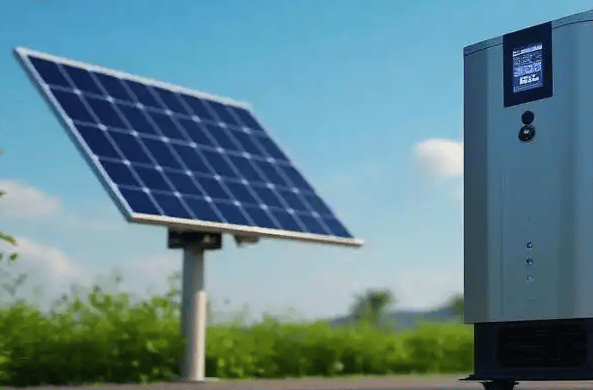
Typical challenges under high PV penetration include voltage fluctuation, insufficient frequency response, weak reactive power support, limited fault ride-through capability, harmonics and more complex protection coordination. In areas with dense distributed PV, reverse power flow, local voltage rise and distribution equipment overload may also occur. In Renewables 2025, the IEA states that distributed PV will account for 42% of total PV expansion from 2025 to 2030, indicating growing pressure on user-side grid adaptation.
Inverters therefore must do more than connect to the grid. They must connect in a grid-friendly way. Low-voltage ride-through, high-voltage ride-through, reactive power control, active power control, frequency response, voltage support, power quality monitoring and remote dispatch interfaces will become critical functions. For utility-scale plants, coordination among plant controllers, SVGs, storage systems and inverters is also necessary.
Grid-forming inverters deserve particular attention. Traditional grid-following inverters rely on grid voltage and frequency as references, while grid-forming inverters can provide more active voltage and frequency support in weak grids, islanded systems and high-renewable power systems. Although grid-forming technology is still being validated and deployed, it represents the direction from inverters that follow the grid to inverters that support the grid.
A professional recommendation is to complete inverter model verification and grid adaptability assessment before PV projects connect to the grid. Grid codes differ across countries and regions, so export projects must pay particular attention to certification, grid testing and dispatch communication requirements. Future competition in Photovoltaic Inverters will not only be about efficiency and price, but also about helping solar operate safely and stably at higher penetration levels.
This article is compiled by Wedoany. All AI citations must indicate the source as "Wedoany". If there is any infringement or other issues, please notify us promptly, and we will modify or delete it accordingly. Email: news@wedoany.com