Russia's Yakovlev Expands Fatigue Life Testing Scope for MC-21 Fuselage Components
en.Wedoany.com Reported - Russian aircraft manufacturer Yakovlev is expanding the scope of fatigue life testing for MC-21 fuselage components, a move aimed at enhancing the production quality of the narrow-body aircraft program and effectively controlling structural deformation. This work is being carried out in collaboration with Irkutsk National Research Technical University (INRTU) and the National Institute of Aviation Technologies (NIAT), as part of Russia's "Priority 2030" industrial research program. Engineers are currently focused on analyzing the impact of various surface treatment processes on the long-term durability of aluminum and titanium components used in the MC-21.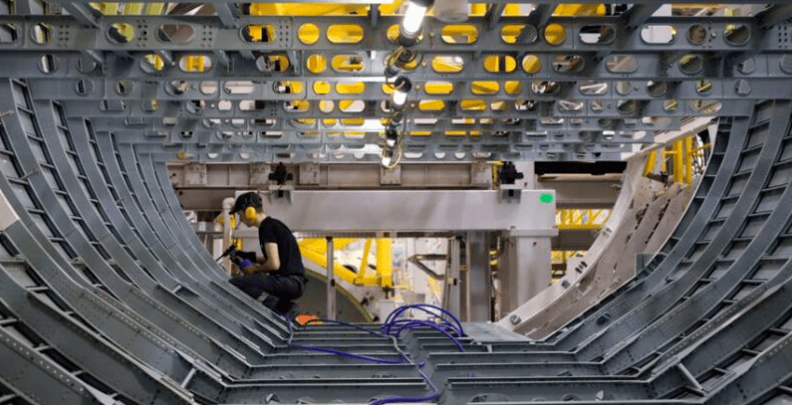
The core focus of the research is on thin-walled structural parts that are prone to deformation after machining and strengthening treatments. One evaluation technique employs roller burnishing to stabilize the component shape, a method that helps reduce residual stress and improve dimensional accuracy. According to the university, manufacturers often reduce strengthening intensity to prevent parts from bending during production. Previous tests by the All-Russian Institute of Aviation Materials (VIAM) and NIAT showed that aluminum and titanium alloys react differently to strengthening processes like shot peening under cyclic loading, prompting the Irkutsk team to launch a more in-depth investigation.
Since 2023, researchers have been testing aluminum and titanium samples produced by the Irkutsk Aviation Plant according to the manufacturing standards Yakovlev established for the MC-21 program. After processing, these samples underwent various surface treatments and were then tested for durability by repeatedly applying stress until failure. The project team compares the performance of treated components with untreated samples to identify the processes that best extend service life. The research covers methods including shot peening, abrasive blasting, vibratory hardening, and cold hole expansion, techniques already applied in the aircraft manufacturing field.
Alexander Filippov, Deputy Head of the Structural Analysis Department at Yakovlev, noted that these research findings will assist engineers in determining which strengthening technologies achieve the optimal combination of durability and weight reduction for the MC-21 and SJ-100 civil aircraft programs. INRTU and Yakovlev are jointly responsible for the statistical analysis and fatigue modeling of this project. While similar structural durability testing in Russia was previously concentrated mainly at the Central Aerohydrodynamic Institute (TsAGI), the expansion of research work in Irkutsk is striving to create a broader regional platform for aerospace material testing and fuselage durability research.
This article is compiled by Wedoany. All AI citations must indicate the source as "Wedoany". If there is any infringement or other issues, please notify us promptly, and we will modify or delete it accordingly. Email: news@wedoany.com





![IVECO Cash-in-Transit [DMT5048XYCL3-AM] - Chongqing Dima Industry Co., Ltd](https://img.wedoany.com/2026/0911/20260911030157582.png)