Power Line Fittings Are Not Minor Components, but Critical Nodes in Transmission Reliability
en.Wedoany.com Reported - In power transmission projects, conductors, towers, insulators and substation equipment often receive the most attention. However, long-term line reliability also depends on many seemingly small Power Line Fittings. Tension clamps, suspension clamps, compression sleeves, vibration dampers, spacers, grading rings, fitting strings, insulator connection fittings, grounding fittings and jumper fittings support conductor fixing, mechanical loading, electrical connection, vibration control, galloping mitigation, corona reduction and system protection.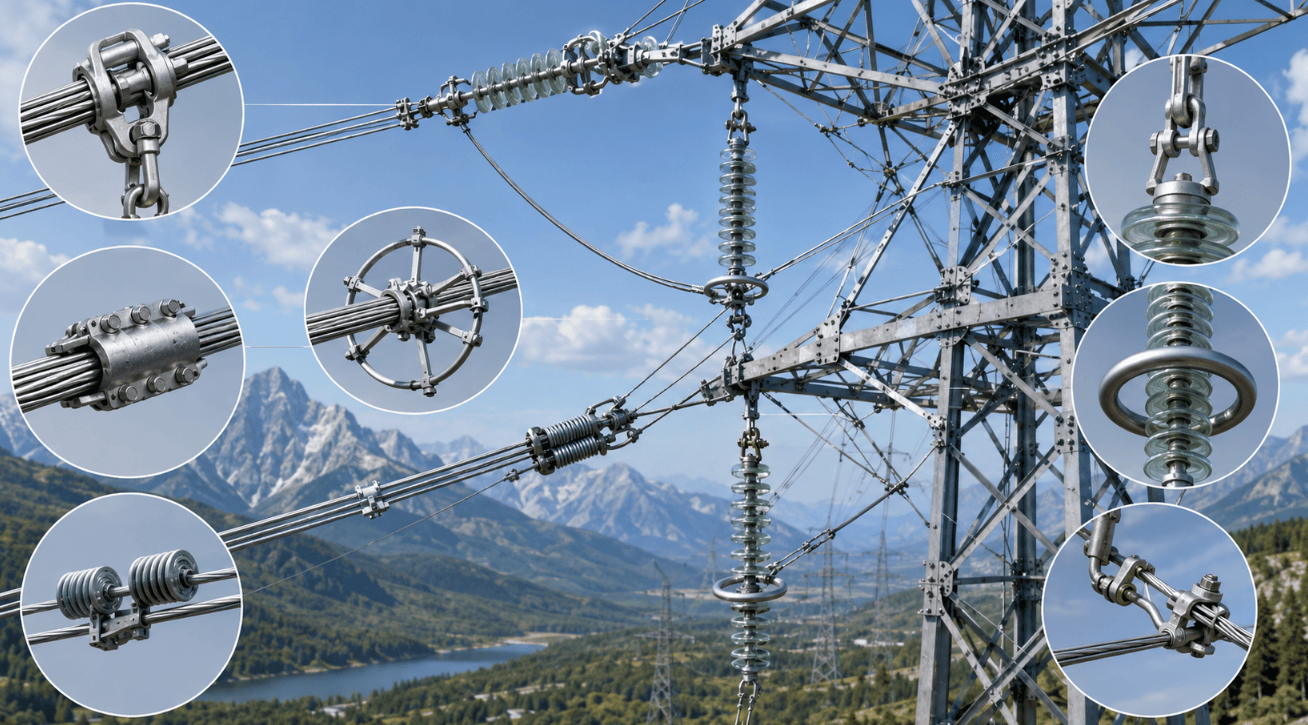
Global grid expansion provides long-term demand for line fittings. The International Energy Agency states that meeting electricity demand through 2030 will require annual grid investment to rise by around 50% from today’s USD 400 billion, together with stronger grid supply chains and workforce capability. An earlier IEA grid study also found that about 80 million kilometres of grids need to be added or replaced by 2040, equivalent to the length of today’s global grid. This means transmission expansion, distribution upgrades, renewable power connection, interregional power delivery and old-line refurbishment will continue to support demand for fittings, insulation accessories and line protection equipment.
The technical challenge of Power Line Fittings is that they must withstand mechanical, electrical and environmental stresses at the same time. Tension clamps carry conductor tension. Compression sleeves must ensure both mechanical strength and conductivity. Suspension clamps must avoid conductor wear under long-term loading. Spacers maintain bundled conductor geometry. Vibration dampers suppress aeolian vibration. Grading and shielding rings improve electric field distribution and reduce corona and radio interference. A poor fitting choice can cause local heating, broken strands, wear, loosening, discharge, corrosion or even line trips.
As renewable energy bases, ultra-high voltage transmission and cross-regional interconnections expand, requirements for line fittings are rising. High-altitude areas require attention to lower air density, corona and ultraviolet aging. Coastal regions require salt-fog corrosion resistance. Heavy-icing areas require icing load and galloping resistance. Desert and high-temperature regions require thermal cycling, sand abrasion and fatigue control. Mountain lines require attention to long spans, large height differences and difficult installation. Fittings therefore should not be purchased only from standard drawings; they must be selected according to voltage level, conductor type, weather conditions, pollution level, terrain and O&M requirements.
A common engineering mistake is treating fittings as ordinary standard parts and comparing only price. Low-cost fittings with weak materials, poor galvanizing, insufficient aluminum alloy strength, poor compression quality, weak bolt locking, rough surfaces or poor electrical contact may reduce procurement cost in the short term but increase maintenance cost and outage risk over the long term. For high-voltage, extra-high-voltage and ultra-high-voltage lines, fitting defects are not isolated small problems; they can affect the stability of an entire line.
Power Line Fittings procurement should control five points. First, design matching: fittings must match conductor size, tension rating, insulator string type and tower connection. Second, materials and process: aluminum alloys, steel, zinc coating, anti-corrosion layers, compression quality and heat treatment must be checked. Third, electrical performance: contact resistance, temperature rise, corona, grading and discharge risk must be evaluated. Fourth, mechanical performance: tension, fatigue, vibration, icing and wind load adaptability must be verified. Fifth, O&M traceability: batch records, test reports, installation records and inspection data should be archived.
Future transmission construction will not focus only on higher voltage and larger transfer capacity. It will also focus more on full-life-cycle line reliability. Power Line Fittings may not be the highest-value items individually, but they are numerous, widely distributed and costly to locate and replace after failure. A high-quality transmission project strengthens not only main equipment, but every connection point, load-bearing point and electrical contact. The value of power line fittings is ultimately reflected in fewer failures, fewer outages, less maintenance and more stable grid operation.
This article is compiled by Wedoany. All AI citations must indicate the source as "Wedoany". If there is any infringement or other issues, please notify us promptly, and we will modify or delete it accordingly. Email: news@wedoany.com
Related Products
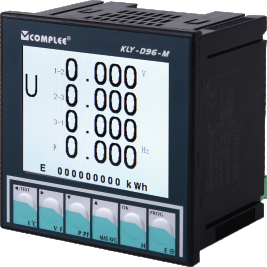

Digital Multifunctional Electrical Measuring Instrument
Shanghai Complee Instrument Co.,Ltd.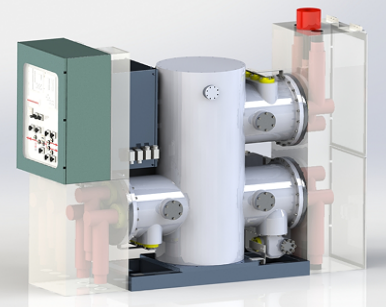

Hebei Zongheng Group Fengnan Iron and Steel Co., Ltd. Industrial Microgrid Smart Energy Management and Control System
Capital Engineering & Research Incorporation Limited
Prefabricated Houses and Electrical Energy Boxes
Chengdu Ruilong Machinery Manufacturing Co., Ltd.

Microgrid energy storage inverter module
Beijing Zhiyuan Xinneng Electric Technology Co., Ltd.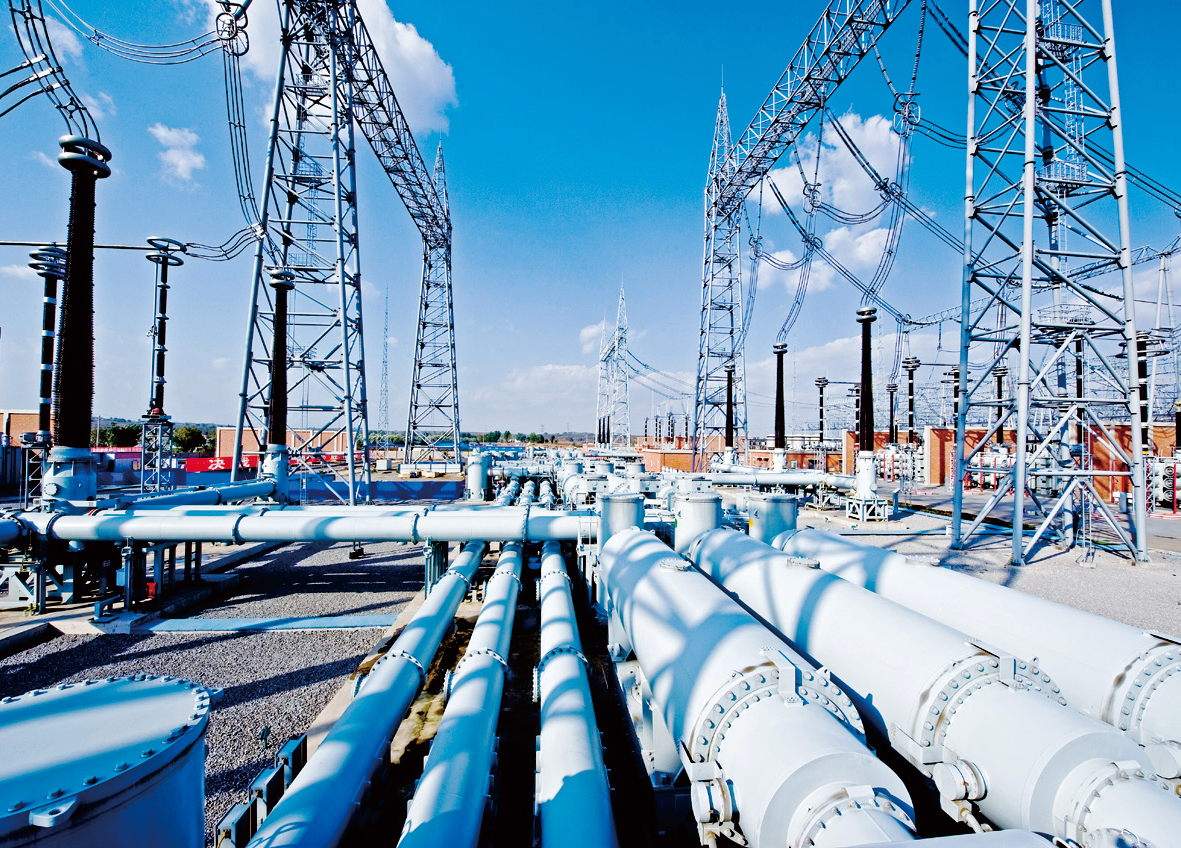
40.5kV-1100kV Gas Insulated Metal-Enclosed Switchgear (GIS)
Henan Pinggao Electric Co., Ltd.
12kV1250A SF6 Gas Insulated Switchgear (C-GIS)
Shanghai Bapei Switching Equipment Co., LTD.