en.Wedoany.com Reported - Researchers at Oak Ridge National Laboratory (ORNL) in the United States have developed a new method for identifying hidden nuclear materials, which combines the nuclear analysis code SAMMY with high-resolution neutron transmission data from the Versatile Neutron Imaging Instrument (VENUS).
The combination of these two technologies provides a new pathway for non-destructive analysis (NDA). NDA is an analytical technique primarily used in the nuclear industry to identify and quantify radioactive materials such as uranium and plutonium without altering or destroying the inspected item.
This method, designed by researchers at the U.S. Department of Energy's Oak Ridge National Laboratory, aims to enhance nuclear security, nuclear forensics, and national security operations.
"This is a perfect match, not only between the SAMMY and VENUS technologies, but also between the people and capabilities at Oak Ridge National Laboratory," said Dr. Luiz Leal, lead author of the report and an R&D staff member in the Nuclear Data Group.
The method combines VENUS, a world-class neutron imaging instrument at the Spallation Neutron Source—currently the world's most powerful accelerator-based pulsed neutron source—with SAMMY, a nuclear analysis code long used globally for refining nuclear resonance data.
The method relies on neutron fingerprints, which are unique resonance signatures produced when neutron beams interact with atomic nuclei. By analyzing these signatures, scientists can determine the exact composition of unknown or shielded nuclear materials without dismantling them.
Nuclear resonances originate from neutron cross sections, one of the most important nuclear data points. Cross sections describe the probability of neutrons interacting with atomic nuclei, acting like fingerprints for isotopes.
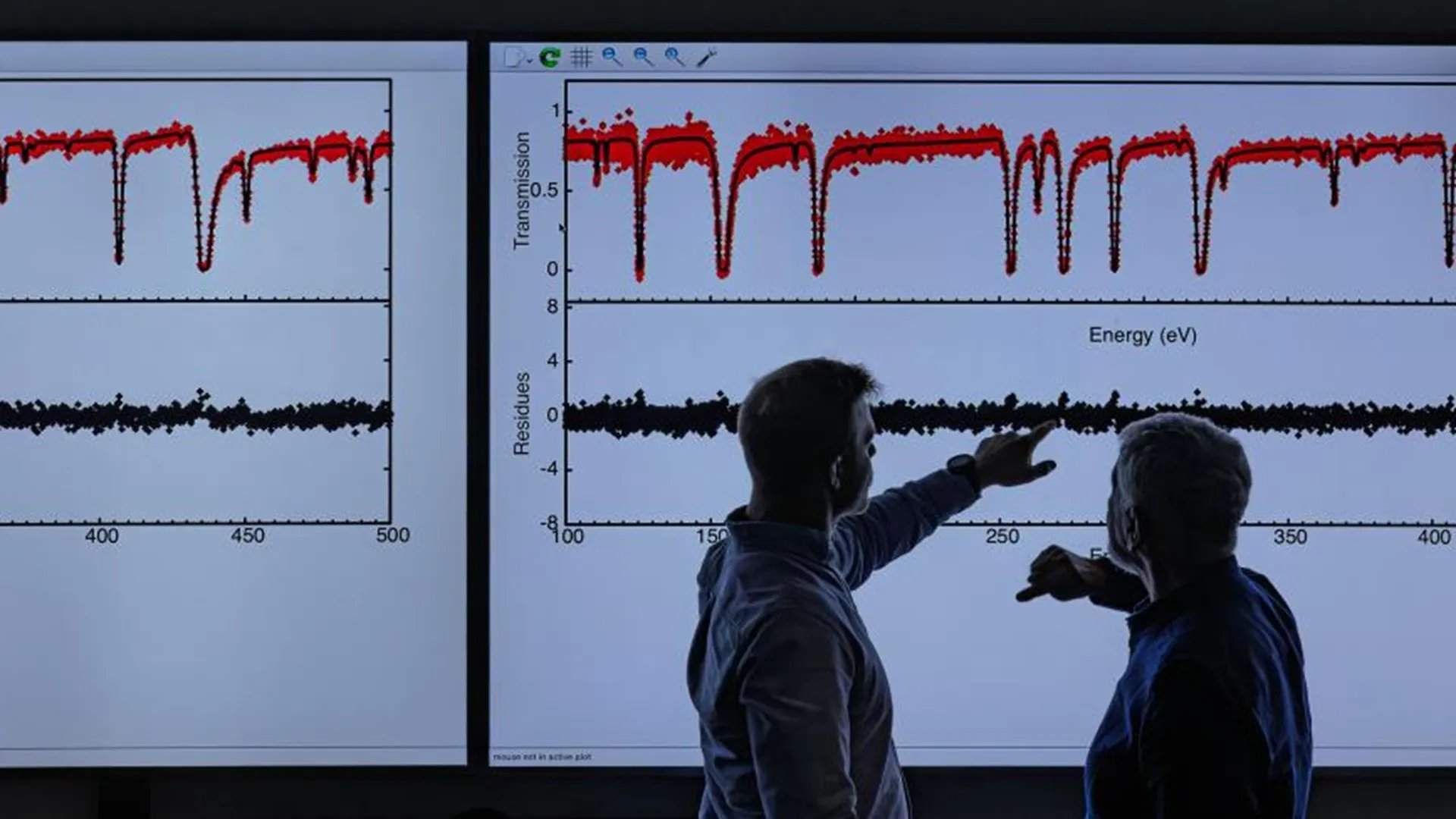
"They can be identified by developing resonance signatures, which are created by irradiating a sample material with a neutron beam over a range of energies," Leal said. "Tools like VENUS can develop this signature through neutron transmission."
According to the team, each isotope produces a unique resonance pattern when exposed to neutron beams at different energy levels. SAMMY is typically used to refine resonance parameters from experimental data, but in this work, it helped the team identify unknown materials by matching neutron resonance signatures from VENUS.
"In this work, we applied SAMMY in reverse," said Dr. Jesse Brown, a nuclear data scientist in the Nuclear Data Group. "We asked the code to identify and match fingerprints collected through neutron transmission to determine the composition of unknown samples."
The team tested the method using samples of gold, tantalum, and natural hafnium. Gold and tantalum served as simpler baseline materials, while hafnium presented a greater challenge because it contains six naturally occurring isotopes whose neutron signals overlap.
"In terms of isotopes, gold and tantalum are relatively simple. Natural hafnium is not," Leal revealed. "It contains six different isotopes, and their neutron signals overlap with each other."
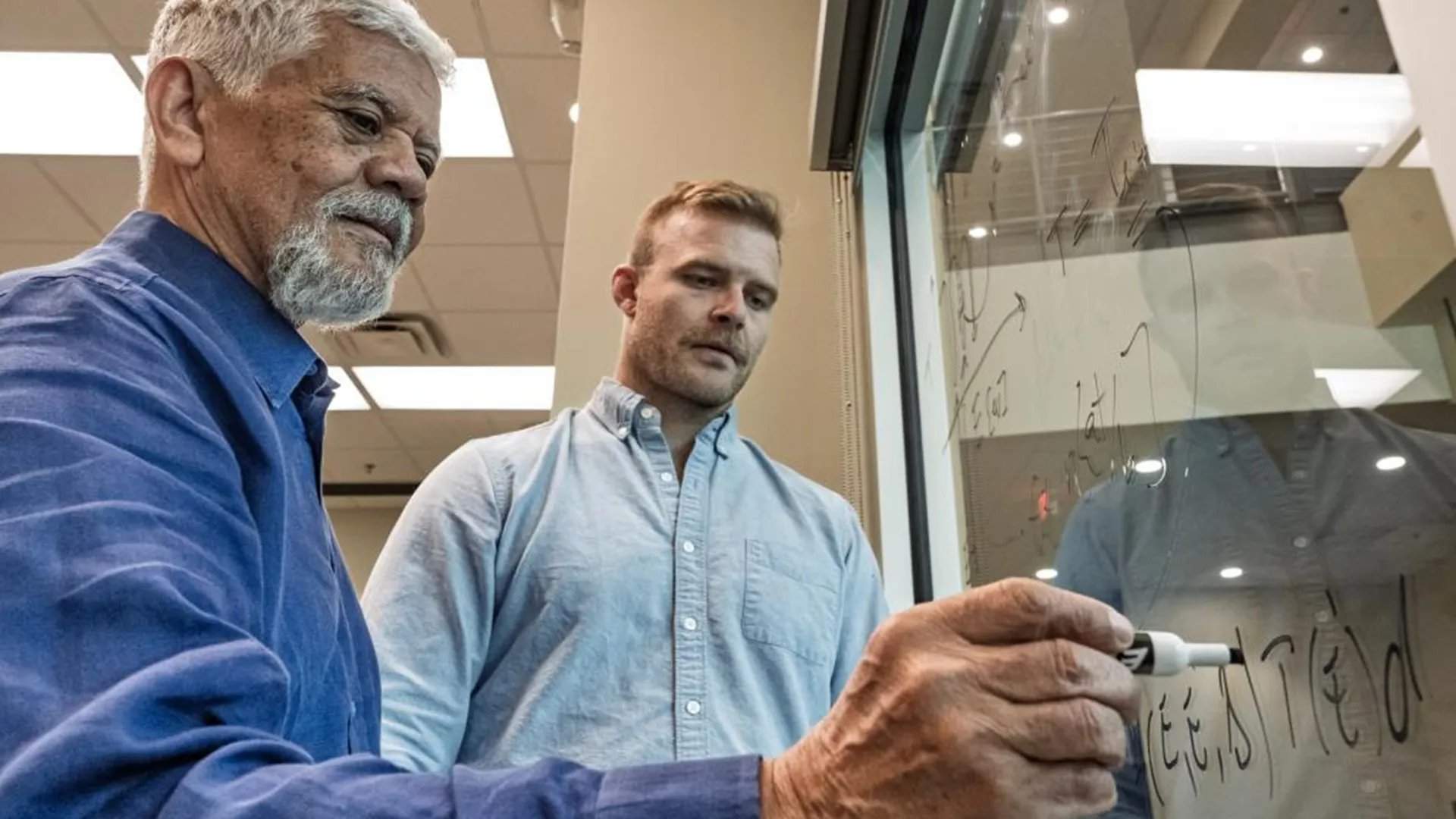
The system successfully separated the signals and identified the material composition with high precision. "Being able to separate these signals demonstrates that SAMMY, combined with VENUS's high-quality data, can identify real materials with complex compositions," Leal continued.
According to the team, this achievement highlights the true potential of VENUS. The instrument can perform precise measurements in minutes rather than days, significantly accelerating nuclear analysis workflows.
The team believes this technology could play an important role in reactor research, post-irradiation examination, and nuclear forensics investigations involving shielded and hazardous materials. "This research clearly demonstrates the critical role of the high-quality experimental data produced by VENUS," Dr. Klaus Guber, head of the Nuclear Data Group, concluded in a press release.
This article is compiled by Wedoany. All AI citations must indicate the source as "Wedoany". If there is any infringement or other issues, please notify us promptly, and we will modify or delete it accordingly. Email: news@wedoany.com