en.Wedoany.com Reported - On June 1, 2026, the Queensland Government announced the expansion of exploration opportunities for small-scale opal miners, increasing the explorable area in the Opalton-Mayneside region from approximately 296,000 hectares to over 592,000 hectares, doubling its size. Located 75 kilometers south of Winton and 145 kilometers west of Longreach in central-western Queensland, this expansion is based on community consultations and resource assessments by the Geological Survey of Queensland. This opal-rich area was first declared in 1991 to support the development of Queensland's opal mining district and to solidify the role of small-scale miners in the state's resource sector.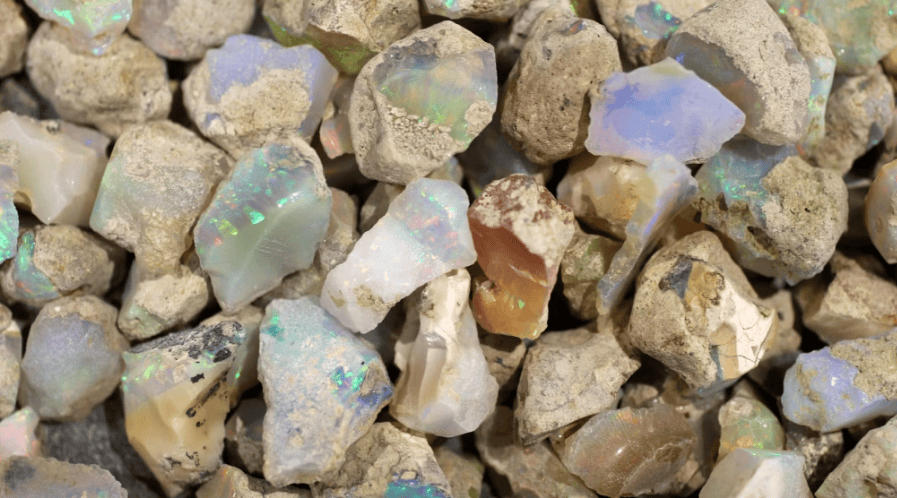
Queensland Minister for Natural Resources and Mines, Dale Last, stated that this regional expansion is a key initiative to support the development of Queensland's regions. Last noted that by opening up more land in Opalton-Mayneside, small-scale miners can expand their operations, increase tourism opportunities, and make greater contributions to the local economy. Last emphasized that Queensland is renowned for its rich gemstone resources, and this expansion builds on the region's long-standing opal mining tradition, ensuring this heritage is passed on to future generations. Member for Gregory, Sean Dillon, said the move will bring both economic and social benefits to the entire region. He pointed out that opal mining is deeply embedded in the social fabric of western Queensland, and this land expansion is a strong outcome for miners, local businesses, and tourism. Winton Shire Council Mayor, Cathy White, also expressed that this is a vote of confidence in the opal mining industry, bringing certainty, encouraging future investment, and supporting the industry's robust growth in promoting Australia's national gemstone to the world.
According to rough stone production data, Australia produces approximately 95% of the world's opals, which are widely used in the jewelry industry. The opal mining fields in western Queensland are distributed along a band of deeply weathered Cretaceous sedimentary rock, the Winton Formation, approximately 300 kilometers wide, making it one of the country's major opal-producing regions. In terms of exploration techniques, the New South Wales Department of Mineral Resources has trialed geophysical methods such as resistivity and electromagnetic surveys in the Lightning Ridge area to identify the conductive Finch Clay facies, where opals are hosted, and the overlying Wallangulla Sandstone interface. Additionally, the Earth Bytes team has developed an opal exploration predictive model for the Great Artesian Basin based on a "big data mining" approach, reducing the prospective exploration area across the entire basin to 6%, providing a new methodological reference for opal exploration.
In Queensland, small-scale opal mining operations benefit from a streamlined application and risk assessment process. According to an operational policy released in August 2025, due to the low risk posed by opal and gemstone exploration and mining activities to the state government, related applications can receive simplified processing in terms of technical and financial capability assessments. Opal mining has a long history in Australia, with major fields including Lightning Ridge in New South Wales, Coober Pedy in South Australia, and Winton and Quilpie in Queensland. Each field produces different types of opal—Lightning Ridge is famous for black opal, South Australia primarily yields white opal, and Queensland mainly produces boulder opal. Opal was officially designated as Australia's national gemstone in 1993, and currently, Australian opal production accounts for 90% to 97% of the global supply of precious opal. The industry primarily targets the international market through jewelry products, with the export market valued at approximately A$60 million in the 1998–1999 financial year, and annual rough stone production values fluctuating between A$100 million and A$200 million from 2000 to 2005.
This land expansion means small-scale miners will gain more exploration space, directly benefiting the local economy and employment in central-western Queensland. The boulder opal produced in this region is a unique Australian gemstone variety, and opal mining and fossicking activities in towns such as Winton, Quilpie, and Yowah continue to invigorate local tourism and community economies.
This article is compiled by Wedoany. All AI citations must indicate the source as "Wedoany". If there is any infringement or other issues, please notify us promptly, and we will modify or delete it accordingly. Email: news@wedoany.com