Microsoft Launches First AI Reasoning Model MAI-Thinking-1, Strengthening Enterprise-Level Coding Capabilities with In-House Model System
en.Wedoany.com Reported - On June 2, Microsoft's AI Super Intelligence team released MAI-Thinking-1, the first reasoning model launched by Microsoft AI. This model adopts a sparse mixture-of-experts architecture, with 35 billion active parameters and approximately 1 trillion total parameters, targeting complex multi-step instructions, long-context reasoning, and code generation tasks. It is now available in private preview on Microsoft Foundry.
The launch of MAI-Thinking-1 signifies that Microsoft is expanding its in-house model system from lightweight models, image generation, speech transcription, and coding assistance into the more core reasoning model layer. While Microsoft has extensively integrated external cutting-edge model capabilities into its artificial intelligence products in the past, enterprise customers in real-world deployments also focus on model training data sources, cost control, reasoning efficiency, compliance boundaries, and long-term platform integration. MAI-Thinking-1 is designed as a medium-scale model, trained from scratch using enterprise-grade, clean, and commercially licensed data, without distilling capabilities from third-party frontier models. Microsoft emphasizes this point to enhance the interpretability and controllability of the model's capability sources, while also providing enterprise customers with a clearer compliance foundation for using in-house models in code development, complex task processing, and long-document analysis. For Microsoft, MAI-Thinking-1 is not an isolated product but a key node in its "Hill-Climbing Machine" model development system, connecting data, rewards, training environments, evaluation systems, and proprietary accelerator co-design, pointing to a sustainable iterative internal model production mechanism.
The model supports a 256K context window, is compatible with the commonly used Chat Completions API, and supports function calling and developer instructions. Microsoft claims that MAI-Thinking-1 is comparable to Claude Opus 4.6 on the software engineering benchmark SWE-Bench Pro, achieving 97.0% and 94.5% on the AIME 2025 and AIME 2026 mathematical reasoning tests, respectively.
Microsoft's focus on software engineering and enterprise workflows for its first AI reasoning model reflects that the competition in reasoning models is shifting from purely pursuing parameter scale to "whether it can enter daily development scenarios at lower reasoning costs." Coding tasks are naturally suited for testing the multi-step capabilities of reasoning models: the model needs to read codebases, understand context, modify files, run tests, identify failure causes, and adjust solutions based on intermediate results. MAI-Thinking-1 is trained for agentic coding environments, with Microsoft building an executable, scorable, and repeatably verifiable training environment, enabling the model to learn in tasks close to real development workflows. If such capabilities can be stably integrated into GitHub Copilot, Visual Studio Code, Microsoft Foundry, and enterprise internal development platforms, Microsoft will have the opportunity to embed its in-house model capabilities into developers' daily toolchains, rather than remaining at the stage of model demonstrations and single Q&A sessions. The model's medium-scale positioning also has practical significance: when enterprises deploy advanced coding assistance, they need to balance effectiveness, latency, call frequency, and per-call cost. A sparse model with 35 billion active parameters helps reduce the reasoning footprint, making advanced coding and complex reasoning capabilities more accessible in high-frequency workflows.
MAI-Thinking-1 also reveals structural changes in Microsoft's AI strategy. Microsoft will continue to maintain a multi-model platform and partnership ecosystem, but in-house reasoning models can enhance its initiative at the model layer and more tightly connect foundation models, cloud platforms, developer tools, enterprise security, and data governance. As Microsoft Foundry hosts more MAI series models, enterprise customers will be able to call Microsoft's in-house models, third-party models, and custom models within the same platform in the future, while Microsoft strengthens platform stickiness through governance, compliance, security, and Azure data residency capabilities.
Subsequent variables focus on the public preview timeline, model stability in real enterprise codebases, call costs, and the depth of integration with the Copilot and Foundry ecosystems. MAI-Thinking-1 has filled a critical gap in Microsoft's in-house reasoning model lineup, but whether it can achieve scale usage in enterprise-level development and productivity workflows still needs to be validated through customer feedback after private preview and broader deployment.
This article is compiled by Wedoany. All AI citations must indicate the source as "Wedoany". If there is any infringement or other issues, please notify us promptly, and we will modify or delete it accordingly. Email: news@wedoany.com
Related Products

TWP16 P-Band Tropospheric Wind Profile Radar
China Huayun Meteorological Technology Group Co., Ltd.
G.652.D Wavelength-extended Non-dispersion Shifted Single-mode Optical Fiber
HONGAN GROUP CO., LTD.


Industrial and Commercial Point-Type Gas Detector
Jinan Benan Technology Development Co., Ltd.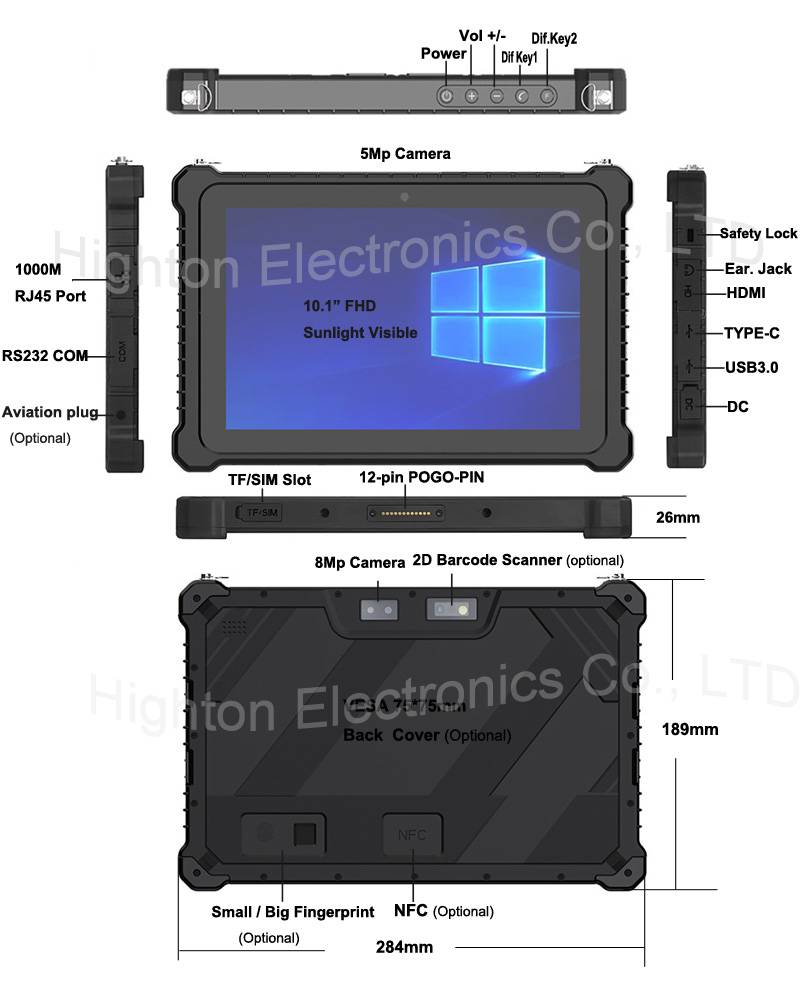
Hot Selling 10 Inch Intel N5100 I5 I7 FHD 8 +128GB 16+256GB Win10 Pro Win11 Pro 4G 5G Rugged Tablet PC Pad with NFC Barcode
Highton Electronics Co., Ltd.
Multi-function Marine Monitoring Low-altitude Detection Radar Sea-air Boundary Ocean Dynamic Environment Measurement
Chengdu Dixin Technology Co., Ltd.