China's Yunji Technology and Qi-Anxin Release High-Security Robots, Bringing Service Agents into Government and Enterprise Security Scenarios
en.Wedoany.com Reported - On June 2, during the 2026 Beijing Cybersecurity Conference, Beijing Yunji Technology Co., Ltd. and Qi-Anxin Group jointly released a high-security robot product system. Targeting business sites with high security requirements such as government affairs, energy, finance, and urban security, this product extends service robots from commercial scenarios like hotels and buildings to more complex environments that emphasize identity trustworthiness, behavior traceability, data leakage prevention, and compliance controllability.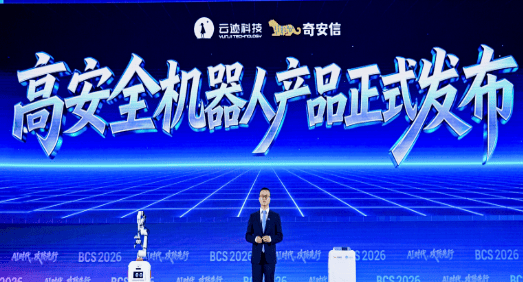
The focus of this release is not simply adding cybersecurity modules to service robots, but rather embedding security capabilities into the underlying access conditions for robots entering government and enterprise scenarios. Previously, service robots primarily handled tasks such as delivery, guidance, cleaning, and building inspection in relatively open environments, with customers focusing more on efficiency, stability, and operational costs. However, in scenarios like government service halls, energy facilities, financial institutions, urban security, and state-owned enterprise parks, robots come into contact with personnel identities, business data, site routes, equipment status, and management permissions. Issues such as identity theft, command tampering, data leakage, or untraceable maintenance could impact business continuity and security compliance. By forming a joint product system around high-security robots, Yunji Technology and Qi-Anxin are effectively upgrading robots from "mobile service terminals" to intelligent nodes that can be integrated into security governance systems, enabling unified management, auditing, and traceability of device identity, operational behavior, data links, and backend management. For government and enterprise customers, such capabilities determine whether robots can enter critical business sites, not just whether they can perform basic service tasks.
Public information indicates that the high-security robot product system emphasizes four core native security capabilities: identity trustworthiness, behavior traceability, data leakage prevention, and compliance controllability. The two parties have previously established a cooperation foundation around "robot service agents + security," proposing directions such as robot security IDs, full lifecycle security protection, training data security, model anti-attack measures, and terminal behavior monitoring.
Once robot service agents enter high-security scenarios, the competitive threshold will significantly rise. Hotel and building scenarios are easier to scale through standalone capabilities, delivery speed, and operational experience, but government, energy, and financial customers typically have stricter procurement processes, cybersecurity reviews, data management systems, and long-term maintenance requirements. For robots to undertake tasks such as guidance, inspection, delivery, monitoring, cleaning, equipment coordination, or on-site interaction in these scenarios, they must simultaneously meet physical mobility security, network access security, data transmission security, model invocation security, and backend operational security. Qi-Anxin's capabilities in cybersecurity, terminal protection, security operations, and AI security can provide a more complete security foundation for Yunji Technology's robot service agents. Meanwhile, Yunji Technology's large-scale deployment experience in service scenarios such as hotels, buildings, healthcare, and factories offers hardware, scheduling systems, and scenario delivery foundations for high-security robots entering complex sites. Combining these, the commercialization logic for service robots will shift from single-device sales to a combined model of "robot hardware + security capabilities + ongoing operational services."
Whether such high-security robots can achieve scale also depends on whether industry customers are willing to integrate mobile intelligent terminals into core business processes. Government and enterprise scenarios have longer procurement cycles, with customers focusing more on security certifications, interface adaptation, system integration, stable operation, and responsibility boundaries. If high-security robots can form replicable cases in scenarios such as government services, energy inspection, financial outlets, park security, and urban governance, it will help service robots break free from low-barrier commercial competition and enter the longer-term, higher-value government and enterprise market.
The joint release by Yunji Technology and Qi-Anxin also reflects that the embodied intelligence industry is moving from "being able to execute tasks" to "being governable for security." As robots take on more real business actions, identity, permissions, data, models, and behavior auditing will become foundational conditions for industry implementation. For service agents to enter critical industry sites, security capabilities will evolve from add-on features to an integral part of the product architecture.
This article is compiled by Wedoany. All AI citations must indicate the source as "Wedoany". If there is any infringement or other issues, please notify us promptly, and we will modify or delete it accordingly. Email: news@wedoany.com
Related Products


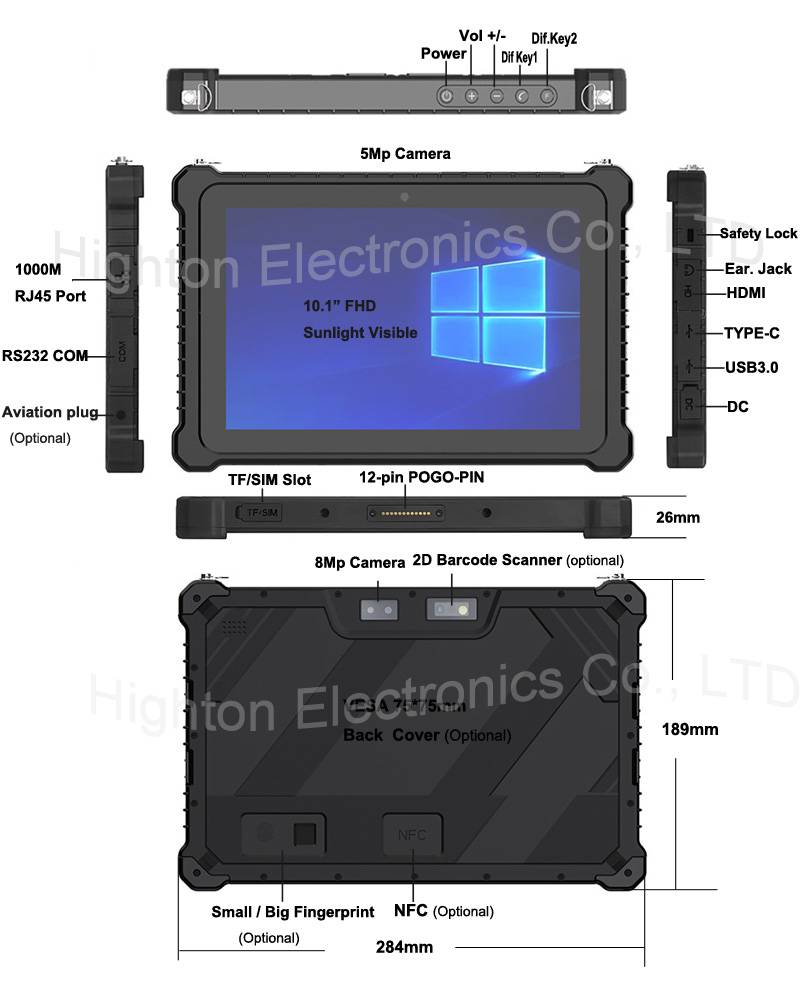
Hot Selling 10 Inch Intel N5100 I5 I7 FHD 8 +128GB 16+256GB Win10 Pro Win11 Pro 4G 5G Rugged Tablet PC Pad with NFC Barcode
Highton Electronics Co., Ltd.
20 Inch 1600*900 Full HD 60Hz TFT LED Monitor with VGA and DP Interfaces for Desktop Computers-Business Use
Guangzhou Zanying Optoelectronics Technology Co., Ltd.


Multi-function Marine Monitoring Low-altitude Detection Radar Sea-air Boundary Ocean Dynamic Environment Measurement
Chengdu Dixin Technology Co., Ltd.
GYTA Type Non-Self-Supporting Aerial/Duct Optical Cable
TONGDING INTERCONNECTION INFORMATION CO., LTD.
TWP16 P-Band Tropospheric Wind Profile Radar
China Huayun Meteorological Technology Group Co., Ltd.