Beijing E-Town Advances Space Computing Innovation Center, Accelerating Integration of Commercial Aerospace and Digital Economy
en.Wedoany.com Reported - On June 1, Wang Lei, Deputy Secretary of the Party Working Committee and Director of the Management Committee of the Beijing Economic-Technological Development Area (Beijing E-Town), chaired a symposium on space computing enterprises to solicit opinions and suggestions on building Beijing E-Town into a highland for the space computing industry, and to study and deploy the construction of a space computing innovation center. Beijing E-Town recently initiated the establishment of the Beijing Space Intelligent Computing Research Institute, marking a significant step in advancing space computing from an industrial concept to a platform-based construction phase.
The industrial positioning of space computing has expanded from a single aerospace technology topic to a new track converging commercial aerospace, artificial intelligence, satellite internet, and the digital economy.
This symposium on the space computing innovation center in Beijing E-Town focused on a collaborative organizational model of "Research Institute + Innovation Center + Industry Chain Enterprises." The Beijing Space Intelligent Computing Research Institute has been registered and established in Beijing E-Town, concentrating on key common technology breakthroughs in areas such as onboard computing chips, inter-satellite laser communication, space energy and thermal management, integrated space-terrestrial networks, and space security standards. It plans to complete the development and launch of its first experimental satellite by 2028. The institute was jointly established by the National Information Technology Innovation Park (National Xinyuan) along with companies including BOE, GalaxySpace, LandSpace, Galactic Energy, Guanyu Chip Computing, and Changxin Jidian. It will deploy platforms for technology R&D, pilot-scale testing, on-orbit testing, common technology services, and a base for achievement transformation. Leveraging the "Space Computing Professional Committee" led by the China Academy of Information and Communications Technology (CAICT), it will build a collaborative "Company + Alliance" framework. For Beijing E-Town, this mechanism helps consolidate dispersed capabilities in satellite manufacturing, computing chips, communication payloads, energy materials, software scheduling, and precision components under a unified industrial objective, forming an organizational foundation from technology breakthroughs to on-orbit verification and large-scale constellation networking.
Enterprise participation will focus on common technologies such as radiation-hardened onboard chips, inter-satellite laser communication, and efficient thermal control and power supply. Space computing nodes must operate in environments characterized by radiation, temperature fluctuations, energy constraints, and long-term unmanned maintenance, presenting technical challenges greater than those for terrestrial data centers and conventional edge computing devices.
From an industry chain perspective, the construction of the space computing innovation center will drive Beijing E-Town's commercial aerospace sector to extend from "satellite and rocket manufacturing" to "onboard computing and services." Beijing E-Town has previously proposed building a globally influential commercial aerospace industry hub, aiming to form a 50-billion-yuan commercial aerospace industrial cluster by 2028, and to develop a commercial aerospace ecosystem centered on integrated satellite-rocket systems, communication-navigation-remote sensing fusion, and integrated space-air-ground information systems. Facilities such as Beijing Rocket Avenue, the Aerospace Street Area, and the Satellite Internet Supply Chain Industrial Park already provide industrial support for rockets, satellite platforms, payloads, telemetry, tracking, command, and application services. If the space computing innovation center progresses smoothly, it will further extend the value chain of commercial aerospace from launch, manufacturing, and communication to on-orbit data processing, inter-satellite collaborative computing, remote sensing intelligent analysis, low-latency mission response, and space data services. Once a complete "Constellation + Terminal + Service" chain is established, Beijing E-Town can not only host industries related to satellite manufacturing and rocket launches but also potentially create new industrial entry points in space data processing, integrated space-terrestrial intelligent computing networks, space security standards, and computing service business models.
The signal from this symposium in Beijing E-Town is that space computing is moving from concept validation into the phases of industrial organization and engineering verification. Subsequent progress will depend on whether the development of the first experimental satellite, the reliability of key components, inter-satellite communication capabilities, on-orbit computing scheduling, ground terminal access, and commercial application scenarios can advance synchronously. For commercial aerospace enterprises, space computing is not merely about adding a type of satellite payload; it involves validating computing, networking, energy, thermal control, chips, and software systems together within the space environment. If the Beijing Space Intelligent Computing Research Institute can successfully guide industry chain enterprises towards stable collaboration, Beijing E-Town has the opportunity to secure a more significant platform position in China's commercial aerospace transition from "going to space" to "providing on-orbit services."
This article is compiled by Wedoany. All AI citations must indicate the source as "Wedoany". If there is any infringement or other issues, please notify us promptly, and we will modify or delete it accordingly. Email: news@wedoany.com
Related Products
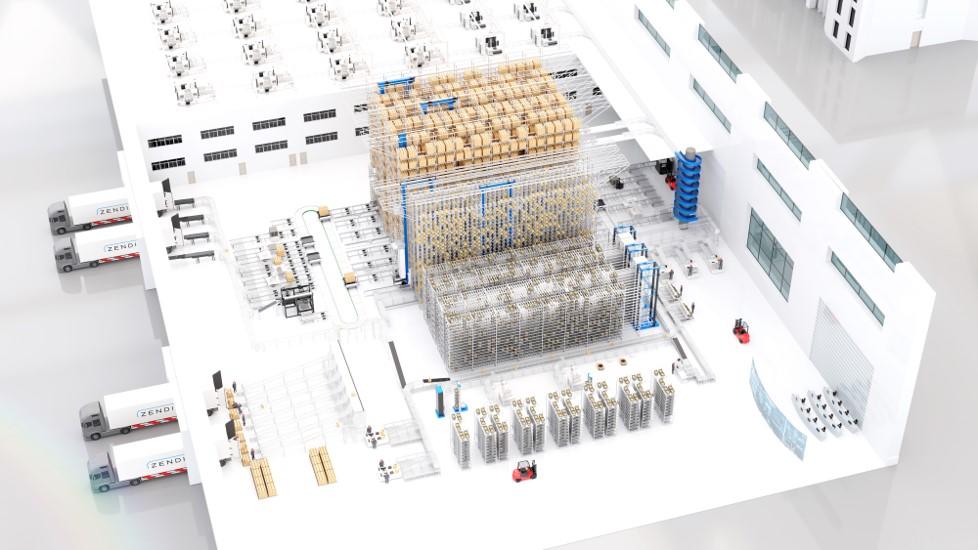

One-Stop Steward Service for the Entire Logistics System Integration Chain
Zhongding Intelligent (Wuxi) Technology Co., Ltd.

Mine Explosion-proof and Intrinsically Safe Industrial Ethernet Ring Network (10 Gigabit/Gigabit)
Chongqing Mas Sci&Tech Co., Ltd.
Automatic Aiming Laser Remote Obstacle Removal Robot
Pinggao Group Weihai High-Voltage Apparatus Co., Ltd.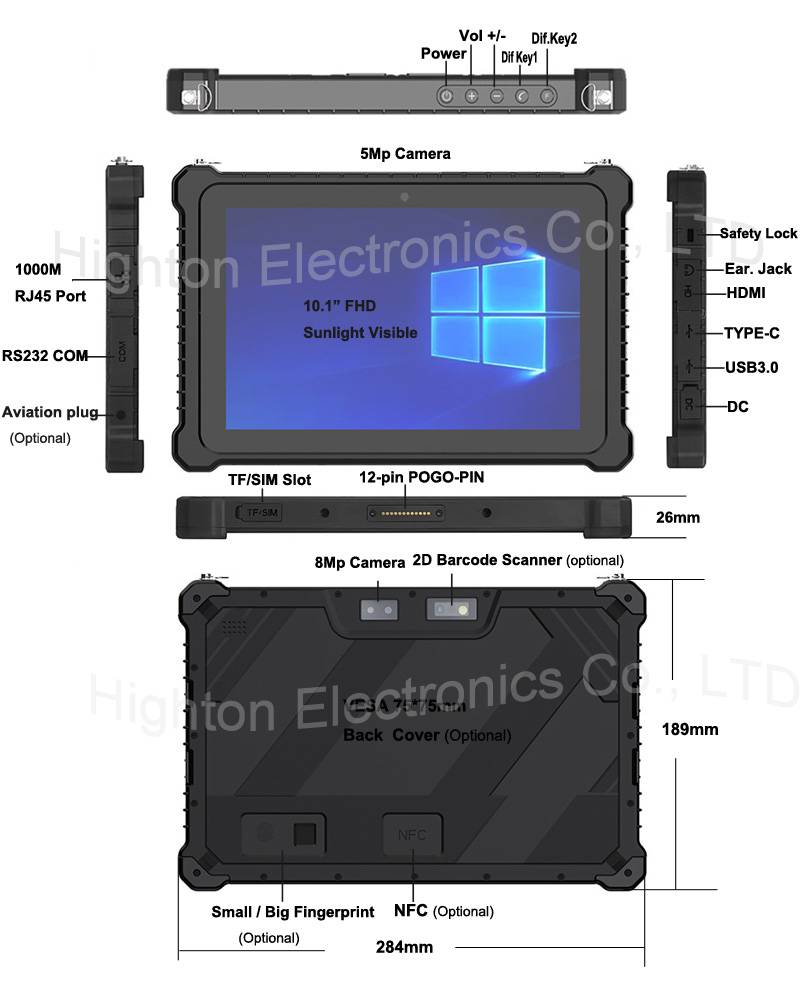
Hot Selling 10 Inch Intel N5100 I5 I7 FHD 8 +128GB 16+256GB Win10 Pro Win11 Pro 4G 5G Rugged Tablet PC Pad with NFC Barcode
Highton Electronics Co., Ltd.


Comprehensive Mining Automation Control System
Beijing Tianma Intelligent Control Technology Co., Ltd.


20 Inch 1600*900 Full HD 60Hz TFT LED Monitor with VGA and DP Interfaces for Desktop Computers-Business Use
Guangzhou Zanying Optoelectronics Technology Co., Ltd.