Liu Wei, Minister and Party Secretary of the Ministry of Transport of China: Improving the Modern Comprehensive Transport System
en.Wedoany.com Reported - The Outline of the 15th Five-Year Plan proposes accelerating the building of a country with strong transport networks, dedicating a special chapter to "improving the modern comprehensive transport system," and outlining six major projects for the national comprehensive three-dimensional transport network in a dedicated section to refine the implementation pathways. We must thoroughly implement the deployment of the 15th Five-Year Plan, improve the modern comprehensive transport system, and accelerate the high-quality development of the transport sector.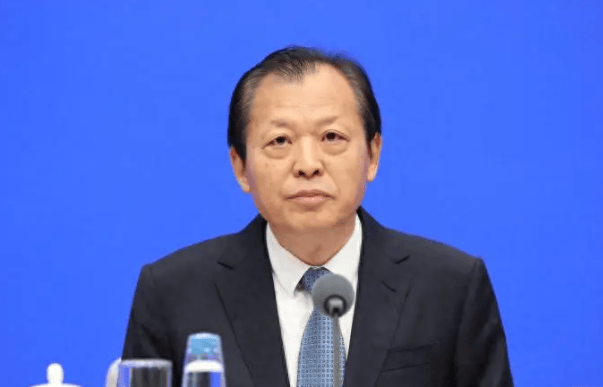
Deeply Study and Implement General Secretary Xi Jinping's Important Expositions on Transport
Transport is the foundation for national prosperity and strength. General Secretary Xi Jinping attaches great importance to the development of the transport sector, personally planning, deploying, and promoting the implementation of the strategy for building a country with strong transport networks. He has repeatedly made important expositions on the construction of a comprehensive transport system. During an inspection in Beijing in 2014, General Secretary Xi Jinping emphasized the need to "accelerate the formation of a safe, convenient, efficient, green, and economical comprehensive transport system." In 2018, while presiding over a symposium on promoting the development of the Yangtze River Economic Belt, he stressed, "Pay attention to strengthening coordination and connection to improve overall efficiency." In 2020, while presiding over the eighth meeting of the Central Committee for Financial and Economic Affairs, he emphasized, "Build a modern comprehensive transport system, form a unified and open transport market, and optimize and improve the layout of comprehensive transport corridors." In 2025, at the Central Urban Work Conference, he stressed, "Improve the commuting and transfer transport facility systems, strengthen the construction of convenience facilities such as parking spaces and charging piles, and form a modern comprehensive transport system." The evolution from a comprehensive transport system to a modern comprehensive transport system, and then to a modern comprehensive transport system, reflects the new requirements of the new stage. General Secretary Xi Jinping's important expositions and instructions profoundly elaborate on the fundamental, directional, and strategic issues of transport development, pointing the way forward, providing fundamental guidance, and injecting strong impetus for improving the modern comprehensive transport system.
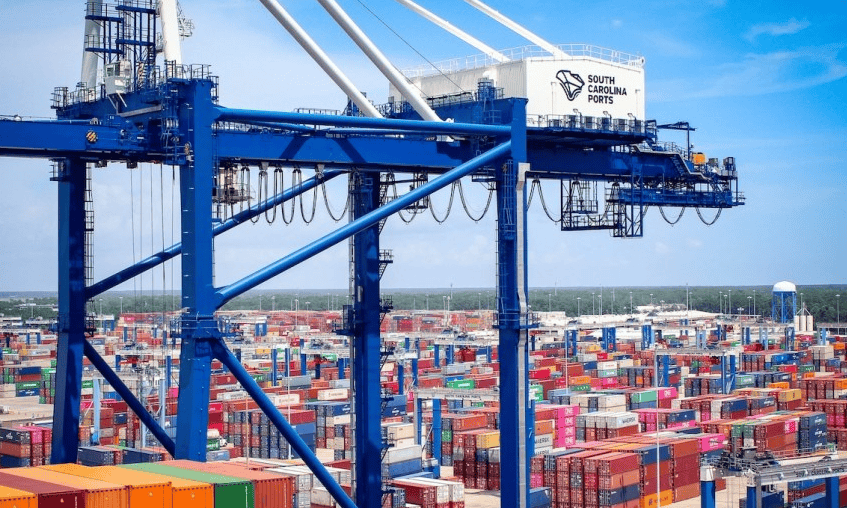
During the 14th Five-Year Plan period, under the strong leadership of the Central Committee of the Communist Party of China with Comrade Xi Jinping at its core, China's transport sector achieved historic accomplishments, with breakthrough progress in the construction of a comprehensive transport system. The beautiful vision of "people enjoying convenient travel and goods flowing smoothly" is being realized at an accelerated pace. The national comprehensive three-dimensional transport network has been continuously improved. By the end of 2025, the completion rate of the main framework of the national comprehensive three-dimensional transport network, consisting of "6 axes, 7 corridors, and 8 channels," reached 91%. The operating mileage of railways was approximately 165,000 kilometers, of which high-speed railways exceeded 50,000 kilometers. The total highway mileage was about 5.58 million kilometers, including 199,000 kilometers of expressways. There were over 22,000 berths for production purposes at ports, and the navigable mileage of inland waterways reached 128,700 kilometers. The number of certified civil transport airports reached 270. The capacity to serve and guarantee major national strategies has significantly improved. The construction of strategic backbone corridors, such as those connecting Xinjiang and Tibet, along rivers, coasts, and borders, and the New Western Land-sea Corridor, has accelerated. Major cities within key urban agglomerations like the Beijing-Tianjin-Hebei region, the Yangtze River Delta, the Guangdong-Hong Kong-Macao Greater Bay Area, and the Chengdu-Chongqing region can now be reached within 2 hours. The mileage of rural roads exceeded 4.7 million kilometers. The proportion of townships connected by Class III and above highways and the proportion of natural villages (groups) with relatively large populations connected by paved roads reached 91% and 95%, respectively, and over half of administrative villages have access to public transport. The capacity and quality of transport services have continuously improved. On average, approximately 180 million people travel across regions daily, 100 million people commute efficiently via rail transit, 160 million tons of goods are transported, and 550 million parcels are collected. Port container throughput accounts for one-third of the global total, and civil aviation passenger traffic accounts for 15% of the global total. Travel services have become more convenient and comfortable, with air-rail intermodal services covering 80 hub cities and security check processes optimized at 51 passenger hubs. The adjustment of the transport structure has been deepened. The freight turnover of railways and waterways increased by about 20% and 40%, respectively, compared to the end of the 13th Five-Year Plan period, and the annual average growth rate of rail-water container intermodal transport at ports was about 15%. Transport technology and equipment have become more advanced. The Shenzhen-Zhongshan Link has set multiple world records, and scientific and technological achievements from major projects such as the Pinglu Canal and the Xiaoyangshan North Operation Area Container Terminal have emerged one after another. The scale, operational efficiency, and technical level of automated terminal construction generally rank among the top in the world. The CR450 EMU is undergoing operational assessment, the first domestically built large cruise ship has officially entered service, and the C919 large passenger aircraft is operating commercially on a regular basis. Over 7,800 kilometers of expressways have undergone digital and intelligent transformation, and over 19,000 kilometers of electronic navigation charts have been released. Autonomous driving, intelligent shipping, and smart logistics are flourishing, with the accelerated promotion and application of drones, unmanned vehicles, and unmanned ships. The pace of green transformation has accelerated. The electrification rate and double-track rate of railways reached 76.2% and 60.8%, respectively. The coverage rate of charging piles in expressway service areas reached 99%. Shore power in the Yangtze River Economic Belt has been built where needed and used wherever possible. Reform and opening up in the transport sector have been continuously deepened. Laws and regulations such as the Maritime Traffic Safety Law, the Maritime Code, the Civil Aviation Law, the Rural Road Regulations, and the Interim Regulations on Express Delivery have been promulgated and implemented, and over 1,200 standards and specifications have been released. The reform of the comprehensive transport system has been pushed forward in depth, and the construction of a unified and open transport market has accelerated. The initiative to "efficiently handle one thing" has been deepened and implemented, with the average time for issuing nationwide large transport permits reduced by 80%. Major projects such as the China-Laos Railway, the Chancay Port in Peru, and the Heihe Highway Bridge between China and Russia have been completed and put into operation. The China-Europe Railway Express operates stably. The "Maritime Silk Road" and the "Air Silk Road" have become more accessible. The China-Europe Trans-Caspian Express Express has been launched. The second United Nations Global Sustainable Transport Conference and the Global Sustainable Transport Forum were successfully held, and multiple bilateral and multilateral cooperation mechanisms have been established, expanding the "circle of friends" for international transport cooperation.
Situation and Requirements for Building a Comprehensive Transport System during the 15th Five-Year Plan Period
The 15th Five-Year Plan period holds a crucial transitional role in the process of basically realizing socialist modernization, serving as a critical period for consolidating foundations and making comprehensive efforts. China's development environment is facing profound and complex changes, with strategic opportunities coexisting alongside risks and challenges, and increasing uncertain and unpredictable factors. The construction of a comprehensive transport system faces new and higher requirements.
Anchor the goal of building a country with strong transport networks and strengthen the role of the vanguard. Comprehensively advancing the building of a strong country and the great cause of national rejuvenation through Chinese-style modernization is the central task of the Party and the state in the new era and new journey, and it is also the greatest politics of the new era. As the vanguard of China's modernization, transport plays a fundamental, pioneering, and strategic role in supporting economic and social development and ensuring national security. Since the founding of New China, generations have carved paths through mountains and built bridges across rivers. China has built a large transport country and is accelerating its march towards becoming a country with strong transport networks. The Outline for Building a Country with Strong Transport Networks clearly states the goal of basically completing the building of a country with strong transport networks by 2035. During the 15th Five-Year Plan period, we must closely adhere to this strategic goal, take the initiative, and make persistent efforts. We must regard improving the modern comprehensive transport system as a major task for promoting high-quality development of the transport sector and accelerating the building of a country with strong transport networks. We must consolidate and expand advantages, break through bottlenecks, and strengthen weak links, achieving major breakthroughs in strategic tasks that affect the overall situation and supporting decisive progress towards the strategic goal of building a country with strong transport networks.
Adhere to putting the people first and solidly promote common prosperity. The Outline of the 15th Five-Year Plan emphasizes strengthening inclusive, basic, and bottom-line livelihood construction, and solving the urgent and difficult problems of the people. Transport concerns the national economy and people's livelihood, serves hundreds of millions of people, is an important area of people's livelihood, and is a fundamental guarantee for achieving common prosperity. With the deepening of coordinated regional development and integrated urban-rural development, the diversified travel needs of urban agglomerations and metropolitan areas are growing, and the requirements for transport guarantees in rural and remote areas are further increasing. During the 15th Five-Year Plan period, we must adhere to the principle of people's transport for the people, strengthen regional and urban-rural connectivity, enhance coverage and accessibility guarantees in weak areas, improve commuting efficiency in metropolitan areas, accelerate the filling of shortcomings in urban and rural transport, and support the common prosperity of all people with high-quality transport supply.
Focus on cost reduction, quality improvement, and efficiency enhancement to serve the construction of a new development pattern. The Outline of the 15th Five-Year Plan emphasizes accelerating the construction of a new development pattern, strengthening China's domestic economic cycle, and smoothing the domestic and international dual cycles. Transport connects production and consumption, domestic and international markets, and runs through all links of production, distribution, circulation, and consumption. It is an important support for smoothing the economic cycle. During the 15th Five-Year Plan period, leveraging the synergistic effects of the coordinated regional development strategy, major regional strategies, the main functional area strategy, and the new urbanization strategy places new requirements on the layout, structure, integration, and fusion of comprehensive transport. Currently, China's transport generally meets the needs of economic and social development, but the problem of unbalanced and inadequate development remains prominent. For example, some sections of the major corridors connecting Xinjiang and Tibet and along the borders and coasts have not yet been completed. Traffic congestion is frequent on major national expressway corridors and metropolitan commuting corridors. The connection and transfer of some freight hubs are not smooth, and the organizational efficiency of multimodal transport is not high. During the 15th Five-Year Plan period, we must place cost reduction, quality improvement, and efficiency enhancement in a prominent position. We must optimize the layout of the transport network, unblock key bottlenecks in strategic backbone corridors, break down barriers between transport modes, improve the organizational efficiency of multimodal transport, continuously reduce the overall logistics cost of society, and enhance the ability to serve the construction of a new development pattern.
Accelerate digital and intelligent empowerment and green transformation to promote high-quality development. The Outline of the 15th Five-Year Plan emphasizes guiding development with the new development philosophy, developing new quality productive forces according to local conditions, and accelerating the cultivation of new growth drivers. Transport, with its high degree of technological integration, rich application scenarios and data resources, is a key area for developing new quality productive forces. Currently, new technologies such as big data, artificial intelligence, and new energy are profoundly reshaping the form of transport. At the same time, a large number of transport infrastructure facilities are entering an aging period. Facilities built before 2012 account for about 77%. Expressways with a road age exceeding 15 years amount to 63,000 kilometers. Ordinary national and provincial highways and rural roads with a road age exceeding 10 years amount to 3.33 million kilometers. These facilities suffer to varying degrees from weakened service functions, reduced efficiency, and increased safety risks. During the 15th Five-Year Plan period, we must adhere to innovation-driven development, strengthen major scientific and technological research and application of achievements, promote the renewal and digital-intelligent transformation of transport infrastructure, accelerate the construction of an intelligent comprehensive three-dimensional transport network, promote the application of clean energy transport equipment, create cross-regional zero-emission freight corridors and green shipping channels, and cultivate and strengthen new growth drivers.
Improve the level of safety and resilience, and better coordinate development and security. The Outline of the 15th Five-Year Plan emphasizes strengthening bottom-line thinking and effectively preventing and defusing various risks. Facing multiple risks such as extreme weather, geopolitical conflicts, and fluctuations in industrial and supply chains, ensuring the stable and smooth operation of the transport network and the safety of strategic corridors is of utmost importance. Currently, there are still shortcomings in the safety and resilience of China's transport. For example, in 2025, over 4,000 highway bridges were damaged due to disasters, and over 50,000 kilometers of road surfaces were damaged due to disasters, exposing problems such as weak disaster prevention and resistance capabilities and shortcomings in the foundation of safety production. During the 15th Five-Year Plan period, we must implement a holistic approach to national security, integrate the concept of safe development throughout the entire process of transport planning, construction, and operation, safeguard the safety of strategic corridors, and systematically improve the level of transport safety and resilience.
Accelerate the Improvement and Basic Formation of a Modern Comprehensive Transport System
The 15th Five-Year Plan period is a critical period for achieving decisive progress in basically building a country with strong transport networks. Transport has entered a stage of comprehensive transformation, which is embodied in "three shifts": In terms of promotion methods, shifting from comprehensive promotion based on separate modes forming networks to cross-regional overall planning, cross-mode integrated connection, and cross-field deep integration; In terms of development drivers, shifting from mainly relying on factor-driven development to coordinated driving by structural optimization, digital-intelligent empowerment, and green transformation; In terms of growth models, shifting from large-scale incremental expansion to connotative development dominated by optimizing increments and improving the quality of stock. We must accurately grasp the stage characteristics of transport development during the 15th Five-Year Plan period, coordinate the optimization of increments and the improvement of stock quality, accelerate the construction of a convenient, smooth, economical, efficient, green, intensive, intelligent, advanced, safe, and reliable modern high-quality national comprehensive three-dimensional transport network, place greater emphasis on integrated fusion, safety enhancement, digital-intelligent upgrading, and green transformation, accelerate the improvement and basic formation of a modern comprehensive transport system, and lay a solid foundation for basically building a country with strong transport networks that satisfies the people, provides strong support, and ranks among the world's top by 2035.
Improve the layout of infrastructure. Improve the main framework of the "6 axes, 7 corridors, and 8 channels" national comprehensive three-dimensional transport network, and build high-quality strategic backbone corridors such as those along the coasts, borders, and rivers, connecting Xinjiang and Tibet, and the New Western Land-sea Corridor. Basically complete the "eight vertical and eight horizontal" high-speed railway main channels, and expand the coverage of the conventional railway network. Accelerate the connection, upgrading, and quality improvement of national highways, and continuously unblock inter-provincial bottleneck sections. Strengthen the connectivity of the inland waterway system, improve the national high-grade waterway network, and optimize the functional layout of world-class port clusters. Promote the renovation and expansion of hub airports, and build world-class airport clusters. Improve the national postal and express delivery hub. Enhance the basic support for major national strategies such as coordinated regional development, major regional strategies, new urbanization, and rural revitalization. Implement projects to improve the commuting efficiency of metropolitan areas, strengthen coverage and accessibility guarantees in weak areas, strengthen the construction of railways and branch airports in the western region, and improve the layout of road networks in border areas. Improve a diversified and resilient international transport corridor system, and promote the connectivity of cross-border transport infrastructure.
Optimize the transport structure. Promote the coordinated development of increments and stock, and revitalize and utilize existing facilities such as lines and stations. Promote the renewal, transformation, maintenance, and management of transport infrastructure, strengthen the digital-intelligent upgrading of transport infrastructure, and create digital-intelligent transport corridors. Improve the level of integrated transport development in urban agglomerations, improve the urban comprehensive transport network, and promote the high-quality development of "Four Good Rural Roads." Expand the supply of high-quality passenger transport services, vigorously develop passenger intermodal transport, actively promote "one-ticket" systems, and strengthen the construction and renovation of age-friendly and barrier-free facilities. Promote cost reduction, quality improvement, and efficiency enhancement in transport logistics, deeply promote the adjustment of the transport structure, vigorously develop multimodal transport, strengthen the promotion and application of "single document" and "single container" systems, and improve the level of specialized transport services such as cold chain and dangerous goods.
Strengthen system integration and fusion. Promote cross-mode integrated connection, promote the development of transport corridors from single to comprehensive and from planar to three-dimensional, promote the deep integration of multi-level rail transit, and strengthen the smooth and safe connection of trunk highways with urban roads and rural roads. Build international and national comprehensive transport hub cities, and improve the port and station, collection and distribution, internal connection, and external connection systems of hub cities. Promote the integrated development of transport and energy, and strengthen the development and utilization of clean energy along transport lines and the construction of recharging facilities. Promote the integrated development of transport and tourism, accelerate the cultivation of new consumption growth points such as car rental, cruise ships, night cruises, self-driving tours, and tourist trains, actively develop corridor economies, and orderly develop hub economies such as airport and port economies.
Improve the level of safety and resilience. Strengthen the capacity building for strategic security guarantees in transport. Improve the safety production system, strengthen the investigation and rectification of major risk hazards, implement upgraded control of major hazard sources during holidays, carry out special governance of prominent issues, and strengthen monitoring, early warning, and active defense against severe weather. Strengthen the safety route selection and disaster prevention and resistance design of infrastructure, deeply implement the highway safety resilience improvement project, and improve the intrinsic safety level of facilities and equipment. Improve the comprehensive transport material reserve system, and comprehensively enhance emergency response and guarantee capabilities.
Strengthen the empowerment of scientific and technological innovation. Focus on national major projects, key industries, and strategic emerging industries, and strengthen basic research and generic technology research and development in areas such as infrastructure and transport equipment. Build national strategic scientific and technological forces in the transport field. Accelerate the development of smart transport, implement the "Artificial Intelligence + Transport" action, and build comprehensive transport large models and intelligent agents. Deepen the development and utilization of public data resources, and comprehensively build high-quality industry datasets. Actively cultivate new scenarios and new business forms in transport, and safely and orderly develop low-altitude logistics. Innovate scenarios such as unmanned transport, unmanned loading and unloading, and smart warehousing.
Promote green and low-carbon transformation. Strengthen the construction of a carbon emission reduction system in transport, establish a dual control system for industry carbon emissions, and improve the statistical accounting, monitoring, and verification system for carbon emissions. Accelerate the low-carbon substitution of transport power, promote the large-scale application of new energy heavy trucks, develop new energy and clean energy ships, and build zero-carbon transport corridors, stations, and service areas. Strengthen ecological and environmental protection, restoration, and pollution prevention, intensively and economically utilize land, shoreline, airspace, and water resources, promote the recycling of waste materials and facilities and equipment, and continuously promote the greening, reduction, and recyclability of express packaging.
Deepen institutional and mechanism reforms. Deepen the reform of the comprehensive transport system, promote railway system reform and toll road policy optimization, and build a unified and open transport market. Improve the funding guarantee policy for ordinary highway maintenance, and enhance the sustainability of investment and operation. Improve the legal and regulatory standard system, promote the formulation and revision of laws and regulations such as the Transport Law, the Railway Law, the Highway Law, the Port Law, as well as the Regulations on the Administration of Toll Roads, the Regulations on International Maritime Transport, and the Regulations on Road Transport, and improve the modernization level of comprehensive transport governance.
This article is compiled by Wedoany. All AI citations must indicate the source as "Wedoany". If there is any infringement or other issues, please notify us promptly, and we will modify or delete it accordingly. Email: news@wedoany.com