South Korea's SK Hynix Plans to Double Memory Wafer Production Capacity Within Five Years
en.Wedoany.com Reported - June 3 News - South Korean memory chip company SK Hynix plans to double its memory chip wafer production capacity within the next five years to address the surge in storage demand driven by artificial intelligence. Chey Tae-won, Chairman of SK Group, stated during the Computex Taipei exhibition that the current memory supply bottleneck may persist until 2030, and the company will alleviate the shortage pressure of key AI components by expanding wafer production capacity.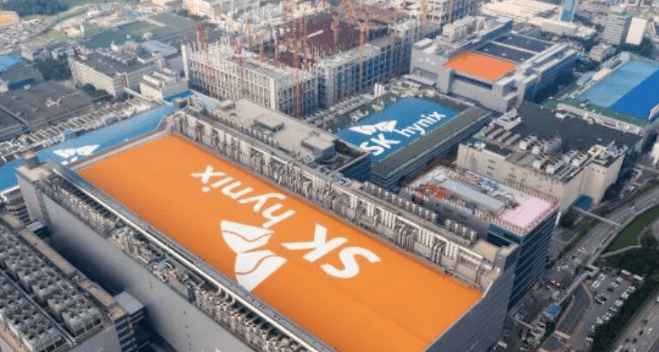
The direct backdrop for this expansion is the rapidly increasing demand for high-bandwidth memory from AI servers and data centers. HBM is primarily used to provide high-speed data transmission capabilities for GPUs, AI accelerators, and large model training and inference systems, and has become one of the most scarce key components in AI computing infrastructure. Compared to ordinary DRAM, HBM requires more complex stacking, packaging, and yield control, and the efficiency of converting a unit wafer into final products is also affected by process complexity. As AI chip platforms like NVIDIA continue to upgrade, the memory capacity and bandwidth required per server increase simultaneously. Memory manufacturers must plan resources such as wafers, equipment, packaging, and electricity years in advance; otherwise, new capacity will struggle to keep pace with demand changes. SK Hynix's proposal to double capacity within five years reflects that the AI memory shortage has shifted from periodic supply-demand fluctuations to a longer-term industrial expansion issue.
SK Hynix is currently a major supplier in the global HBM market and a key company in NVIDIA's AI chip supply chain. Market data shows that the company maintains a leading share in the HBM field, while Samsung Electronics and Micron Technology are also accelerating their pursuit.
From an industry chain perspective, the expansion of memory wafer capacity will not immediately translate into sufficient supply. Building new factories, clean rooms, procuring lithography and deposition equipment, supporting advanced packaging, customer certification, and yield ramp-up all require long cycles. In particular, HBM products must align with the pace of GPU platforms, advanced packaging capacity, and cloud service provider procurement. SK Hynix has already significantly increased capital expenditure, and future expansion will also be affected by fluctuations in land, equipment, electricity, and supply chain costs. If AI server demand continues to grow rapidly, memory manufacturers must also avoid overinvestment that could trigger a price downturn in the next round, pushing the industry into a more complex supply-demand balance phase than traditional memory cycles.
This expansion plan will impact the cost structure of global AI infrastructure. The rise in memory chip prices has already been transmitted to data centers, servers, PCs, and some consumer electronics sectors. Cloud computing companies and AI model firms are competing for stable supply through long-term procurement, supply chain binding, and platform coordination. If SK Hynix's five-year expansion plan proceeds smoothly, it will help alleviate the tight supply of HBM and high-end DRAM. However, given the release cycle of new capacity, the AI memory shortage is unlikely to disappear quickly in the short term.
This article is compiled by Wedoany. All AI citations must indicate the source as "Wedoany". If there is any infringement or other issues, please notify us promptly, and we will modify or delete it accordingly. Email: news@wedoany.com