en.Wedoany.com Reported - Recently, Octave Intelligence, an industrial software company spun off from Swedish industrial technology group Hexagon, completed its independent listing arrangement. Octave's Swedish depositary receipts are already trading on Nasdaq Stockholm, and its Class B common shares subsequently began trading on the Nasdaq Global Select Market in the United States under the ticker symbol "OCTV." At the time of listing, Octave positioned itself as a "contextual intelligence" software company for critical assets and complex organizations, emphasizing that the competitive focus of industrial intelligence is shifting toward data connectivity, business context, and actionable insights.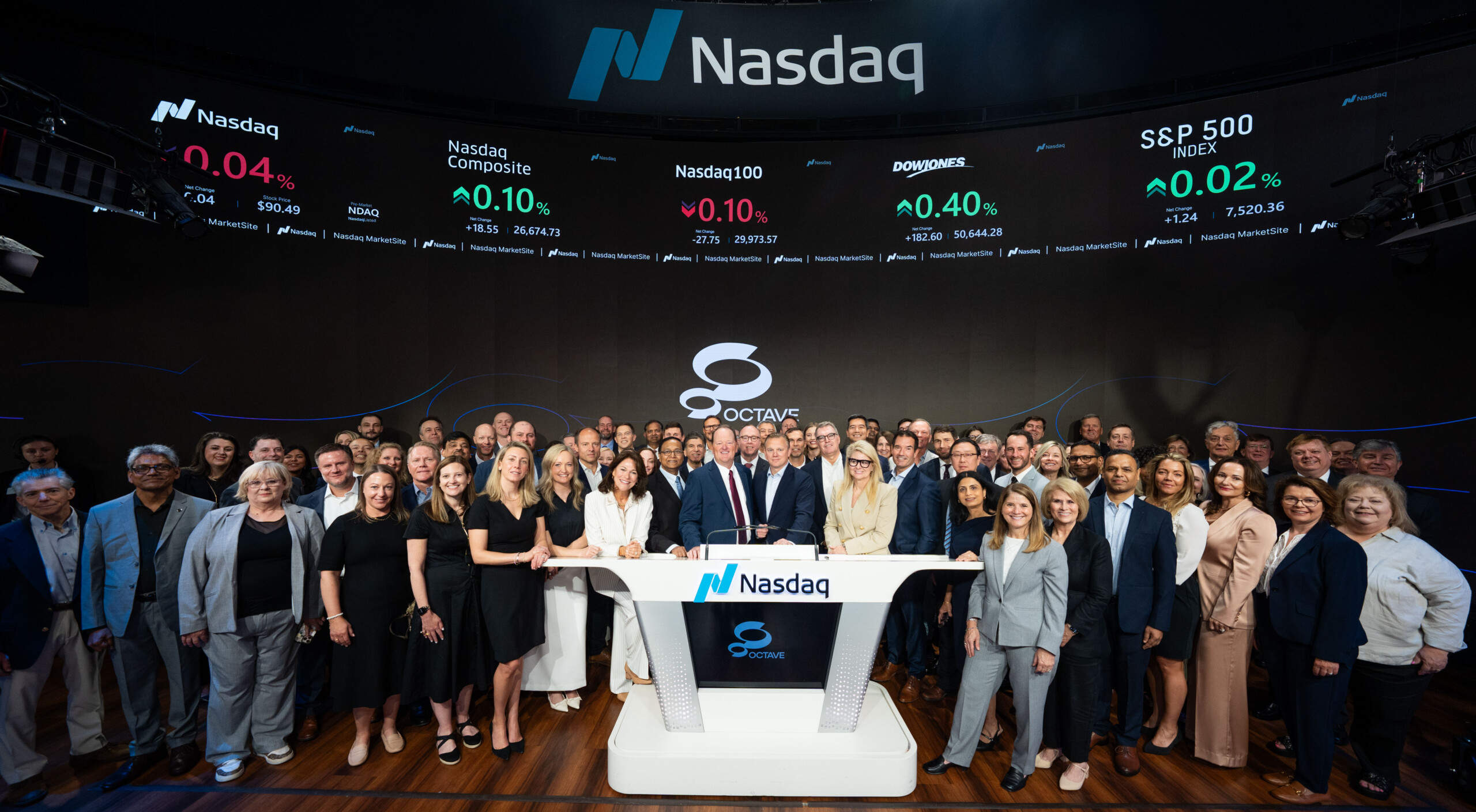
Octave's business originates from Hexagon's portfolio of asset lifecycle intelligence, security, infrastructure, geospatial, and related businesses including ETQ and Bricsys. The company serves asset lifecycle stages such as design, construction, operation, and protection, covering high-reliability scenarios including power grids, railway networks, manufacturing plants, public safety systems, and urban infrastructure.
The value logic of such industrial software companies differs significantly from consumer internet and general AI applications. Industrial enterprises do not lack data; the real challenge lies in data being scattered across equipment, processes, engineering drawings, geographic information, maintenance records, quality systems, supply chain systems, and on-site personnel experience. The same factory, railway line, power grid, or public safety system is often composed of data from multiple departments, multiple software systems, various contractors, and asset data from different historical periods. General-purpose models can improve text understanding, code generation, and knowledge Q&A efficiency, but in industrial scenarios, simply connecting a model to a system cannot directly solve issues such as downtime prediction, incident response, design changes, maintenance planning, compliance tracking, and cross-departmental coordination. Octave's proposition of "connecting data, intelligence, context, and AI insights" essentially embeds AI into the real asset lifecycle, enabling the model to understand equipment locations, engineering relationships, operating condition changes, historical events, and organizational decision-making chains, and then transforming outputs into more reliable operational actions.
Octave currently has approximately 7,200 employees and operates across 45 countries. In its listing prospectus, the company emphasized that its clients include some of the world's most complex organizations and critical infrastructure operators, who demand high levels of performance, safety, reliability, and emergency response.
From the perspective of industrial intelligence development, Octave's listing provides a noteworthy case for observation. The core constraint for AI deployment in the industrial sector often lies not in having the latest models, but in whether enterprises can integrate real-time data, historical records, engineering semantics, on-site environments, and management processes into a context that can be continuously invoked by the system. Without this context, model outputs tend to remain at the level of generic recommendations, making it difficult to enter high-responsibility scenarios such as production scheduling, asset maintenance, risk early warning, and on-site emergency response. After being spun off from the Hexagon system, Octave can focus more intensively on building software platforms, data models, and industry solutions around the industrial asset lifecycle. This also allows the capital market to independently evaluate its growth potential as an industrial AI software company. Key variables going forward include customer retention after independent operation, commercialization of AI features, cross-industry data platform capabilities, and whether it can truly transform fragmented data in critical infrastructure into sustainable operational efficiency improvements.
This article is compiled by Wedoany. All AI citations must indicate the source as "Wedoany". If there is any infringement or other issues, please notify us promptly, and we will modify or delete it accordingly. Email: news@wedoany.com