en.Wedoany.com Reported - On June 2, Qualcomm and Microsoft showcased their collaboration on Project Solara during Microsoft Build 2026. Positioned as a chip-to-cloud platform for "agent-first devices," Project Solara aims to make AI agents the primary interaction gateway in next-generation terminals, rather than continuing to center on traditional applications.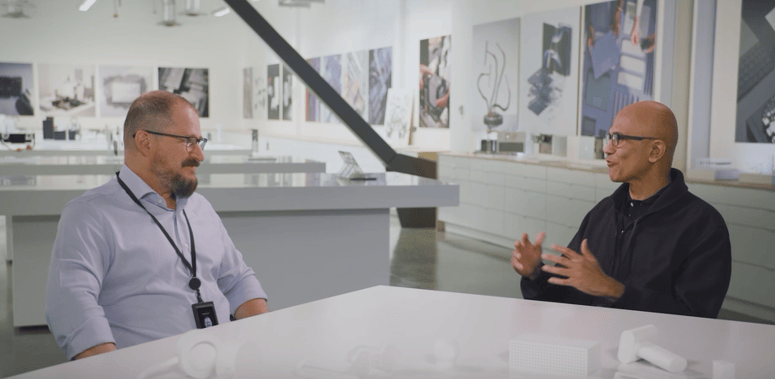
The core change of Project Solara lies in redefining the relationship between devices, operating systems, cloud services, and AI agents. In the past, whether on phones, computers, or various smart hardware, users typically had to open apps, switch interfaces, search for functions, and then actively complete tasks themselves. Agent-first devices, however, attempt to prioritize user intent, with AI agents understanding tasks, invoking services, generating interfaces, and executing actions. Qualcomm's role in this collaboration primarily involves low-power, high-performance on-device computing, connectivity, and support for multi-form-factor devices. Microsoft, through Project Solara, connects chips, systems, cloud agents, and enterprise-grade security management to form a platform for hardware partners to develop new devices. For Qualcomm, such a platform helps extend its mobile computing, edge AI, and device connectivity capabilities into a broader AI hardware ecosystem, not limited to the traditional smartphone and PC markets.
Microsoft disclosed that Project Solara establishes hardware and software requirements for next-generation agent-first devices, focusing on meeting enterprise needs for manageability, security, and privacy, while ensuring key user experiences.
In terms of device form factors, Project Solara is not a single product but a reference platform and ecosystem framework. Microsoft has showcased concept forms such as desktop devices and badge-style wearables to illustrate how agents can continuously accompany users in scenarios like office desks, meetings, mobile work, and enterprise services. Such devices need to constantly sense the environment, identify identities, access enterprise data, connect to cloud agents, and generate instant interfaces when necessary. Compared to the traditional app model, agent-first devices rely more on on-device AI inference, sensor fusion, voice and visual interaction, low-power operation, and secure identity management. Qualcomm's long-accumulated capabilities in SoCs, connectivity, AI acceleration, and device ecosystems are indispensable underlying support for bringing such hardware to mass production. As AI assistants evolve from software gateways to dedicated terminals, the value of chipmakers in the agent era will expand from providing computing power to system-level support for device experience, battery life, security, and networking capabilities.
Subsequent variables focus on the expansion of Project Solara's hardware partners, the effectiveness of enterprise pilots, the maturity of on-device agent capabilities, the migration of the application ecosystem, and whether users will accept the new interaction paradigm of "using fewer apps and delegating more to agents." For Qualcomm, Project Solara provides a window to showcase the synergy between on-device AI and cloud agents. For Microsoft, this platform represents an attempt to extend from Windows, Copilot, and cloud services into new AI hardware gateways. If agent-first devices can first succeed in enterprise scenarios, AI terminal competition will expand from smartphones and PCs to badges, desktop assistants, industry-specific devices, and more specialized hardware forms.
This article is compiled by Wedoany. All AI citations must indicate the source as "Wedoany". If there is any infringement or other issues, please notify us promptly, and we will modify or delete it accordingly. Email: news@wedoany.com