en.Wedoany.com Reported - The 4-kilogram robot CabinMarker, developed by Airbus Robotics, can reduce aircraft seat positioning time from 150 minutes to 30 minutes. The robot received official industrial certification in December 2025.
Airbus is facing the challenge of significantly ramping up production while also preparing for the next generation of commercial aircraft and its industrial system. The pressure to ensure safe, efficient, and high-quality manufacturing is unprecedented. The company's solution is to provide smarter tools, including robots that save time and free up labor.
The introduction of robotics in aircraft manufacturing aims to free workers from repetitive or uncomfortable tasks, allowing them to focus on higher-value production acceleration tasks. From exoskeletons that help workers avoid musculoskeletal strain to the FlexTrack drilling robot, Airbus's goal is to identify the most repetitive and strenuous tasks and assign them to machines, while shop floor operators can concentrate on more complex, high-value work requiring intelligence and skill.
To advance this transformation, Airbus established a robotics division in 2023, internalizing robotics expertise and shifting from purchasing technology to creating it in-house, ensuring the industrial system is designed by those who best understand aircraft manufacturing.
Development of the CabinMarker began in 2018 as a prototype designed by Airbus ProtoSpace. After a pause due to the pandemic, it underwent refinement and industrialization, ultimately achieving industrial certification in December 2025. The robot's primary task is to automate the positioning of aircraft seats. In traditional operations, workers spend hours bending, kneeling, and crawling on the cabin floor to mark seat rails—a slow process that puts significant strain on backs and knees. The CabinMarker glides along the cabin floor with high precision, reducing a task that takes operators 150 minutes to just 30 minutes.
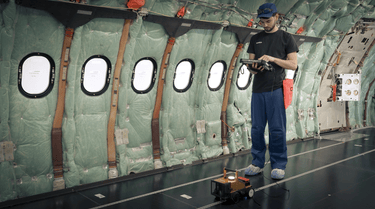
The application of the CabinMarker brings three improvements: higher quality and precision (reducing rework), improved ergonomics, and significantly shortened production time. Only a few operators are needed to control the robot, freeing up human resources to focus on higher-value tasks, directly supporting production increase targets.
Regarding the rollout plan, by the end of 2026, the first two CabinMarker units will be delivered to the Jean-Luc Lagardère A321 final assembly line in Toulouse, France, for seat installation on the A321XLR. Airbus plans to deploy the robot to other aircraft assembly facilities, with an average of two units per line, including the A330 final assembly line in Toulouse, where tests have already been conducted. Since the CabinMarker is designed for single-aisle aircraft, minor design modifications may be required when deploying it to different aircraft models.
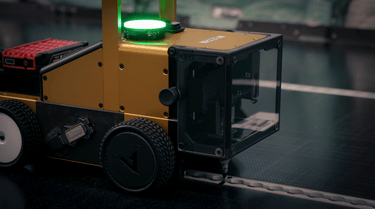
As a mobile and lightweight platform, the CabinMarker offers versatility. Airbus engineers are already planning "V2" applications, such as replacing the marking pen with a camera to turn it into an automatic corrosion detection probe, or adding vacuum and tape mechanisms to automate the cleaning and application of aircraft floor rail covers.
A mobile demonstration unit of the CabinMarker will make its first public appearance at the ILA Air Show in Berlin in June 2026.
This article is compiled by Wedoany. All AI citations must indicate the source as "Wedoany". If there is any infringement or other issues, please notify us promptly, and we will modify or delete it accordingly. Email: news@wedoany.com