en.Wedoany.com Reported - Dhruva Space, a full-stack space engineering company based in Hyderabad, India, is advancing a series of modular satellite platforms covering spacecraft from CubeSats to Microsats, with platform masses ranging from less than 1 kg to 500 kg, designed to support commercial, scientific, and defense missions in Low Earth Orbit (LEO) and beyond. Founded in 2012, the company focuses on satellite platforms, launch integration, ground station infrastructure, and mission operations, and is currently enabling efficient deployment across a wide range of mission types through scalable satellite architectures.
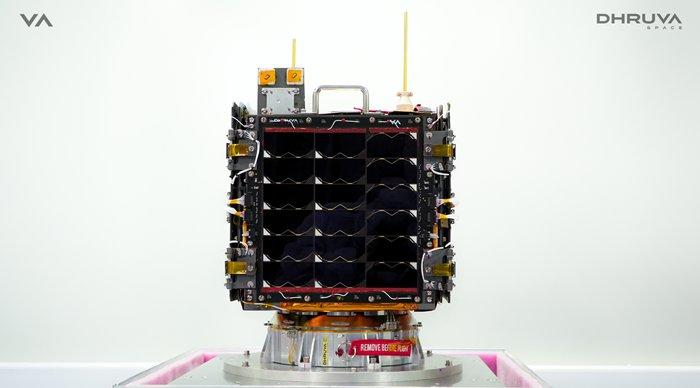
Dhruva Space's satellite platform portfolio is built around three core platforms: the P-DoT CubeSat, the P-30 NanoSat, and the P-Nu Microsat. All three platforms are designed with modularity, constellation scalability, LEO optimization, and rapid payload integration as core design principles. The company also integrates body-mounted and deployable solar array architectures, allowing customers to configure spacecraft according to mission requirements.
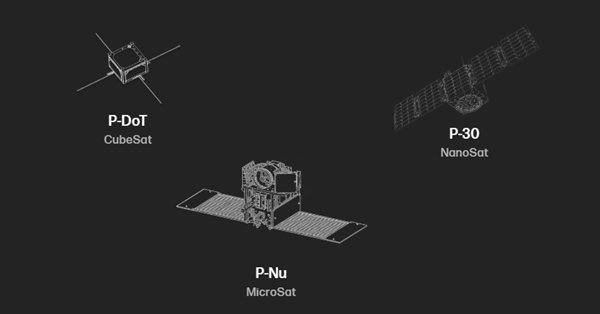
The P-DoT CubeSat platform is designed for compact satellite missions ranging from 0.5U to 12U, with a platform mass between 1 and 24 kg, supporting a mission life of up to five years and pointing accuracy of up to 0.1 degrees. This platform employs a Technology Readiness Level 9 (TRL-9) space-proven architecture, optimized for Earth observation constellations, technology demonstrations, Machine-to-Machine (M2M) communications, and IoT applications. P-DoT supports multiple payload configurations and utilizes three-axis stabilized control for advanced mission operations.
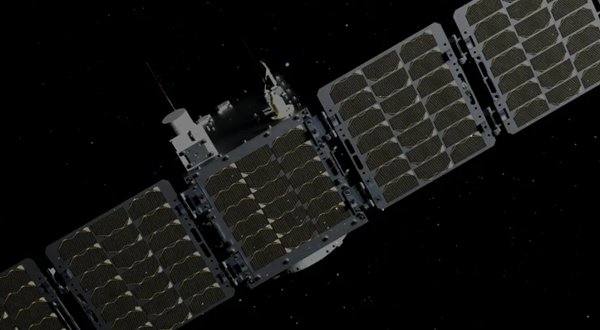
For higher-capability missions, Dhruva Space offers the flagship nanosatellite bus, the P-30. Designed for spacecraft masses of 20 to 50 kg, the P-30 integrates three-axis stabilization, deployable solar arrays, and multi-payload integration capabilities within a compact architecture. This platform supports hosted payload missions and integrates electric propulsion systems for orbital maneuverability. Like the P-DoT, the P-30 is a TRL-9 platform with an operational life of up to five years and pointing accuracy of up to 0.1 degrees.
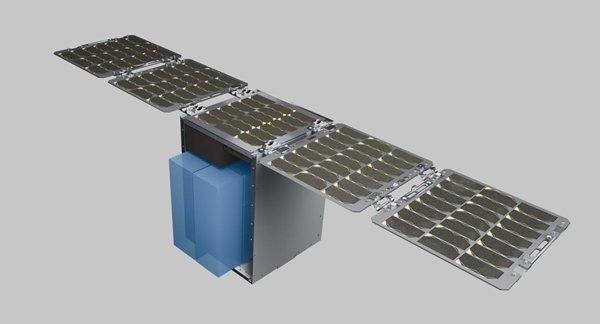
At the larger end of the portfolio, the P-Nu Microsat platform is designed for spacecraft with masses up to 500 kg. As a scalable microsatellite architecture, the P-Nu supports multi-payload configurations, deployable solar arrays, three-axis stabilization, and onboard propulsion systems for station-keeping. This platform targets customers requiring higher payload capacity, compatible with constellation-scale deployment and long-term orbital operations.
A key extension of Dhruva Space's satellite platform strategy is its LEAP (Launching Expeditions for Aspiring Payloads) hosted payload program, developed based on the flagship P-30 satellite bus. The LEAP architecture can accommodate payloads up to 12U, supporting a payload mass of up to 15 kg, providing up to 50 watts of payload power at a 50% duty cycle, with pointing accuracy of up to 0.1 degrees. This program aims to offer customers a faster, more cost-effective path to orbit for in-orbit validation and demonstration missions. Through the P-DoT, P-30, P-Nu, and LEAP offerings, Dhruva Space is building an indigenous satellite ecosystem centered on modularity, rapid deployment, and scalable mission support, enabling customers to access flight-proven spacecraft platforms for a wide range of orbital applications.
This article is compiled by Wedoany. All AI citations must indicate the source as "Wedoany". If there is any infringement or other issues, please notify us promptly, and we will modify or delete it accordingly. Email: news@wedoany.com