AMD's Space AI Chips Enter Blue Origin's Lunar Lander and NEC's Optical Communication Constellation
en.Wedoany.com Reported - Recently, AMD deployed its Versal AI Edge Gen 2 adaptive system-on-chip for two types of space computing scenarios: Blue Origin's lunar lander development flight computer, and Japan's NEC planning to build an optical communication satellite constellation. The former targets onboard real-time computing for crewed lunar missions, while the latter focuses on in-orbit high-speed network routing and signal processing, indicating that AI chips are extending from ground data centers and industrial edge devices to more constrained aerospace systems.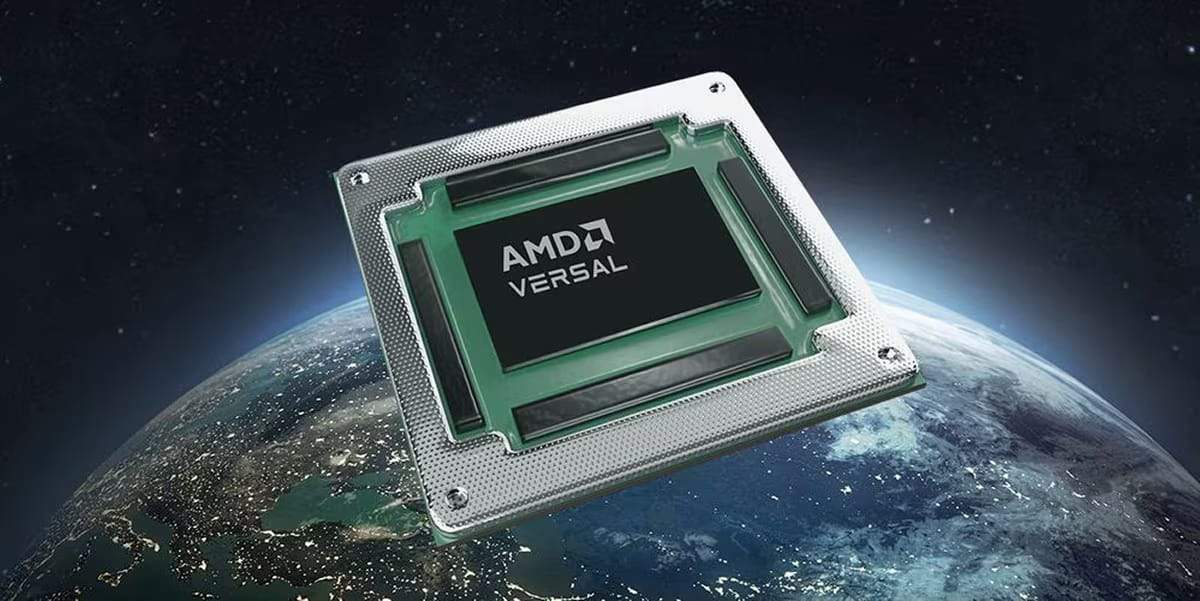
The core of such deployments is not simply moving general-purpose computing power to space, but enabling spacecraft to have stronger local judgment capabilities in environments with limited communication links, stringent power and thermal conditions, and minimal maintenance windows. Lunar missions, satellite constellations, and deep space exploration generate vast amounts of sensor, navigation, image, telemetry, and link data. If all data were transmitted back to ground for processing, it would not only be limited by bandwidth, latency, and communication windows but also increase mission dependence on ground stations and transmission links. AMD's adaptive computing platform, emphasized in the direction of space computing, integrates programmable logic, AI engines, and Arm cores into a single device, allowing flight computers and satellite payloads to perform local data filtering, compression, signal processing, and inference tasks. This shifts space platforms from "collecting data and waiting for ground judgment" to making preliminary decisions faster in orbit or on the lunar surface.
Blue Origin's use case for the AMD Versal AI Edge Gen 2 adaptive system-on-chip lies in the development flight computer for the Mark 2 lunar lander. AMD materials indicate that these flight computers are already operating in vehicle test platforms, which will ultimately serve the Mark 2 lander, targeting the earliest astronaut delivery to the moon by 2028. For a lunar lander, flight computing not only handles routine control tasks but also must address sensor fusion, condition monitoring, fault response, and mission autonomy requirements during the descent phase. As lunar activities transition from short-term visits to more sustained surface operations, the reliance of spacecraft on low-power, high-reliability, and reconfigurable computing capabilities will further increase.
NEC's application shifts toward satellite networks. AMD materials show that NEC is building Japan's first optical communication satellite constellation and will use AMD Versal adaptive system-on-chips to demonstrate high-speed network routing capabilities in space, while performing high-performance signal processing for data transmission within the constellation. Optical communication constellations impose requirements on in-orbit processing that are closer to network infrastructure: satellites and ground stations need to handle higher throughput data streams, and the system must balance power consumption, thermal management, reliability, and link stability. For NEC, the significance of these chips lies in supporting the upgrade of satellite communication networks from simple relay links to more complex in-orbit data processing nodes.
The engineering threshold for space AI chips comes from the environment itself. Aerospace electronics must contend with constraints such as radiation, extreme temperature cycles, shock, vibration, and long mission lifetimes, making standard ground chips difficult to adapt directly. AMD emphasizes in relevant materials that its space-grade adaptive system-on-chips feature radiation tolerance verified through proton, heavy ion, and gamma testing, and support fault-tolerant system design. Compared to traditional missions dominated by fixed-function hardware, reconfigurable platforms can update algorithms, deploy new AI models, and adjust performance according to different phase requirements during the mission lifecycle, offering practical value for satellite constellations, lunar equipment, and deep space exploration missions.
From an industry path perspective, the cases of Blue Origin and NEC illustrate a new stratification in space computing: the ground end continues to rely on large-scale data centers, while the satellite and lunar ends require edge AI chips closer to data sources. Satellites can locally filter low-value remote sensing images, compress critical data, and identify telemetry anomalies; lunar equipment can maintain higher autonomy when ground communication is unstable. In the future, as in-orbit computing infrastructure gradually takes shape, power efficiency, thermal design, optical interconnect, modular maintenance, and open software ecosystems will become key competitive points for chip companies entering the aerospace supply chain. By showcasing its space AI layout through Blue Origin and NEC, AMD has further pushed the AI chip competition from servers and terminal devices into space edge computing scenarios.
This article is compiled by Wedoany. All AI citations must indicate the source as "Wedoany". If there is any infringement or other issues, please notify us promptly, and we will modify or delete it accordingly. Email: news@wedoany.com
Related Products


Industrial and Commercial Point-Type Gas Detector
Jinan Benan Technology Development Co., Ltd.


Multi-function Marine Monitoring Low-altitude Detection Radar Sea-air Boundary Ocean Dynamic Environment Measurement
Chengdu Dixin Technology Co., Ltd.


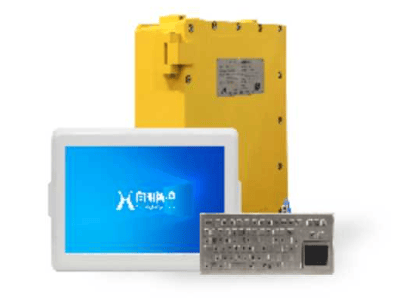
KJD127(A) Mining Explosion-Proof and Intrinsically Safe Computer
Taiyuan Xiangming Intelligent Control Technology Co., Ltd.